
It’s My Life, My Illness … Please Let Me Choose My Treatment
‘I’m sorry. There is no cure.’

I die a little inside each time I hear someone with Meniere’s disease pleading for help, saying they can’t do it anymore, and when I hear the callout for prayer for someone who is suicidal from the insidious incurable disease … I’ve been there. I know exactly how it feels. I wish I had a magic wand to heal every one of us. Right now.
I get angry when I read Meniere’s patients being told by their doctors, ‘I’m sorry. There is nothing more we can do.’
Don’t accept it. There is more that can be done.
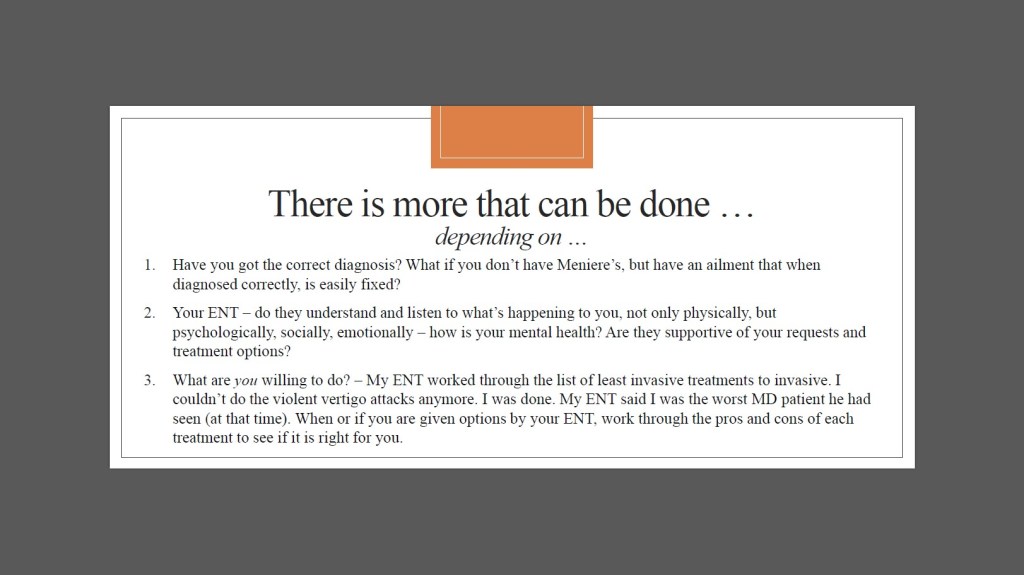
But … it also depends on what you are willing to do.
Let me tell you the short story of my journey.
1995 …
‘I’m sorry. There is no cure.’

‘No cure?’
‘No … no cure; no cause. But you’re not going to die from it.’ My ear specialist eyed me with caution. The bitterness of my diagnosis after five hours of testing was painful to acknowledge.
‘Let’s wait and see how your symptoms go,’ he said.
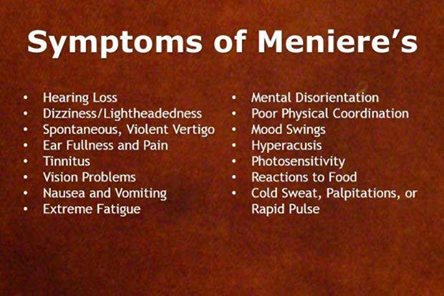
I stepped out of the ENT’s office, trailed by a very dark shadow: Meniere’s disease. It was so large it cast a darkness over me like a heavy, storm cloud, ready to erupt into the strong spiralling wind of a hurricane or cyclone at any moment. I knew the symptoms of my diagnosis well. I lived them with every breath that I took, mixed with fear and anxiety: aural fullness, hearing loss, tinnitus, and vertigo – the abhorrent violent vertigo – a life changer.
I felt like I was given a prison sentence.
Where was the key to escape from Meniere’s disease?
Wait and see how my symptoms go? Why? It could be a mild form that had little impact on my life, or it could go into remission.
But mine didn’t.
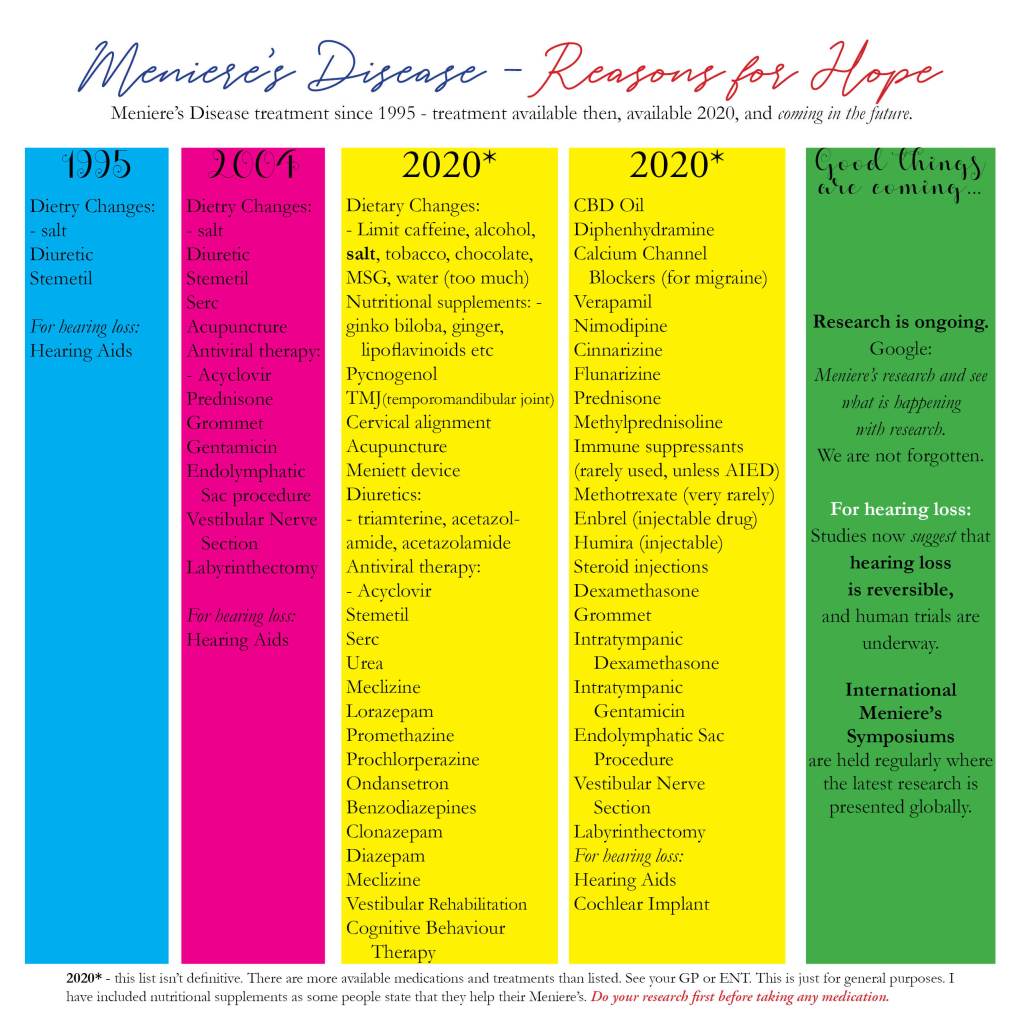
After return visits to my ENT I was given a diuretic and Stemetil. That was it. And that was all they had in 1996. End of story.
But was it?
As my Meniere’s disease kicked into overdrive, destroying every bit of happiness I had in my life, the worst my ENT had seen, I got up to fight. Life was brutally unfair. Why was Meniere’s disease even a thing? It’s so cruel.
I was angry. I wasn’t going to accept “there’s no more we can do”. So I took control.
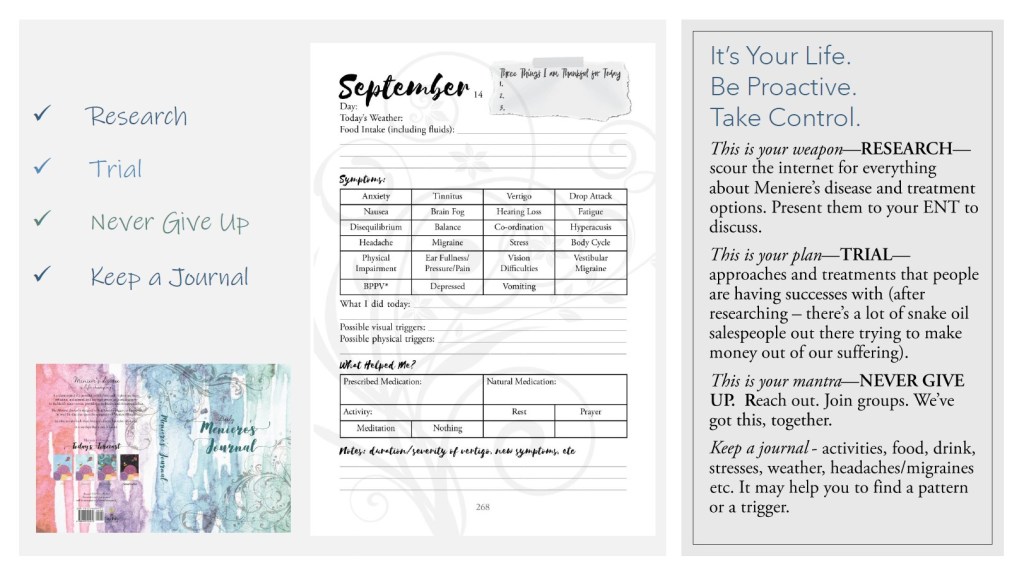
1. I started journaling my lifestyle vertigo attacks – what I did, ate, or drank beforehand an episode, trying to find a trigger or a pattern – and I discovered one – every two months I would have four hours of violent vertigo for nine days in a fortnight. Sometimes ending up in hospital.
2. I started my own research online when we finally had a home computer.
3. I researched and tried natural therapies.
4. I tried acupuncture.
5. I had my jaw alignment checked for TMJ (temporomandibular joint).
6. I listened to sound therapy for months on end – the Tomatis effect.
7. I took my research to my ENT, every visit. I’m sure he let out a sigh every time he saw my name on his patient list for the day. And when I found a Japanese doctor who claimed that the anti-viral Acyclovir cured people of their Meniere’s disease, my ENT was doubtful, but told me to give it a go. It cost me around $375 for each script from my GP – and that’s another story. It didn’t work.
8. I tried Serc.
But still, the debilitating vertigo rendered me defenceless. Incapacitated. And mentally, I found myself at the bottom of the darkest abyss with no hope, wearing a mask with a smile, covering up my very, very deep and dark depression.
2004 …
9. I tried prednisone. For one day I felt like a normal person. And then my vertigo returned.
10. I had a grommet inserted into my eardrum. It did nothing.

The doctor’s words were full of apology. And frustration. ‘I’m sorry. There is nothing more we can do.’
‘Nothing more?’ My heart sunk. There was no horizon of hope, like the sun’s rays projecting onto the twilight canvas. It had disappeared into the darkness. Like me.
Just me and the beast: Meniere’s.

My ENT looked gutted. ‘Well … we could try gentamicin injected into your middle ear, and if that doesn’t work, I can do a vestibular nerve section.’
‘I’ll take the gentamicin.’
‘It will destroy your balance cells. You will also lose some hearing.’
‘Does it stop the vertigo?’
‘It can. Yes.’
‘Then I’ll take the gentamicin.’ I didn’t care about losing more hearing. I couldn’t live with the vertigo. I was done …
2020 …
I’ve been vertigo free since 2004. But the gentamicin injected into my middle ear was not the low dose gentamicin offered now, it was the full strength, and I remember my ENT saying that he added bi-carbonate of soda and sterile water to the mix to make the toxic antibiotic penetrate better. I now have my life back. And my shadow, Meniere’s, is a small thing that follows me around, a reminder that I am a survivor and a fighter.
I have to admit, I’m a little jealous of newly diagnosed Meniere’s people now. You have so much more HOPE than I did when I started my Meniere’s journey 25 years ago. There are far more medications and treatment options and success stories, and support groups and people who have started blogs and websites for MD people.
You have so much more.
And remember, you can choose. Like I did. Make sure you have a supportive ENT. I’m eternally thankful to my ENT and his care and compassion. And now my new ENT for his skill with my Cochlear Implant that has allowed me to hear again after 15 years.
Meniere’s Warriors:
This is your weapon—Research—scour the internet for everything about Meniere’s disease and treatment options. Present them to your ENT. You are your best advocate. It’s your life. You take control.
This is your plan—Trial—approaches and treatments that people are having successes with (after researching – there’s a lot of scammers/snake oil salespeople/quacks out there trying to make money out of our suffering).
This is your mantra—Never give up and reach out. We’ve got this, together.
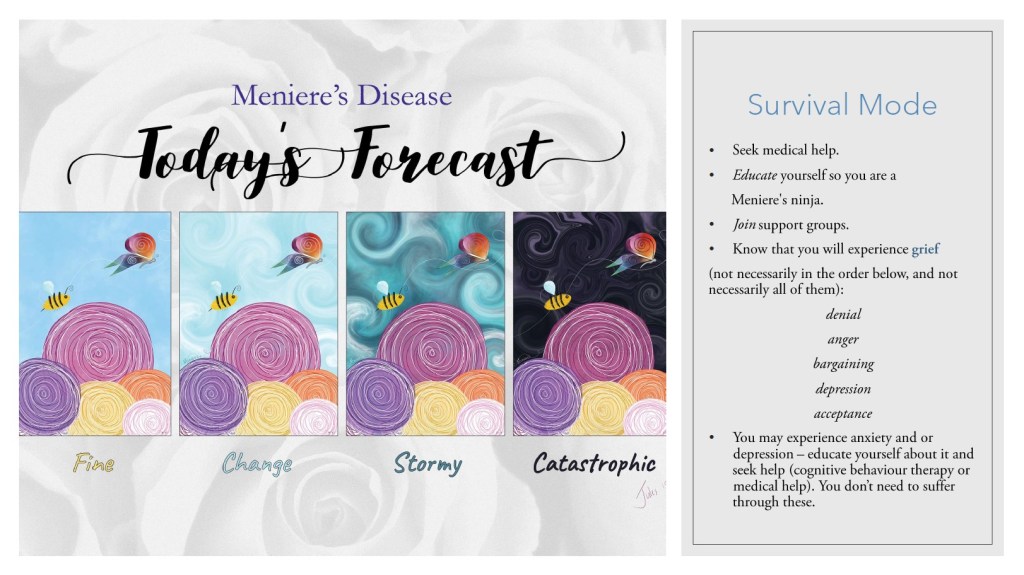
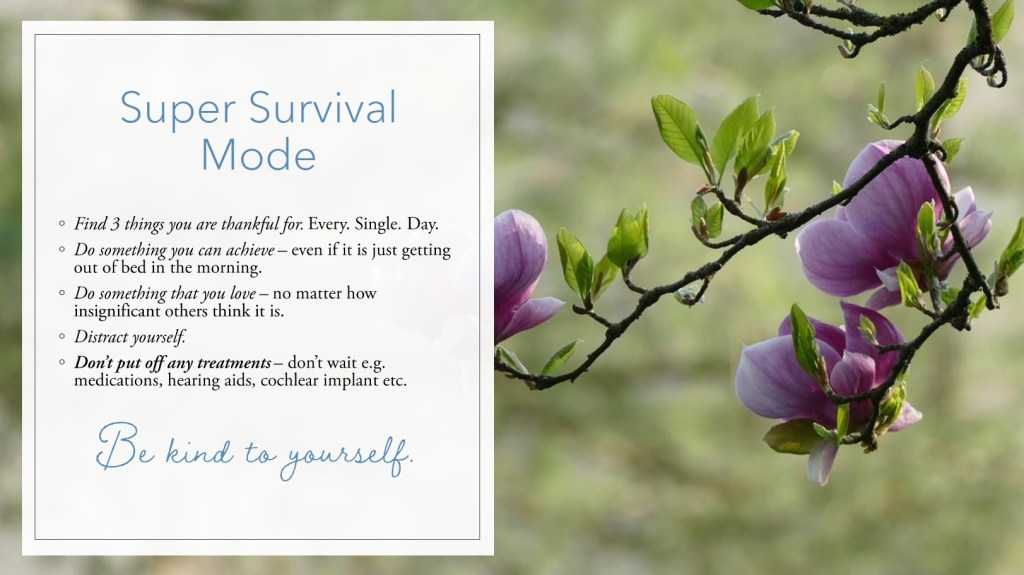
Doctors, this is our plea: please let us choose our steps to wellness, to a better life where we can find joy again, where we can take back what Meniere’s disease has taken from us. Please don’t say “there is nothing more you can do”. We have suffered more than enough.
I’m looking forward to the day when I hear: ‘Here’s the bad news. You have Meniere’s disease. Here’s the good news—we can fix it!’’

To help you out in your MD journey, I have a two freebies you can download:
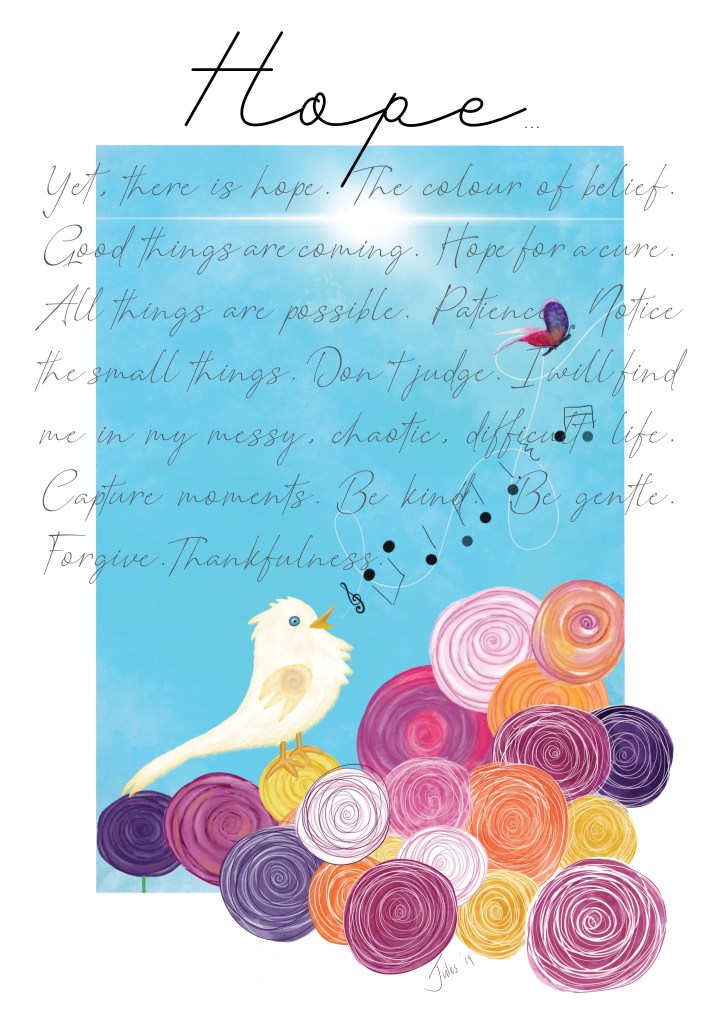
The spark of hope can never be extinguished. A cure for Meniere’s disease is coming …
I write this blog with the knowledge of the great diversity of experiences of people with Meniere’s disease in mind. Some suffer greatly. Some little. Some people respond to medications. Some don’t. Some can still function with little disruption to their daily lives. Some don’t.
I also write acknowledge that there are many debilitating incurable illnesses, and I am in not in any way discrediting or minimalizing another person’s illness.
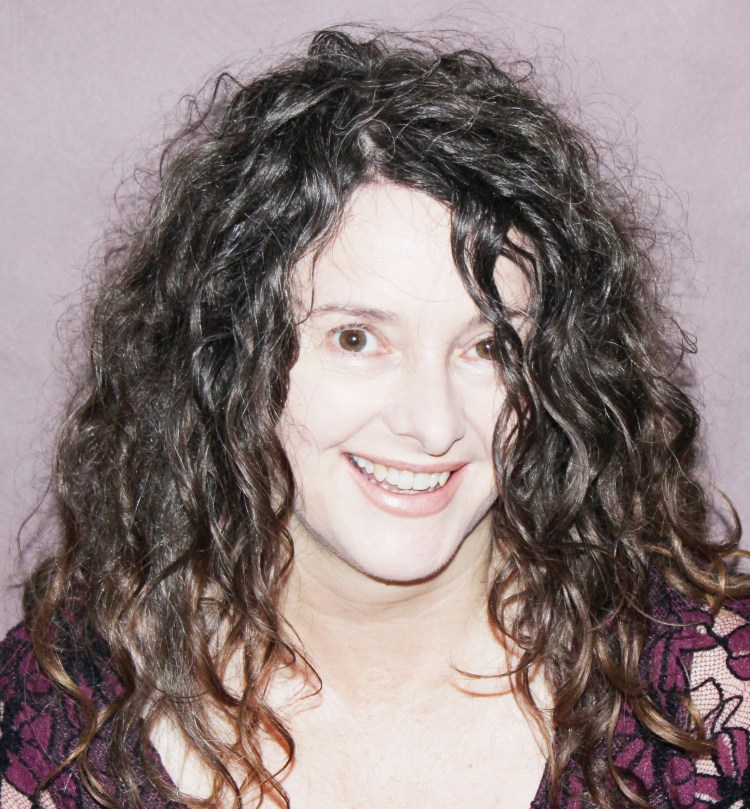
Julieann Wallace is a best-selling author, artist and teacher. She is continually inspired by the gift of imagination, the power of words and the creative arts. She is a self-confessed tea ninja, Cadbury chocoholic, and has a passion for music and art. She raises money to help find a cure for Meniere’s disease, and tries not to scare her cat, Claude Monet, with her terrible cello playing. playing.
https://www.julieannwallaceauthor.com/

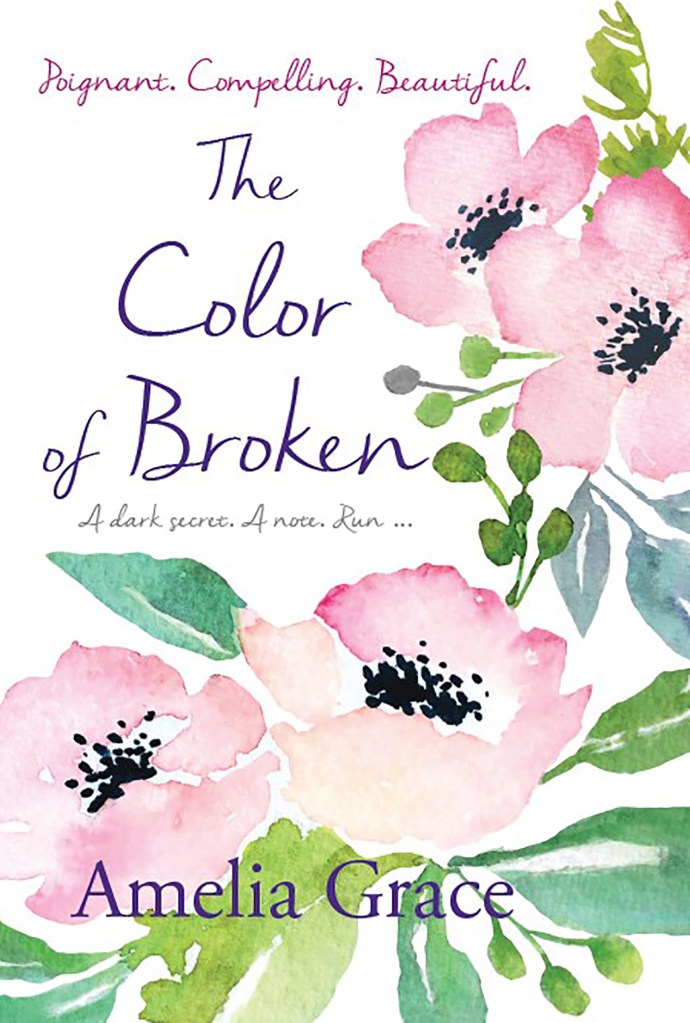
The Colour of Broken is my best-selling novel (written under my pen name) that has a character with Meniere’s disease. It hit #1 on Amazon in it’s category a more than once. It can be bought at any online bookstore, including Amazon.
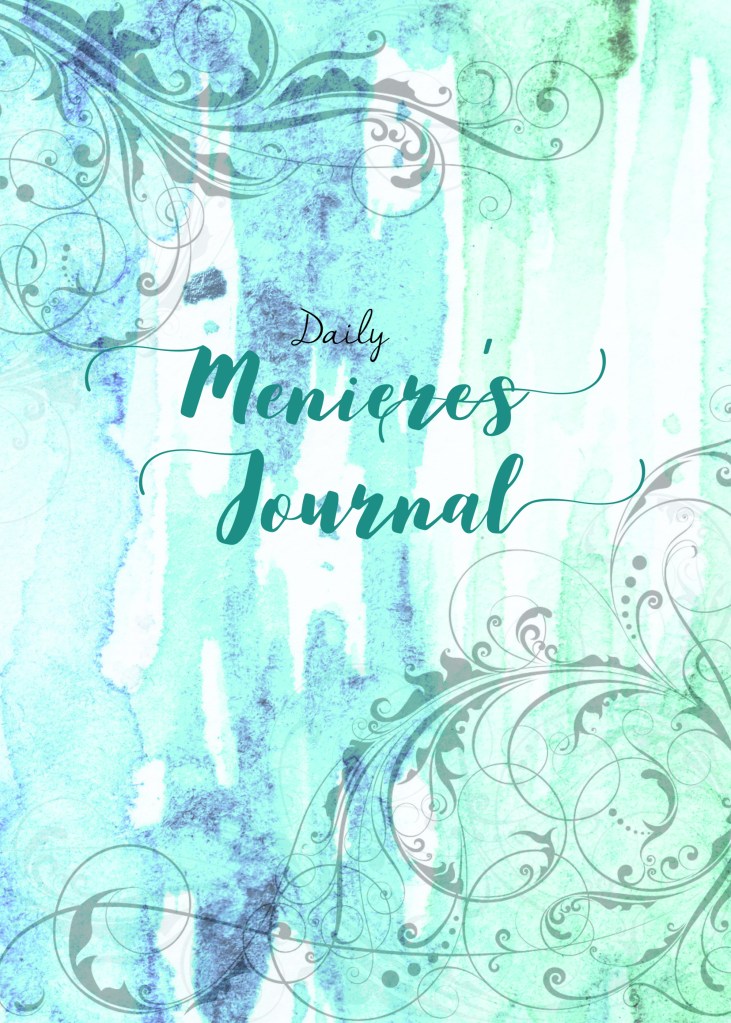
The Daily Meniere’s Journal is a 365 day print book to record your MD symptoms to find triggers and patterns. It can be bought on any online bookstore, including Amazon.
All profits from these books are donated to Meniere’s research to help find a cure.
I am mindful of those who also have incurable diseases or are walking the path of a diagnosis that is life changing. My blog never aims to undermine the severity of anyone else’s illness, disability or journey. We all deal with life with different tolerances, attitudes and thresholds. ‘My Shadow -Meniere’s’ is my journey. It is my hope that it can help others with Meniere’s disease, or hearing loss, or simply when life has a plot twist.
I also acknowledge those before me, who have Meniere’s Disease or a Cochlear Implant. Your experiences, advice and suggestions are welcome.
 My Shadow - Meniere's