Balancing Rocks

Balance Awareness Week, 2022

I’m sitting on a small rock beach at Wangetti, between Cairns and Port Douglas in Australia.

There’s balancing rocks everywhere. Allowed by the council. The insta-famous Gatz balancing rocks.

There’s a foreboding, for me.

Others would see it differently. I can see how it might be considered fun, and the challenge of creating your own rock stack exciting. There’s a family to my left busy creating rock stacks. Smiles litter their faces. Fingers point. Hands rest on hips once they have accomplished their mission.

But to me, the rocks are all shades of darkness, mirroring my Meniere’s journey and the destruction of my balance cells. My Meniere’s journey that has scarred my heart and mind. And my inner ear. My journey that I pray that nobody ever has to travel. Cure for Meniere’s disease, please come soon.

I study the balancing rocks with more focus.

Rocks of black.

Rocks of brown.

Grey rocks. So many grey rocks with an “e” like the rain clouds – melancholy, but an enjoyable melancholy that builds up until it releases, like petrichor, the smell of the rain after warm, dry weather. Satisfying. The grey with an “e” of deep thought, philosophy and ponderings. The grey with an “e” that helps you to discover parts of yourself that you never knew existed, and can vanish without leaving a bitter aftertaste.

Gray rocks. So many gray rocks with an “a”. Never enjoyable. A very dark gray. It’s self-judgement, doom and gloom, forever hanging around and within. It wants to drag you into the dark abyss of the colour black, that absorbs all colours … the colour of self-condemnation, the colour of depression.

The rocks first caught my gaze as my husband and I travelled to Port Douglas to catch the Quicksilver boat out to the Great Barrier Reef the day before.

‘I want to go back to the rocks tomorrow,’ I had said to him.

Memories of my journey with Meniere’s disease flood my mind and my throat tightens. Vertigo. I so hate vertigo! I could cope with the ear fullness, hearing loss and tinnitus. But not the abhorrent, unpredictable vertigo.

Balance. I chose to have my balance cells destroyed in 2004 to stop the violent, horrendous, soul-destroying vertigo that would last up to 4 hours at a time. I would be hit with episodes of vertigo at least 40 times a year. I was totally debilitated, unable to move. I would stare at one spot of the wall for the entire time trying to gain some sort of control over the vertigo. I never could. My husband would selflessly empty my vomit bucket numerous times, and take me to emergency at the hospital for an injection of Stemetil and a bag of IV fluids. I was exhausted for days afterward.

I looked to my right. And there was my husband creating his own rock stack.

Tears pooled in my eyes. I felt like he was making the balancing rocks for me, for the journey I have been through, relearning my new balance using my eyesight. Successfully.

In reality, I know that he is creating a rock stack because it is fun.

I wipe the tears from my eyes and place the final rock on top of my husband’s rock stack. Joy fills me and I smile.

And there it is. We have created a rock stack for my Meniere’s family, and for others who have vertigo caused by diseases and traumas.

I lift my gaze to the ocean and inhale deeply. What a journey I have been on. What an awesome family I have where I receive support, always, and who deal with my lack of balance with humour to make me laugh.

I am beyond thankful that I no longer have vertigo. An answered prayer.

I walk to my left and move amongst the balancing rocks with care. The ground is uneven and … rocky. Any normal person could easily lose their balance here. But I’d hate to be the reason some rock stacks are knocked over due to me losing my balance.

I laugh to myself at the irony.

I take one final gaze at the works of rock art. Ephemeral art. I know that researchers are working on devices and gene therapies to cure vertigo.

I look down and find a heart shaped rock. Good things are coming.

https://www.julieannwallaceauthor.com/

https://www.instagram.com/julieann_wallace_/

https://www.instagram.com/myshadow_menieres/ https://myshadowmenieres.wordpress.com/

Julieann Wallace is a multi-published author and artist. When she is not disappearing into her imaginary worlds as Julieann Wallace – children’s author, or as Amelia Grace – fiction novelist, she is working as a secondary teacher. Julieann’s 7th novel with a main character with Meniere’s disease—‘The Colour of Broken’—written under her pen name of Amelia Grace, was #1 on Amazon in its category a number of times, and was longlisted in 2021 and 2022, to be made into a movie or TV series by Screen Queensland, Australia. She donates profits from her books to Macquarie University, where they are researching Meniere’s disease to find a cure. Julieann is a self-confessed tea ninja and Cadbury chocoholic, has a passion for music and art, and tries not to scare her cat, Claude Monet, with her terrible cello playing.

Balance Awareness Week, 2022

Balancing Awareness Week, 2022

balance

noun: balance; plural noun: balances

1. an even distribution of weight enabling someone or something to remain upright and steady.

‘I fell,’ I said. I wanted to sob. Loudly. Aftershock from my fall. I caught the sob in my throat. ‘I fell and I couldn’t stop it.’

My husband’s eyes filled with tears, but they didn’t leak down his cheek like mine. I always hate seeing his eyes that way. He was following me as we walked, to catch me if I fell. He always does that for me. My protector. And when it happened, there was no way he could stop it. I remember the panic in his voice as he leaned over me, asking if I was okay, looking over me, again and again. ‘Did you hurt yourself?’ he had asked.

All I could say was, ‘My phone is under the bush, over there.’ I had no idea how I saw it slide under the bush. When I fall (which is rare), I have no idea where to put my hands to stop me, or protect me – inside my head as I’m falling, I see myself as a body but no arms or legs. That’s what destroying my balance cells did to me. I just have to wait for impact and suffer the consequences.

‘I don’t care about your phone. Are you okay?’ he said.

‘Yes,’ I said. It was a lie. I was hurt. But I wanted to get up to save face. There were many people on the walking track at Dove Lake, Cradle Mountain, Tasmania. 5.7kn. 3 hours.

I HATE YOU MENIERE’S!

My husband pulled me up off the ground. My daughter picked up my phone. She was too quiet. How many times had she witnessed Meniere’s bring me to my knees with vertigo, deafness, depression? And now falling, this first time, only because I tripped over a step.

I blew out a long breath between my lips. Then set a rock in my sights to sit on for a moment to assess my injuries, then walked there, my husband holding onto my arm to support me. I wanted to yell at him, “LET GO OF ME. I’M NOT AN INVALID!” But I didn’t. He was trying to help.

I sat on the rock, looked over the lake and focussed on where I hurt – my wrist, my arm, my ankle and my back. Hold yourself together, I thought, people fall all the time. Put on your “I’m okay mask”.

‘Are you alright, Ma?’ my daughter asked.

Hold yourself together. The emotion of “I want to fall to pieces” rolled through me. Hold it together. Breathe.

‘It could be worse,’ I said, ‘I could have broken something.’ I was hoping that I didn’t break anything. My wrist, arm and ankle were throbbing. Not to mention my back spasms. ‘Thanks for picking up my phone,’ I added.

She nodded, looking at me with concern in my eyes.

‘I’m sorry for falling,’ I say to her. I don’t want her to be embarrassed by me.

I HATE YOU MENIERE’S!

And of course, she’s not. She never is. She’s always one of the first to help. It is my own self-judgement that betrays me.

I stand. In pain. But I can walk to finish the last hour of the 3 hour track.

My daughter is in front of me, glancing back at me every once and a while, and my husband behind me. I’m glad. He can’t see me wriggling my fingers to check my wrist, and feeling where my right arm hurts, nor the wince on my face when my ankle hurts more than I want it to, or my back spasms. All I can think of is when my son would roll his ankle at elite triathlon training, and his coach would tell him to walk normally on it. So that is what I do, despite the pain.     

After the walk we entered a cafeteria for a drink.

Without warning, tears filled my eyes. In public. ‘I could have died if I fell in a different part of the walk,’ I say. It was true. Parts of the track were on a boardwalk above the ground that fell steeply, scattered with rocks and trees below. No rails to stop a tumble.

‘I know,’ my husband whispered. I watch his watery eyes and see him swallow harder than usual. ‘What do you want to drink? Do you want an ice-cream?’ He was using the distraction method. He knows me well.

Claire and I find a table away from most of the people. My wrist and arm throb. My back was spasming and my ankle twinging. Swelling was setting in. I ate my ice-cream, flicking tears from my eyes when they dropped. At least I don’t have vertigo, I thought. It was a good day, after all. Any day without vertigo is a good day. Suck it up, I tell myself, it could be worse.

In 2004, nine years after my Meniere’s started, I made a conscious decision to have my balance cells destroyed. I couldn’t do the horrendous, unpredictable, debilitating, violent, torturous, four-five hours of insane vertiginous spinning and nausea and vomiting and staring at one focus spot on the wall for the entire four-five hours anymore. I was more than done. I didn’t want to be here anymore. So when my ENT offered to inject gentamicin into my middle ear to kill off the balance cells, halting the vertigo, I didn’t think twice.

Imagine for one moment, having to make the choice about destroying your balance cells. Balance. Yeah – that thing. Something you never even think about. Your body just does it for you.

The vertigo of Meniere’s disease for me, was the most abhorrent, violent, room spinning.

Totally debilitating.

It was “hold on to the floor or the bed even though you are already on lying on the floor or bed”. I had to stare at one spot on the wall for four or five hours until the spinning subsided. And whatever you do, DON’T move your head. It will make the spinning one hundred times worse.

Beyond exhausting. Soul destroying.

And let’s not forget the relentless, vicious puking that feels like you’re about to turn inside-out, dehydrating the body so much you need to be transported to emergency at the hospital.

If you ever want to know how vertigo of Meniere’s feels, sit on an office swivel chair and get someone to spin you around and around and around as fast as they can.

Now, imagine not being able to stop it. Not being able to get off that office chair for hours and hours and hours.

Then imagine, never being able to predict when vertigo will hit – and when it does, you are stuck wherever you are, and you absolutely cannot move as it will make the spinning impossibly worse. This is the vertigo of Meniere’s. Hell.

Was the gentamicin my first port of call? Absolutely not. I had already had Meniere’s disease for nine years and tried:

* Low salt diet

* Diet elimination

* Stemetil

* Diuretic

* Serc

* Sound therapy

* Acupuncture

* Prednisone

* Grommet

Gentamicin was next. If that didn’t work, I was going to have a Vestibular Nerve Section where the balance nerve to your ear is severed.

The gentamicin worked – an answered prayer. One full strength shot injected in through my grommet with some bicarbonate of soda and sterile water mixed with it to make it penetrate better.

Image: Polyclinique Centre-Ville

The procedure took place at my ENT’s procedure room in the city. I lied on my right side while he injected the concoction in through my grommet in my left ear.

‘Isn’t that hurting?’ he had asked me as he infused the mixture into my middle ear.

‘Yes,’ I had said, ‘but I am envisaging it destroying the Meniere’s in my middle ear. It’s a mind visualisation technique I taught myself when I was young, when I had growing pains in my knees.’

I remained on my right side, left ear facing the ceiling for 20 minutes after the procedure, then went home, where I went to bed and rolled onto my right side to keep my left ear up. I slept for two hours.

The next day I had bouncy vision when I walked. It has a term – oscillopsia. Oscillopsia is a vision problem in which objects seem to jump, jiggle, or vibrate when they’re actually still. It stems from a problem with the alignment of your eyes, or with the systems in your brain and inner ears that control your body alignment and balance. It was a side effect of having my balance cells destroyed. It was a good sign that the gentamicin was working, my ENT had said.

Three weeks later I was back teaching full-time, learning to trust that I wouldn’t have any more vertigo attacks. I relearned to walk using my eyesight. The neuroplasticity of the brain is beyond words. Since 2004, I have been vertigo free. So thankful for God’s mercy and grace.

15 year later, before I had my cochlear implant, I had balance rehabilitation. Finally. I wish I had discovered it earlier in my journey. My balance improved far beyond what I every thought it would. My life is pretty normal balance-wise now. I do have limitations, like climbing ladders and fences. I just make sure that I hold on for stability.

It’s Balance Awareness Week. Many people do not know that your inner ear plays a significant roll in your balance. The inner ear is home to the cochlea and the main parts of the vestibular system. The vestibular system is one of the sensory systems that provides your brain with information about balance, motion, and the location of your head and body in relation to your surroundings. There are three loops in your inner ear, called semicircular canals. The first canal senses up-and-down movement. The second canal senses side-to-side movement. The third canal senses tilting movement. Each canal has hair cells and fluid inside, which move when your head or body moves. The hair cells send messages to your brain through the acoustic nerve. These messages tell your brain about how you are moving. Are you moving straight, like in a car, or up and down, like in an elevator? Or maybe you are not moving at all. This information (along with what you see, hear, and sense with your body) helps you keep your balance. A problem in your inner ear is just one of many factors that can lead to balance difficulties, dizziness, and vertigo.

Signs and Symptoms

Balance disorders come with different symptoms. Symptoms may happen all the time or just occasionally. They may come about suddenly or may be triggered by something (e.g., position change, head movement, visual or sound stimulation). Symptoms of balance problems include:

  • difficulty walking and moving around
  • dizziness
  • falling
  • headaches
  • light-headedness
  • motion sickness
  • nausea
  • unsteadiness
  • vertigo (e.g., a feeling that the room is spinning) and
  • visual problems (e.g., blurry vision)

https://www.asha.org/public/hearing/dizziness-and-balance/https://www.asha.org/public/hearing/dizziness-and-balance/

A balance problem may cause you to feel nervous or afraid. You may change the way you walk and move around. For example, you may walk more slowly or move your head less.

Causes

It is important to find out the cause of your dizziness and balance problems. A variety of underlying conditions or issues may cause balance problems and dizziness, including:

  • cardiovascular or circulation problems
  • head injury (traumatic brain injury, or TBI)
  • injury to the ear or vestibular system
  • inner ear disorders
  • medication side effects
  • Meniere’s disease
  • neurological diseases or disorders
  • sudden hearing loss
  • sudden vision changes
  • surgeries, such as cochlear implant placement
  • tumors on the acoustic nerve and
  • viruses and other infections

https://www.asha.org/public/hearing/dizziness-and-balance/

Good News

The good news is the brain has an ability to change and adapt, also known as brain plasticity – neuroplasticity. https://www.verywellmind.com/what-is-brain-plasticity-2794886

I learned to use my vision to help with balance, and balance rehabilitation did wonders.

Life is good.

Julieann Wallace is a multi-published author and artist. When she is not disappearing into her imaginary worlds as Julieann Wallace – children’s author, or as Amelia Grace – fiction novelist, she is working as a secondary teacher. Julieann’s 7th novel with a main character with Meniere’s disease—‘The Colour of Broken’—written under her pen name of Amelia Grace, was #1 on Amazon in its category a number of times, and was longlisted to be made into a movie or TV series by Screen Queensland, Australia, twice. She donates profits from her books to Macquarie University, where they are researching Meniere’s disease to find a cure. Julieann is a self-confessed tea ninja and Cadbury chocoholic, has a passion for music and art, and tries not to scare her cat, Claude Monet, with her terrible cello playing.

julieannwallaceauthor | Instagram | Linktree

Home – Dizziness & Balance Disorders Centre (dizzinessbalancedisorders.com.au)

https://www.menieres.org.uk/

It Did Change My Life

Cochlear Implant Activation, 9th January


The alarm is sounding. It’s 6am. But it doesn’t wake me, my husband does. I am lying on my “good’ hearing ear, so I hear nothing. He touches me to wake me and I struggle to open my eyes. I’m tired. I’m so tired. I haven’t slept well because it’s hot and humid. The night-time low was 24 degrees Celsius.
 

clock-1426622__340


I roll over and vertigo hits me, followed by nausea.

op-art-2874994__340

Great, I think, as my world spins. I hold still and the room stops spinning and the nausea goes. BPPV. A misalignment of the crystals in the inner ear. I know I can do the Epley Manoeuvre to stop it. But I don’t want to do it until I check with my Cochlear Surgeon in 4 weeks’ time.

I breathe a messy breath through my lips and sit up. First, I focus on the wall to check that my world is not spinning again, then stand slowly, to ascertain whether my balance feels okay. I remember it’s Cochlear activation day. But I’m so tired. Activation can’t be on a day when I am exhausted before the day begins. It didn’t happen that way in my imagination when I looked forward to hearing again. I sigh. 

I push forward with my morning routine. Breakfast is low key. Toast with peanut butter and a cup of tea. Anxiety joins my shadow, Meniere’s, and me at the table. The three of us together again. I frown. Why do I feel anxious about activation, but not about the two-hour surgery where they drilled a hole in my skull three weeks ago?

I stop before the door before we leave to drive to the city. I feel safe here, behind the closed door. Comfortable. Once I open that door, my world is going to change. I take a deep breath, place my hand on the doorknob and turn it.

I step out into my future.

fantasy-4350993__340

My husband and I arrive early for the appointment. We sit in the waiting room where the perfectly arranged magazines adorn the table, that have been painstakingly presented. When my husband takes a magazine, flips through it and plops it back on the table, I can’t help but to straighten it up so it is like the others.

IMG_1165

I look up when I think I hear my name called.

Jane, my cochlear audiologist greets me with a smile. The universal language that puts you at ease. Anxiety, Tinnitus, Deafness, My Shadow, Meniere’s, my husband, and I follow her to her office. We all sit down, except for my shadow, Meniere’s. He’s jumping up at the window overlooking the city, and sliding down with a giggle. I shake my head at him.

‘Welcome back,’ Jane says. ‘How did the surgery go?’

‘Good,’ I say. ‘I’ve had no pain, no major vertigo, just little spins when I roll over. BPPV. I can fix that with the Epley Manoeuvre, but I want to wait until I see my surgeon in a few weeks.’

Jane shakes her head. ‘The little spins may not be BPPV. Sometimes drilling the hole in your skull can upset your inner ear and cause that. It will get better.’

Oh. I am surprised by that information. I smile. ‘The surgeon managed to get the 22 electrodes all the way in. He was really happy with that.’

‘Wonderful. Plus you have two earth electrodes in there as well.’ Immediately my mind turns to the memory of me out in the storm the other day. I had rushed inside in case my implant attracted lightning.

thunderstorm-3625405__340

Then, on researching lightning and Cochlear Implants, I am no more likely to be struck by lightning than anyone else. Phew!

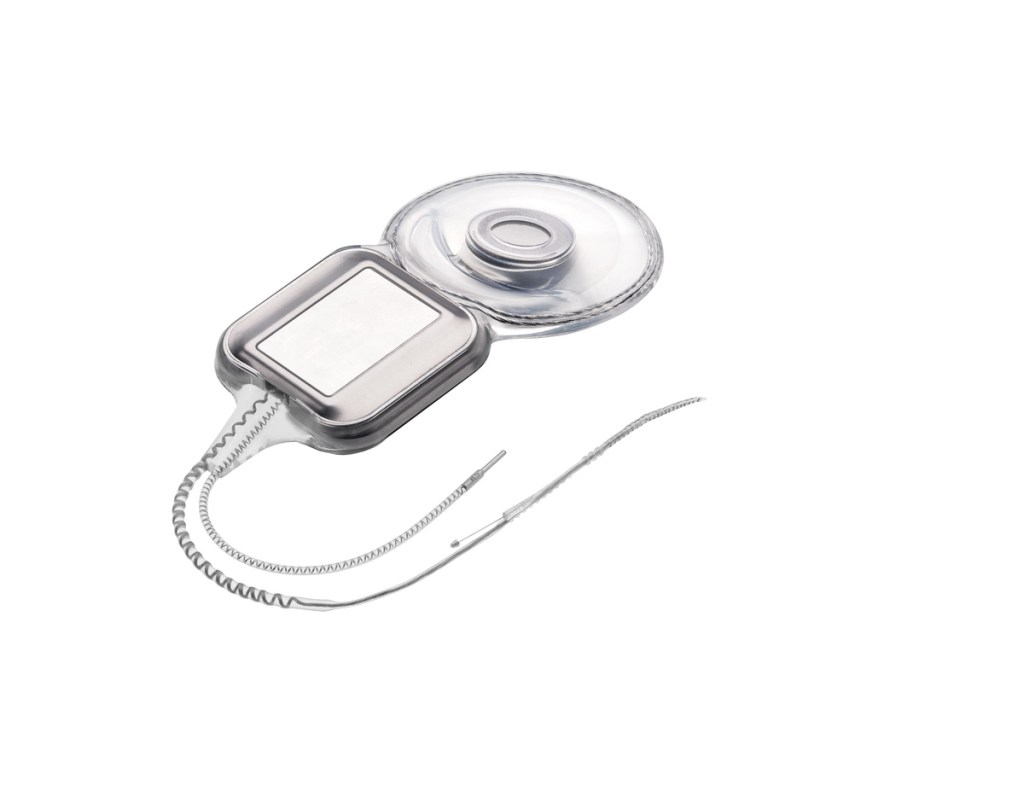
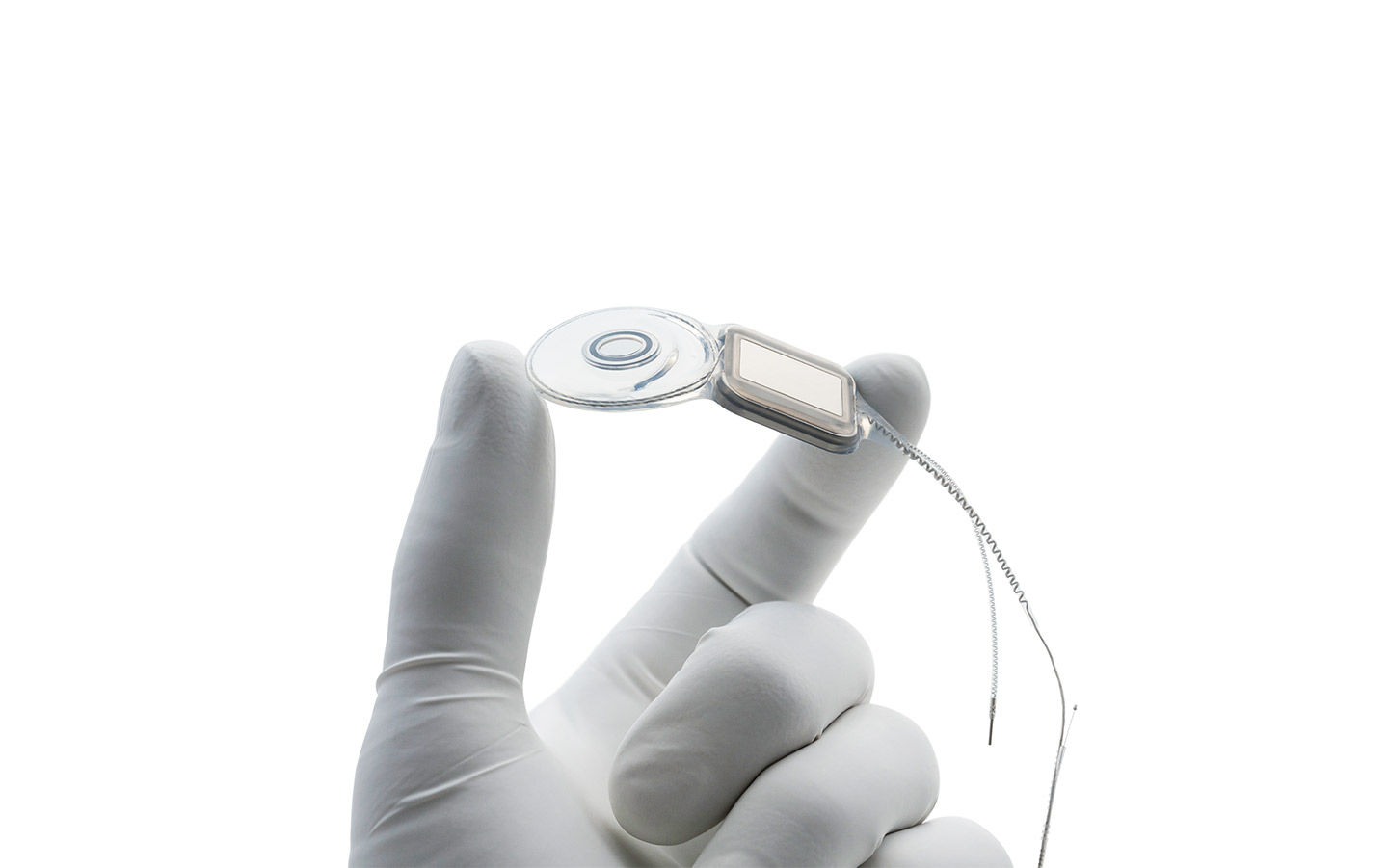
Jane turns to my husband and shows him what has been implanted into the cochlear of my inner ear. ‘The electrodes are 1/5 of the width of a hair strand, in size.’ My husband’s jaw drops to the floor. He shakes his head. It’s hard to comprehend.
worlds-thinnest-implant.jpg cochlear n7

‘Okay. Are you ready for today?’ she asks.

I nod, and see Anxiety double his size beside me. I want to grab a pen and stabbed him so he farts all the air out of him. My shadow, Meniere’s, sits in the corner and lowers his head. Tinnitus is doing pirouettes in a tutu. My life really is a circus!

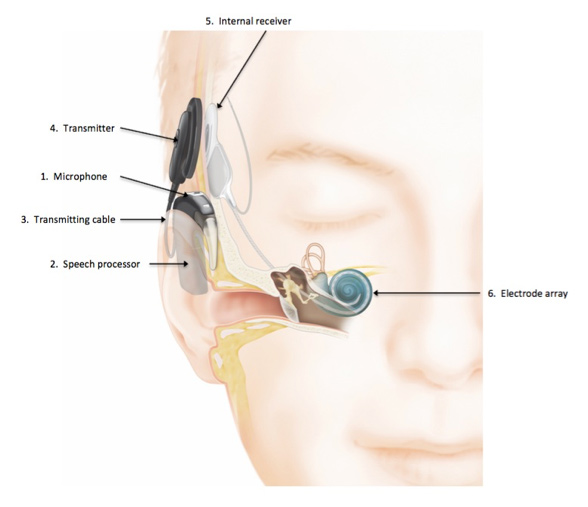
Jane places the external hardware over my ear, attaches the transmitting coil to the magnet that sits under my skin on my scalp, all the while explaining how it works. The enthusiasm in her voice tells me how much she loves her job. She is super excited about switching on my Cochlear Implant.

Once the processor and transmitter are in place, Jane sits on her chair. I’m knotting my fingers together as my skin burns. I frown. I can’t hear a thing in my Meniere’s ear. Nothing has changed. My tinnitus is still screaming at me.

She attaches a wire to the speech processor around my ear and taps a few keys on the computer. She smiles and says all the electrodes are looking good. Then she taps another key and I still. My heart starts to race and my eyes widen. I can hear a few crackles and pops.

‘Can you hear this, Julieann?’ she asks in her English accented voice.

Three beeps sound in my deaf ear. Then another three at a different pitch, and another three.

‘Yes,’ I say, my voice cracking. I cover my eyes as tears fall. I can’t stop from crying.

woman-641528__340

‘I can hear that,’ I add.

‘Good,’ she says and smiles. ‘Are you okay? There’s tissues behind you.’

‘Yes,’ I squeak. I grab a tissue and look over at my husband. His eyes are red-rimmed and wet. He has been a part of my journey. Twenty-five years of being a spectator to my incurable Meniere’s disease, where he could do absolutely nothing to help me, except clean out the vomit bucket time after time after time after I had vomited violently whilst spinning, or attending the emergency room when I was so dehydrated from vomiting that it was dangerous to my health, or when we thought the violent spinning wouldn’t end. We’ve been married for 31 years. He knows exactly what physical, emotional and psychological toll it has taken on me. He has seen me during my darkest days.

Yet, I spared him from witnessing the darkest of dark days when I no longer wanted to be here, when I wasn’t the colour of grey with an “e”, nor the colour of gray with an “a”, but the colour of black.

From my novel – ‘The Colour of Broken’ – Yolande, the main character is sitting in the chair, talking to her psychologist …

‘What colour are you?’

I took a deep breath and twisted my fingers together. My stomach tightened. I cleared my throat. ‘The colour of broken …’

Dr Jones was silent.

I stopped breathing when anxiety rose inside me like a wall of lava, about to incinerate me. It was freaking me out that she now knew this about me, and that she had not reacted to the description of my colour.

‘And what colour would that be?’ she finally asked.

I breathed out through my lips, slowly, steadily, counting to five in my head. ‘Gray with an “a”.’

‘There’s a difference?’

‘Oh, yes. Grey with an “e” is very different to gray with an “a”.’

‘How?’

‘Grey with an “e” is like the rain clouds. It’s melancholy, but an enjoyable melancholy that builds up until it releases, and then it’s like petrichor, the smell of the rain after warm, dry weather. Satisfying. Grey with an “e” is also when deep thought, philosophy and ponderings happen. Everyone should experience grey with an “e”, it helps to discover parts of you that you never knew existed, and it can vanish without leaving a bitter aftertaste.’

‘Tell me about gray with an “a”.’

I looked down at my knotted hands. ‘Gray with an “a” is … never enjoyable—it’s a very dark gray. It’s self-judgement, doom and gloom, forever hanging around and within. It wants to drag you into the dark abyss of the colour black, that absorbs all colours … the colour of self-condemnation, the colour of depression, the colour of death of the physical body.’

‘But not the spiritual body?’

‘No.’ I didn’t want to add any more to this conversation. It was painful to talk about.
‘So, me being a supposedly normal person, could I see your gray with an “a”?’
‘No. Because I mask it. And my gray with an “a” is not a plain gray with an “a”. It’s a crackled dark gray, with other colours that seep out … sometimes.’

‘What colours would they be?’

‘Drips of red for anger … specks of black—’ for self-hate, ‘—for my secret, blushes of pink for my love for Mia and my family, and explosions of turquoise that screams at me to love myself …’

‘That’s very insightful, Yolande. It’s highly intuitive. I’m curious … when you look at me, what colour am I?’

I hesitated before I spoke. I never told anyone the colour I had appointed to them for fear of them running from me. But Dr Jones, she was different, she would understand …

‘You are … magenta,’ I finally said. ‘It’s the colour of a person who helps to construct harmony and balance in life, hope and aspiration for a better world—mentally and emotionally,’ I said, and held my breath, waiting for her reaction.

She raised her eyebrows at me. ‘That’s an amazing gift to have in your mind toolbox, Yolande. Does it ever lie to you?’

Jane says, ‘I’m going to switch on each of the electrodes, one by one. Tap on the table when you hear the beeps.’

And so it begins. As I hear beeps, and tap on the table, hope rises in me like a flower blooming, facing its sun. I hear 21 out of 22 electrodes. Jane is ecstatic.

I am in shock and a tears trickles down my face. I can hear!

She looks at me and smiles. ‘Do you need a break?’

‘No,’ I say. I am beyond fascinated. In awe. What an age to live in with medical science, discoveries and inventions.

‘Let’s try some speech,’ she says. She taps a few more keys, and suddenly there are words in my Cochlear Implanted ear.

I start crying, wiping a thousand tears from my cheeks. ‘I can hear what you are saying,’ I sob. ‘But you sound like you have been inhaling helium!’ 

balloons-1012541__340

Jane’s face lights up with a smile. ‘You can! That is so wonderful!’ She is looking at me with a contagious joy.

She continues talking. I hear her chipmunk voice, but I can’t understand her. She keeps talking, and with my good ear, I understand that, as she keeps talking for another 10 minutes, my brain will start understanding better. She says the hearing part of the left side of my brain has been used for some other processes since I lost my hearing. And now it is shuffling, trying to find my speech and sound memories, to make sense of what it is hearing. It is using auditory pathways and memories, and must work at a higher level to pull together the information to have bi-normal hearing. The brain must code all the information coming in.

And then suddenly, like a light has been turned on, I can understand much of what she is saying, as words. Not all of them, but quite a few. For the words I don’t get, my mind fills in the blanks with words to match the meaning of what she is saying.

I am speechless.

She turns to my husband. ‘Say something to Julieann.’

I look at him and smile. 

He smiles back. I see his lips move. I wait for the sound of his chipmunk voice. I swallow and my skin burns. His voice doesn’t even register as a chipmunk. I can’t hear his voice at all!

His eyes widen in panic.

Jane jumps in quickly in a calm and encouraging voice. ‘That’s okay. It will happen.’ 

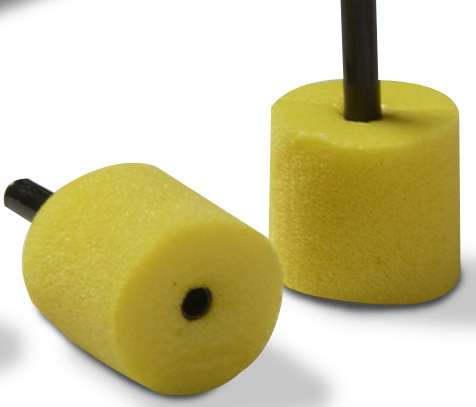
Jane reaches over and pulls out a foam ear plug and puts it firmly into my good ear.
c807010-1k

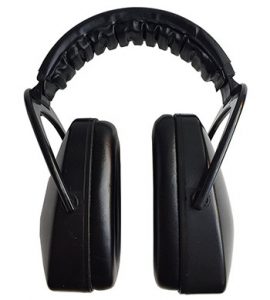
Then she places a hearing muff over my good ear.
TenTen-TI-All-Purpose-Earmuffs-in-Black-270x300

I have lost all hearing that I have been relying on to hear and understand conversation.

Jane continues talking like we are in a normal everyday conversation. I stare at her, trying to get what she is saying. It is so hard. Her voice is sound, but not words.

82766906_2666631973458317_2310843338988716032_n

I focus harder, and slowly some of the sounds become words.

She stops and asks me a question. I stare at her blankly. I am trying to figure out what she has asked. I am trying to piece together what words I understood of the question, and with the missing words, I am working on using any visual cues from what she is doing, plus I am trying to read her lips.

Finally, I answer with a smile. ‘Yes. I can hear you. And your speech is starting to sound like words.’ 

‘Well done!’ she says. And I understand her chipmunk voice perfectly. She then explains about the delay happening in my brain with the speech and understanding. She knows how hard I am working to try and understand the new input into my brain.

‘Can you hear this?’ she rattles a piece of paper in front of her.

‘Yes,’ I say, although it doesn’t sound like paper, but an unrecognisable noise.

She stands and goes behind me and I hear another noise. I nod my head. I can hear it. She shows me a tissue that she rubbed in her palms. I am absolutely gobsmacked. She asks me to repeat words. I get most of them right, guessing some of them. Then Jane covers her mouth so I can’t read her lips. I hear her, but not clearly enough and get some of the words wrong.

She turns to my husband and asks him to speak to me again, and he does.

I still can’t understand him, at all.

She tells him to slow down and breaks his sentences into chunks, and not to run the words together.

He tries again.

I smile at him and say, ‘No. You don’t sound like Darth Vader.’ He smiles. He’s happy now.

10fc09f37a7ade12eb1e7763a06465af

Jane grins. She goes through the Cochlear Australia backpack that is mine to keep. It is filled with bits and pieces for care of my Cochlear Implant external hardware, plus other bits and pieces and chargers and batteries and paraphernalia. She shows me how to use everything, and then asks me to do the same. It fits in perfectly with my teaching philosophy.
31093-Confucius-Quote-I-hear-and-I-forget-I-see-and-I-remember-I-do-and

After two hours of intense concentration, she asks in her chipmunk voice, ‘Is there anything you want to ask me before you leave today?’

I think for a moment. I’ve had way too much information overload. My brain is working double time and I am tired. ‘Is it okay to wear my new hearing to the Big Bash Cricket tonight?’

Jane laughs. ‘Yes. If you like. It will be very noisy though.’

images.jpg bbl

My husband and I leave her office, take the elevator and walk out into the real world. I stop for a moment, wondering if I can hold my emotions together. The impact of activation has been overwhelming. Two hours ago I had walked into Jane’s office deaf in one ear. Now I walk out, hearing with two ears.

The thought is profound.

My husband looks at me. ‘Are you okay?’ His eyebrows are pulled together. For a moment, I wonder how hard this has been on him? 

‘Yes.’ I blink away tears, then start to walk again. 

The world is noisy. Terribly noisy. I hear everything in a tinny, echoing, chipmunk way. My brain is detecting two lots of hearing with everything – my deaf, now hearing Meniere’s ear, hearing conversations of chipmunk voices, and chipmunk city noises of its own while I listen with my good ear to the same thing with normal hearing. The two sides of my brain haven’t synced yet. They are acting independently of each other. 

I laugh to myself. How privileged am I to be able to experience this oddity? My heart overflows with gratitude.

I take confident steps into my new normal. Into my future. Bilateral hearing. Something I haven’t had for 15 years. Something I thought would be impossible.   

Creative background, the human brain on a blue background, the hemisphere is responsible for logic, and responsible for creativity. different hemispheres of the brain, 3D illustration, 3D render 

Before I go to bed, I remove the external hardware. Immediately my ear feels full and profoundly deaf. My tinnitus returns. But that’s okay. That’s my other normal. Two of me.

I reflect on my most extraordinary day –  five times I have stilled at big moments:

  1. When the Cochlear Implant was activated and I could hear! My mind was blown!
  2. When I heard music. I cried so hard my husband wanted to pull over the car to make sure I was okay.
  3. I located the direction of a sound. I haven’t been able to find where a sound is coming from for 15 years. This ramifications of this for me in the classroom will change my stress level as I teach. 
  4.  I heard a man’s lower chipmunk voice while waiting to catch the bus after the cricket …

The cricket … I think back to the Big Bash Cricket and smile. On entry, I was pulled aside for a security check, the metal detector waved over and around me – it always happens to me at airports too. It’s become a running joke with my family. I held my breath, wondering whether my Cochlear Implant would set the detector off, but it didn’t. 

And Jane was right. The Big Bash was very noisy. But it was so worth it. And I’m taking marshmallows to toast in the flame next time!

And number 5 … I entered our walk-in wardrobe. As I stood there trying to decide what to wear to the  cricket, I froze. Something was wrong. Very wrong. My heart raced and I started to panic. I couldn’t hear anything. Not even from my “good” ear. I felt for the Cochlear Implant external hardware. It was still there. I ran my hands over my arms to make sure I was still me, and I wasn’t dying – seriously!

Something wasn’t right.

I could hear absolutely nothing. Nothing! I spoke to check that the Cochlear Implant was still working. Maybe the power pack had gone flat? I heard my own voice as well as my chipmunk voice. Two of me. I stopped and listened again in the stillness of my walk-in wardrobe.

There was silence. Utter. Beautiful. Silence. No tinnitus. After a quarter of a century. I closed my eyes and let my tears fall, covered my mouth and ugly cried. 

night-4489561__340

The gift of hearing. I am so beyond thankful. I have no words to explain what it feels like to have the Cochlear Implant activated and to hear again. My faith. Health professionals. Family. Support of friends and Facebook groups. It takes a tribe.

The Cochlear Implant has changed my life. On activation. It has made the impossible, possible. Meniere’s disease may not be curable, yet, but we can take back from Meniere’s what is has taken from us. 

woman-591576__340

Next blog – learning to hear again …

Julieann Wallace 300 dpi

Julieann Wallace is a best-selling author, artist and teacher. She is continually inspired by the gift of imagination, the power of words and the creative arts. She is a self-confessed tea ninja, Cadbury chocoholic, and has a passion for music and art. She raises money to help find a cure for Meniere’s disease, and tries not to scare her cat, Claude Monet, with her terrible cello playing. 

https://www.facebook.com/julieannwallace.author/

https://www.julieannwallaceauthor.com/

Meniere’s Journals are available for pre-order at Lilly Pilly Publishing  & Amazon (30 Jan. 2020). Profits are donated from ‘The Colour of Broken’ and the Journals to Meniere’s research to help find a cure.

About this blog …

My Shadow, Meniere’s, is not just about the physical aspect of a Cochlear Implant – you can research about them online. I am sharing the human side of the journey towards a Cochlear Implant – feelings, appointments, the process, apprehensions, successes, highs and lows as I step into the next chapter of my Meniere’s journey.

I am mindful of those who also have incurable diseases or are walking the path of a diagnosis that is life changing. My blog never aims to undermine the severity of anyone else’s illness, disability or journey. We all deal with life with different tolerances, attitudes and thresholds. ‘My Shadow -Meniere’s’ is my journey. It is my hope that it can help others with Meniere’s disease, or hearing loss, or simply when life has a plot twist.

I also acknowledge those before me, who have already had a Cochlear Implant. Your experiences, advice and suggestions are welcome.

It Will Change Your Life #9

Wednesday, 27th November – balance therapy

Balance

/ˈbal(ə)ns/

noun: balance; plural noun: balances

1. an even distribution of weight enabling someone or something to remain upright and steady.

In 2004 I made a conscious decision to have my balance cells destroyed. I couldn’t do the horrendous, unpredictable, debilitating, violent, torturous, four-five hours of insane vertiginous spinning and nausea and vomiting and staring at one focus spot for the entire four-five hours anymore. I was more than done. So when my ENT offered to inject gentamicin into my middle ear to kill off the balance cells, halting the vertigo, I didn’t think twice.

Was the gentamicin my first port of call? Absolutely not. I had already had Meniere’s disease for 9 years and  tried:

* Low salt diet

* Diet elimination

* Stemetil

* Diuretic

* Serc

* Sound therapy

* Acupuncture

* Prednisone

* Grommet

* Gentamicin. The gentamicin worked. One shot injected in through my grommet with some bicarbonate of soda and sterile water mixed with it to make it penetrate better.

The procedure took place at my ENT’s procedure room in the city. I lied on my right side while he injected the concoction in through my grommet.

‘Isn’t that hurting?’ he had asked me as he infused the mixture into my middle ear.

‘Yes,’ I had said, ‘but I am envisaging it destroying the Meniere’s in my middle ear. It’s a mind visualisation technique I taught myself when I was young, when I had growing pains.’

I remained on my right side, left ear facing the ceiling for 20 minutes after the procedure, then went home, where I went to bed and rolled onto my right side to keep my left ear up. I slept for 2 hours.

The next day I had bouncy vision when I walked. It has a term – oscillopsia. And was a side effect of having my balance cells destroyed. It was a good sign that the gentamicin was working, my ENT had said.

https://www.healthline.com/health/oscillopsia

Three weeks later I was back teaching full-time, learning to trust that I wouldn’t have anymore vertigo attacks. Fifteen years later, I am still vertigo free.

Choosing to destroy my balance cells to stop the vertigo was not a hard decision. Meniere’s disease had total control on my life, and I wanted it back. There was a risk of losing all of my hearing, but that was a preferred choice to suffering through the torturous vertigo anymore. The gentamicin stopped the vertigo.

I gained quality of life again – socialising, working, independence, driving, and slowly became more confident in my life.

I lost a little of my hearing, but not a lot.

If my vertigo returned, would I do it again?

Yes.

When I joined global Meniere’s groups, I discovered that others who had had this procedure done, were having balance therapy. I was shocked that there was even a thing called balance therapy. When I had my procedure done in 2004, balance therapy didn’t exist where I lived. I had to learn to walk again, finding my new balance, learning my limitations as I went. No help.

Today, I sit in the reception of the Vestibular Therapist’s office, with a referral from my Cochlear Implant surgeon.

Mandy greets me with a smile. The universal language that puts you at ease. Curiosity, and my shadow, Meniere’s, follow her to her office. I sit on a chair and she questions me about my Meniere’s history, writing notes.

‘I’m an concerned about your imbalance after 15 years. You should not have that deficit anymore. It may point to another problem you have. Do you have Meniere’s in your right ear,’ she asks.

‘No,’ I say. Anxiety joins us in the room.

She frowns at me. ‘Let’s do some tests and see what is going on.’

She asks me to balance with my eyes closed for 30 seconds. I pass this test. 😊

She asks me to walk across the room, heel to toe, heel to toe, heel to toe. I fail miserably. Two steps and I fall over. ☹

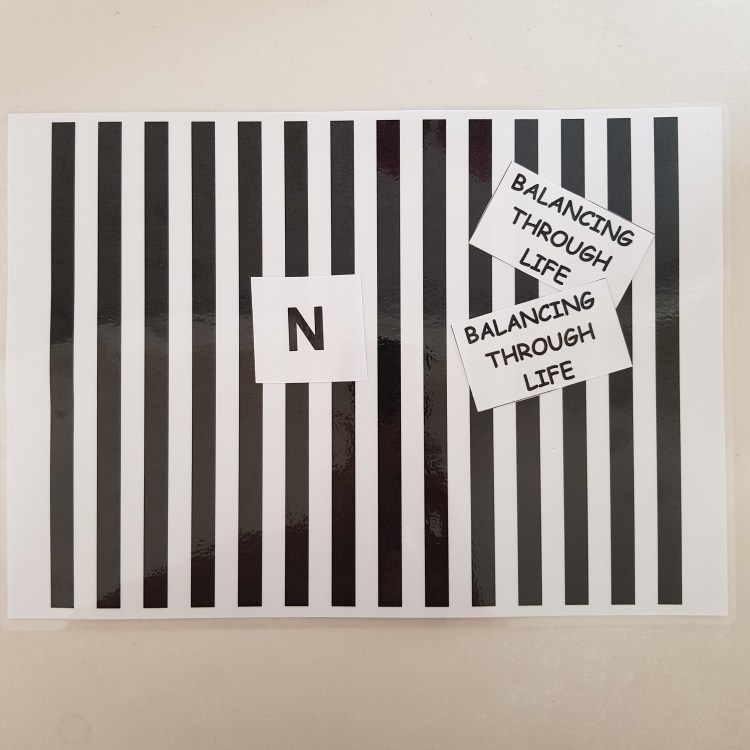
Then she asks me to look at the letter “N” on the wall, and moves my head left to right over and over and over, quickly, then asks me whether the letter moves. Yes. She repeats that test, but moves my head up and down over and over and over, quickly, asking whether the letter “N” moves. Yes.

Mandy sits close to me on my left. I have to sit at a 45-degree angle to her and focus on her nose. She then moves my head left to right over and over and over again, quickly. ‘That’s not too bad,’ she says.

She repeats the test, but this time she sits on my right side. I try to keep my focus on her nose as she moves my head left to right over and over and over again, quickly. I can not keep my focus on her nose at all. ‘Yes. That’s the gentamicin damage in your left ear,’ she says.

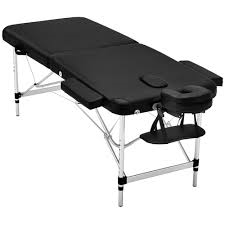
I sit on a massage table.

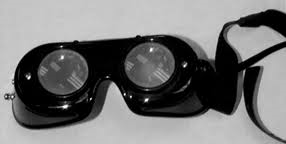
Mandy places some goggles over my eyes. She wants to see if I have Benign paroxysmal positional vertigo (BPPV). She does the Epley manoeuvre. No vertigo or eye movement evident.

Mandy stands and talks me through some vestibular exercises for neuro-plasticity – the brain relearning balance. I cannot express how happy I am to get these exercises. They will help me no end.

Except, each of the exercises make me feel insanely nauseous. I blow a controlled breath through my lips. I’m an expert at it.

‘Do you want to stop?’ she asks me during each exercise.

‘No,’ I say. ‘I can do this.’ And I get through to the end.

‘Can I take stemetil when I feel nauseous with the exercises?’ I ask.

‘No,’ she says. ‘It’s a vestibular suppressant, and your brain won’t learn the new balance pathways and desensitisation.’

‘What about Serc?’ I ask.

‘No. Don’t take Serc either,’ she says.

‘But it is only supposed to increase the blood floor in the inner ear,’ I say.

She shook her head. ‘No. That’s what they want you to believe. It a vestibular suppressant, like stemetil – it’s good for Meniere’s, but not other vestibular conditions.’

‘Some doctors say it does nothing for Meniere’s,’ I say, frowning, recalling how my own ENT and the Cochlear Implant ENT scoffed when I mentioned Serc. I wondered why the makers of Serc would say it increases blood flow, while the vestibular therapist, who specialises in vestibular retraining says it’s a suppressant. I know for a fact that many Meniere’s people say Serc keeps their vertigo at bay.

‘From the conferences I have attended, it does indeed work for many Meniere’s patients, not all though,’ she adds. Yeah, I was one who it didn’t work for, I think.

I leave her vestibular therapy room, which is in a really old house that is not level. I catch my balance as I walk through it. My shadow, Meniere’s, laughs at me. I am armed with vestibular exercises, and an appointment for next week.

I have now completed all of my necessary Cochlear Implant work-up appointments.

Next stop, the Cochlear Implant. December 19th.

It Will Change Your Life #8

Wednesday 20th November – final expectations with cochlear audiologist

I’m feeling super nervous today. Anxiety has grown bigger than me, and my shadow, Meniere’s, is using it as a punching bag while tinnitus whistles. I have an appointment with the Cochlear Implant audiologist to discuss “final expectations”. This is my do or die day. My “yes, let’s do it day”, or, “I’ve changed my mind, I’ve decided not to go ahead with the procedure day”.

Do I really want to take the step into the bionic hearing world? Am I brave enough? I just want to sit and cry.

I suck in a deep breath. Calm, I tell myself. It will be okay. Be still and know. Faith.

My daughter sits beside me in the waiting room. We’re thirty minutes early. I flip mindlessly through one of the 50 million magazines displayed with obsessive spacing. I almost don’t want to mess up their perfection. Anxiety sits beside me and taps me on the arm. I shake my head at it while tinnitus holds on for dear life. I’m okay. My shadow, Meniere’s, is jumping from seat to seat, trying to catch my attention. I ignore it.

Jane greets me with a smile. The universal language that puts you at ease. Anxiety, tinnitus, deafness, my shadow, Meniere’s, and I follow her to her office.

We sit with a sigh and Jane turns to me. ‘Today is our ‘final expectations’ discussion.’ It’s all about ensuring that I know what I am signing myself up for.

She picks up her blue pen, and starts checking items off her checklist, questioning me for my understanding of each point:

– Technical aspects

– The Cochlear Implant manufacture of my choice – Cochlear or MED-EL – I choose Cochlear – based on conversations with many CI recipients.

– Ear fitting

– Care of the outer device of the Cochlear Implant

She stops talking and looks at me. ‘All good so far?’

‘Yes,’ I answer.

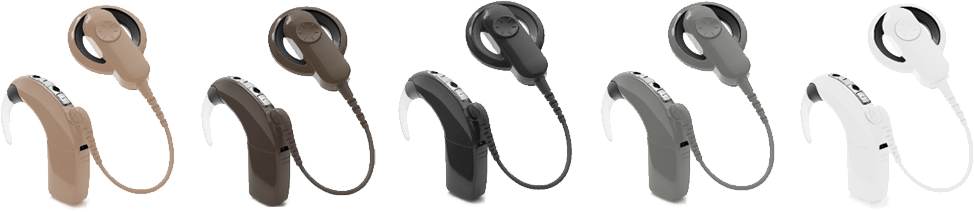
She nods, then pulls out colour samples, like choosing colours for a car.

I gaze down at them and narrow my eyes. Skin colour. Brown. Black. Grey. White.

‘Which colour would you like?’

I lift my chin a little as I visualise each of them on my head. ‘White, please.’

‘Really?’ Jane looks at my dark wavy hair.

‘Yes. Black is the colour of depression. I don’t like gray, skin colour or brown. White for me, is a symbol of a new start. New beginnings. Hope.’

‘Okay. Just email me if you change your mind,’ she says as she takes note of the colour I have chosen.

‘Sure,’ I say, knowing that I won’t be changing my mind.

I am certain the meeting is now over. I have survived yet another appointment. As taxing as they are, the appointments are important. I feel like they are preparing my mind for the change that is to come. If I think too much about the entire process, I wonder how much of a change to my life it will make.

Jane moves her chair backward and stands. ‘I’ll be back in a moment.’ She leaves the room.

I look at the desk at the CI implant that will be inserted under my scalp, a hole drilled in my skull, and the electrodes fed inside my cochear, and am struck with intense panic, my mind saying, ‘What are you doing? What. Are. You. Doing?’

I am filled with an incredible doubt that nearly cripples me. Do I really need a CI? My shadow, Meniere’s, is climbing the large glass windows like Spiderman and laughing. My tinnitus turns up the volume on a new noise, louder than the rest.
I close my eyes and focus on my good ear. Yes. It feels different. I am losing my hearing in my good ear. The Cochlear Implant is the right choice.
Jane returns with some paperwork. I quickly switch into a cool, calm, composed mode after my intense moment of panic.
‘I need to let you know that if you were going through the public health system, you wouldn’t be a candidate for a CI as your hearing in you right ear isn’t bad enough.’

My eyes widen for a moment. I feel like I am cheating the system with my private health insurance. What am I doing?

‘I need to talk to you about the bad things about the Cochlear Implant.

There’s bad things? I think.

‘Any residual hearing that is left in your left ear may no longer function.’

I frown. ‘But I can’t hear anything out of it. So, don’t the benefits outweigh that risk?’

Jane nods and smiles at me, then says, ‘For some recipients, their tinnitus gets worse.’

I nod. Can this really be true? My five noise of impossibly loud tinnitus, louder than anything in my life, no matter what my environment is, couldn’t get worse, could it? My tinnitus screams and shouts while doing the happy hoola dance. I flick it a backhand and it behaves.

Janes gives me a smile. ‘You are the person with the longest time of deafness to go through our clinic with activation.’ She seems kinda excited by that.

Great, I think. ‘I always like a challenge,’ I say. I change the subject. ‘The technology of the CI blows my mind. It’s such a great age to live in. A friend of mine lost his eye while surfboarding and told me that sight for the blind is being developed based on the cochlear technology.’

Jane smiles and nods her head. ‘There are companies working on a vestibular type of device for vertigo, based on the cochlear implant technology.’  

A vestibular pacemaker, I think. My skin prickles. Happiness for my fellow Menierian’s and other vertigo sufferers fills me until I overflow with joy. I can’t imagine a world without vertigo. But maybe it is getting closer.

Jane looks around her desk at her paperwork. ‘Okay – your surgery date is the 19th of December, and switch on of your Cochlear Implant is the 7th of January. I will organise for delivery of the Cochlear Implant to your surgeon and then everything is good to go. Any questions?’

I sit for a moment in silence. My shadow, Meniere’s, anxiety and tinnitus all fold their arms and look at me. ‘You have covered everything exceptionally well. I don’t have any questions.’

We both stand and leave the room. This is really happening.

Claire smiles at me when I enter the reception room. We walk to the car and she tells me a story about an old lady who kept staring at her. The old lady finally spoke up. ‘What are you doing on your phone?’

‘I’m reading the news,’ Claire had said.

The old lady nodded and said to Claire, ‘I was on a bus with my friend. We were the only ones without phones. The bus driver said over the speaker, “If you don’t put away your phones, I am going to pull the bus over and stop”.’

Claire said to me, ‘I find that hard to believe.’ We laughed.

Next appointment – Wednesday, 27th November – balance therapy

Meniere's and me

It Will Change Your Life #1

Monday, 21.10.19

The day is overcast, mirroring my mood. Today, I go for a Cochlear Implant “work-up” for my left ear. I’ve been considering a Cochlear Implant for a while, but have bathed in the delusion that somehow, my hearing will come back. But of course, it won’t – it’s just my eternal hope that floats around me as I journey through the incurable Meniere’s disease.

My symptoms started in 1995. Ear fullness, like I had been swimming and still had water stuck in my ear canal. Bouts of unpredictable, violent vertigo. Tinnitus. And then came the hearing loss. Gradually.

I was 28. ‘Meniere’s is more common in men over 50,’ my ENT told me. Online information at the time backed up the statement.

Today, I sit looking out the window at the dark, heavy clouds, painting the state of my heavy heart and dark emotion. I’m 24 years into my Meniere’s journey, yet I’m filled with tingles of anxiety travelling over my skin like waves, with one big question bouncing around in my mind.

If I have a Cochlear Implant, will the disabling vertigo of Meniere’s disease return?

And I’m not just talking about being ‘dizzy’. The vertigo of Meniere’s disease for me was the most abhorrent, violent, room spinning. Totally debilitating. Hold on to the floor even though you are already on lying on the floor, stare at one spot on the wall for four or five hours until the spinning subsides. Beyond exhausting.   

And let’s not forget the relentless, vicious puking that feels like you’re about to turn inside-out, dehydrating the body so much you need to be transported to emergency at the hospital.

If you ever want to know how vertigo of Meniere’s feels, sit on an office swivel chair and get someone to spin you around as fast as they can, non-stop. Imagine not being able to stop it. For hours and hours and hours. Then imagine never being able to predict when vertigo will hit – because when it does, you are stuck wherever you are, and you absolutely can not move, as it will make the spinning impossibly worse. This is the vertigo of Meniere’s. Hell.

In 2004 I made the choice to destroy the balance cells in my left ear to stop the debilitating, violent vertigo. The bottle of gentamicin was now my hope. My ENT injected it into my middle ear.

Imagine for one moment, having to make the choice about destroying your balance cells. Balance. Yeah – that thing. Something you never even think about. Your body just does it for you.

I relearned my balance and retaught myself to walk with a new normal, using my eyesight as my guide for balance. But compared to the unpredictable vertigo, the destruction to my vestibular system was an answered prayer. It changed my life. It gave me my life back. With physical limitations. I was no longer spiralling down into the darkness of the Meniere’s prison where there is no escape.

But back to my question – if I have a Cochlear Implant, will the disabling vertigo return? And if it does, what does it mean for my life after living vertigo free for 15 years? 

eyeandear.org.au Adapted from images courtesy of Cochlear Ltd

I’m taking a risk. I know that. The thought of having vertigo again terrifies me. My vertigo years were a very, very dark emotional place to be. Once upon a time I had a life and lived it fully – working full-time in a job I loved, physically able to do what I pleased, and engaged in a social life. I was happy. Then Meniere’s hit, and took it all away. Every waking moment was lived in fear of a vertigo attack. Sleep was not even a safe place. I would wake in the night, spinning violently, unable to close my eyes for four or five hours until it stopped.

I need answers from my ENT and my Otologist whom I am yet to see. Can my Meniere’s vertigo return due to the Cochlear Implant?

I walk out the front door and lock it behind me, anxiety joining me for the Cochlear Implant work-up appointment. Anxiety. We have been friends for a long time. Introduced to each other by my dark, dark shadow, Meniere’s disease.

Friends already fitted with Cochlear Implants tell me it will change my life … I sigh and wonder which way it will change my life.

Just breathe, I tell myself …

To be continued.

Julieann is a multi-published author and artist who is continually inspired by the gift of imagination and the power of words. When she is not disappearing into her imaginary worlds as Julieann Wallace – children’s author, or as Amelia Grace – fiction novelist, she is working as a secondary art teacher, editor, book designer, and book magician for other authors. Julieann’s 7th novel ‘The Colour of Broken’ with a main character with Meniere’s disease hit #1 on Amazon in its category twice – all profits are donated to Meniere’s research. Julieann is a self-confessed tea ninja and Cadbury chocoholic, has a passion for music and art, and tries not to scare her cat, Claude Monet, with her terrible cello playing.

The Color of Broken: Grace, Amelia: 9780648084662: Amazon.com: Books

The Colour of Broken: Grace, Amelia: 9780648084624: Amazon.com: Books

Amazon.com: Daily Meniere’s Journal (9780648424451): Wallace, Julieann: Books