Learning to Hear

Fatigue
/fəˈtiːɡ/
noun
noun: fatigue; plural noun: fatigues
1.
extreme tiredness resulting from mental or physical exertion or illness.

bear-3663438__340

December 19, 2019, I had Cochlear Implant surgery. On the 9th of January, 2020, my Cochlear Implant was “activated”. My world of deafness, including the five roaring noises of tinnitus changed. I could hear again for the first time in 15 years!

My cochlear audiologist, Jane, warned me, ‘You will have mental fatigue from hearing again with your left cochlear.’

Yeah nah, I thought. I’ve had the repugnant, revolting, repulsive Meniere’s disease for 25 years now, three children and a teaching workload. I know exactly what mental and physical fatigue is like. The simple act of hearing again will leave me fatigued? I doubt it!

Yeah Nah. Australian slang for no.

Yeah nah

I enter the outside world. Reality. I’m no longer safe and comfortable in the confines of the quiet audiologist’s office, where Jane’s reassuring smiles, encouragement and support, wrap me like a warm blanket on a freezing winter’s night.

My eyes widen. It’s so NOISY! I hear EVERYTHING! But not the sounds of normal hearing, but of cochlear implant hearing, newly activated: chipmunk voices, robotic representations of every sound my 22 electrodes can feed into my auditory nerve. I am told that what I hear now, is not what I will hear as I continue to attend “mapping” sessions. Sounds will become more “normal-ish”, like what I hear with my right ear.

After 10 hours of wearing my processor, I am fatigued. Like a flat battery.
Nah Yeah. Yes. Jane was right. Again.

nah yeah
My cochlear audiologist, Jane, explained, ‘It’s like you’re a baby again. You hear absolutely everything. For your left hearing centre in your brain, every noise is new, and it’s working hard to work out whether to file the sound as an important sound, or background sound, that it doesn’t have to pay attention to. And the two hemispheres of your brain are not working together, yet. But they will.’

Creative background, the human brain on a blue background, the hemisphere is responsible for logic, and responsible for creativity. different hemispheres of the brain, 3D illustration, 3D render
source 123rf

She continued. ‘When you lost your hearing 15 years ago, your brain re-used that area for something else, and now that it is stimulated again with hearing, your brain is madly reorganising what parts of your brain are used for what. It is also accessing your auditory memories to match up to what you are hearing now.’

brain_senses-56ccf48f5f9b5879cc5ba0e6

WOW! Mind blown. Not only by the fact that I can hear again, but by the knowledge that the brain has a design and intelligence that is beyond human understanding.

My cochlear implant journey has been a road filled with new learnings, revelations and knowledge. My erudite self is soaking up anything and everything about hearing, the cochlear and the brain. The more I learn, the more I realise what an amazing piece of architecture our brain is, one that cannot be replicated. It’s complexity and control of our bodies are both extraordinary and intriguing.

When Jane was talking about my brain reorganising, she was talking about brain plasticity, or neuroplasticity, which I was already familiar with from having to relearn my balance after having my balance cells destroyed in my left ear to stop the horrendous, violent, vertigo of Meniere’s disease.

“Neuroplasticity or brain plasticity, is defined as the ability of the nervous system to change its activity in response to intrinsic or extrinsic stimuli by reorganizing its structure, functions, or connections. A fundamental property of neurons is their ability to modify the strength and efficacy of synaptic transmission through a diverse number of activity-dependent mechanisms, typically referred as synaptic plasticity”

https://www.physio-pedia.com/Neuroplasticity

Principles of neuroplasticity

The brain wastes nothing…

So, my left hearing centre is like a baby again. It’s got me thinking. If I was a baby again, would I choose the same path in life. For instance, if I didn’t excel in sport, and I didn’t receive a head trauma just in front of my left ear that I believe caused my Meniere’s,  would I still have Meniere’s disease in my lifetime? Would I still be me?

Next blog – Learning to Hear is like Learning to Read

Julieann Wallace 300 dpi

(Dip T., B Ed., Author, Artist, Teacher, Tea Ninja, Chocoholic, Papercut Survivor)

Julieann Wallace is a bestselling author, artist and teacher. She is continually inspired by the gift of imagination, the power of words and the creative arts. She is a self-confessed tea ninja, Cadbury chocoholic, and has a passion for music and art. She raises money to help find a cure for Meniere’s disease, and tries not to scare her cat, Claude Monet, with her terrible cello playing.

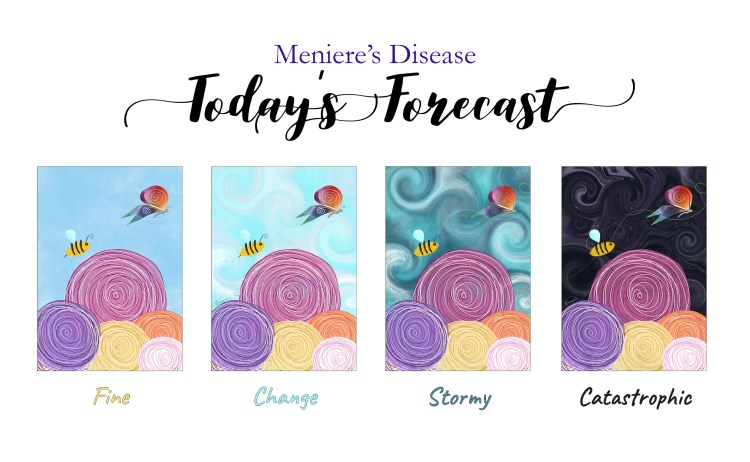
MD weather forecast

About this blog …

My Shadow, Meniere’s, is not just about the physical aspect of a Cochlear Implant – you can research about them online. I am sharing the human side of the journey towards a Cochlear Implant – feelings, appointments, the process, apprehensions, successes, highs and lows as I step into the next chapter of my Meniere’s journey.

I am mindful of those who also have incurable diseases or are walking the path of a diagnosis that is life changing. My blog never aims to undermine the severity of anyone else’s illness, disability or journey. We all deal with life with different tolerances, attitudes and thresholds. ‘My Shadow -Meniere’s’ is my journey. It is my hope that it can help others with Meniere’s disease, or hearing loss, or simply when life has a plot twist.

I also acknowledge those before me, who have already had a Cochlear Implant. Your experiences, advice and suggestions are welcome.

 

It Will Change Your Life #8

Wednesday 20th November – final expectations with cochlear audiologist

I’m feeling super nervous today. Anxiety has grown bigger than me, and my shadow, Meniere’s, is using it as a punching bag while tinnitus whistles. I have an appointment with the Cochlear Implant audiologist to discuss “final expectations”. This is my do or die day. My “yes, let’s do it day”, or, “I’ve changed my mind, I’ve decided not to go ahead with the procedure day”.

Do I really want to take the step into the bionic hearing world? Am I brave enough? I just want to sit and cry.

I suck in a deep breath. Calm, I tell myself. It will be okay. Be still and know. Faith.

My daughter sits beside me in the waiting room. We’re thirty minutes early. I flip mindlessly through one of the 50 million magazines displayed with obsessive spacing. I almost don’t want to mess up their perfection. Anxiety sits beside me and taps me on the arm. I shake my head at it while tinnitus holds on for dear life. I’m okay. My shadow, Meniere’s, is jumping from seat to seat, trying to catch my attention. I ignore it.

Jane greets me with a smile. The universal language that puts you at ease. Anxiety, tinnitus, deafness, my shadow, Meniere’s, and I follow her to her office.

We sit with a sigh and Jane turns to me. ‘Today is our ‘final expectations’ discussion.’ It’s all about ensuring that I know what I am signing myself up for.

She picks up her blue pen, and starts checking items off her checklist, questioning me for my understanding of each point:

– Technical aspects

– The Cochlear Implant manufacture of my choice – Cochlear or MED-EL – I choose Cochlear – based on conversations with many CI recipients.

– Ear fitting

– Care of the outer device of the Cochlear Implant

She stops talking and looks at me. ‘All good so far?’

‘Yes,’ I answer.

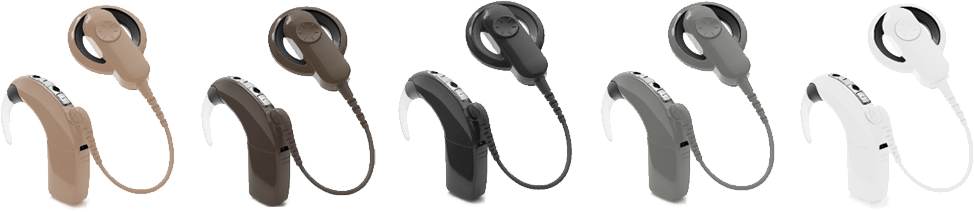
She nods, then pulls out colour samples, like choosing colours for a car.

I gaze down at them and narrow my eyes. Skin colour. Brown. Black. Grey. White.

‘Which colour would you like?’

I lift my chin a little as I visualise each of them on my head. ‘White, please.’

‘Really?’ Jane looks at my dark wavy hair.

‘Yes. Black is the colour of depression. I don’t like gray, skin colour or brown. White for me, is a symbol of a new start. New beginnings. Hope.’

‘Okay. Just email me if you change your mind,’ she says as she takes note of the colour I have chosen.

‘Sure,’ I say, knowing that I won’t be changing my mind.

I am certain the meeting is now over. I have survived yet another appointment. As taxing as they are, the appointments are important. I feel like they are preparing my mind for the change that is to come. If I think too much about the entire process, I wonder how much of a change to my life it will make.

Jane moves her chair backward and stands. ‘I’ll be back in a moment.’ She leaves the room.

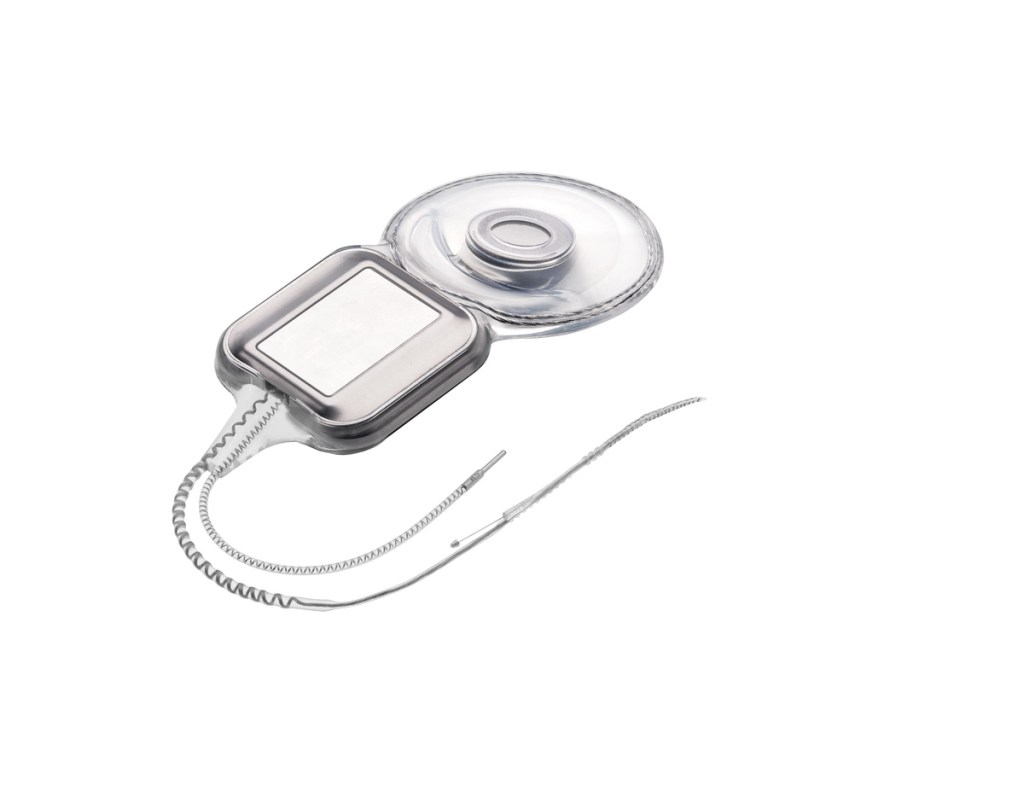
I look at the desk at the CI implant that will be inserted under my scalp, a hole drilled in my skull, and the electrodes fed inside my cochear, and am struck with intense panic, my mind saying, ‘What are you doing? What. Are. You. Doing?’

I am filled with an incredible doubt that nearly cripples me. Do I really need a CI? My shadow, Meniere’s, is climbing the large glass windows like Spiderman and laughing. My tinnitus turns up the volume on a new noise, louder than the rest.

I close my eyes and focus on my good ear. Yes. It feels different. I am losing my hearing in my good ear. The Cochlear Implant is the right choice.

Jane returns with some paperwork. I quickly switch into a cool, calm, composed mode after my intense moment of panic.

‘I need to let you know that if you were going through the public health system, you wouldn’t be a candidate for a CI as your hearing in you right ear isn’t bad enough.’

My eyes widen for a moment. I feel like I am cheating the system with my private health insurance. What am I doing?

‘I need to talk to you about the bad things about the Cochlear Implant.

There’s bad things? I think.

‘Any residual hearing that is left in your left ear may no longer function.’

I frown. ‘But I can’t hear anything out of it. So, don’t the benefits outweigh that risk?’

Jane nods and smiles at me, then says, ‘For some recipients, their tinnitus gets worse.’

I nod. Can this really be true? My five noise of impossibly loud tinnitus, louder than anything in my life, no matter what my environment is, couldn’t get worse, could it? My tinnitus screams and shouts while doing the happy hoola dance. I flick it a backhand and it behaves.

Janes gives me a smile. ‘You are the person with the longest time of deafness to go through our clinic with activation.’ She seems kinda excited by that.

Great, I think. ‘I always like a challenge,’ I say. I change the subject. ‘The technology of the CI blows my mind. It’s such a great age to live in. A friend of mine lost his eye while surfboarding and told me that sight for the blind is being developed based on the cochlear technology.’

Jane smiles and nods her head. ‘There are companies working on a vestibular type of device for vertigo, based on the cochlear implant technology.’  

A vestibular pacemaker, I think. My skin prickles. Happiness for my fellow Menierian’s and other vertigo sufferers fills me until I overflow with joy. I can’t imagine a world without vertigo. But maybe it is getting closer.

Jane looks around her desk at her paperwork. ‘Okay – your surgery date is the 19th of December, and switch on of your Cochlear Implant is the 7th of January. I will organise for delivery of the Cochlear Implant to your surgeon and then everything is good to go. Any questions?’

I sit for a moment in silence. My shadow, Meniere’s, anxiety and tinnitus all fold their arms and look at me. ‘You have covered everything exceptionally well. I don’t have any questions.’

We both stand and leave the room. This is really happening.

Claire smiles at me when I enter the reception room. We walk to the car and she tells me a story about an old lady who kept staring at her. The old lady finally spoke up. ‘What are you doing on your phone?’

‘I’m reading the news,’ Claire had said.

The old lady nodded and said to Claire, ‘I was on a bus with my friend. We were the only ones without phones. The bus driver said over the speaker, “If you don’t put away your phones, I am going to pull the bus over and stop”.’

Claire said to me, ‘I find that hard to believe.’ We laughed.

Next appointment – Wednesday, 27th November – balance therapy