It Will Change Your Life #9

Wednesday, 27th November – balance therapy

Balance

/ˈbal(ə)ns/

noun: balance; plural noun: balances

1. an even distribution of weight enabling someone or something to remain upright and steady.

In 2004 I made a conscious decision to have my balance cells destroyed. I couldn’t do the horrendous, unpredictable, debilitating, violent, torturous, four-five hours of insane vertiginous spinning and nausea and vomiting and staring at one focus spot for the entire four-five hours anymore. I was more than done. So when my ENT offered to inject gentamicin into my middle ear to kill off the balance cells, halting the vertigo, I didn’t think twice.

Was the gentamicin my first port of call? Absolutely not. I had already had Meniere’s disease for 9 years and  tried:

* Low salt diet

* Diet elimination

* Stemetil

* Diuretic

* Serc

* Sound therapy

* Acupuncture

* Prednisone

* Grommet

* Gentamicin. The gentamicin worked. One shot injected in through my grommet with some bicarbonate of soda and sterile water mixed with it to make it penetrate better.

The procedure took place at my ENT’s procedure room in the city. I lied on my right side while he injected the concoction in through my grommet.

‘Isn’t that hurting?’ he had asked me as he infused the mixture into my middle ear.

‘Yes,’ I had said, ‘but I am envisaging it destroying the Meniere’s in my middle ear. It’s a mind visualisation technique I taught myself when I was young, when I had growing pains.’

I remained on my right side, left ear facing the ceiling for 20 minutes after the procedure, then went home, where I went to bed and rolled onto my right side to keep my left ear up. I slept for 2 hours.

The next day I had bouncy vision when I walked. It has a term – oscillopsia. And was a side effect of having my balance cells destroyed. It was a good sign that the gentamicin was working, my ENT had said.

https://www.healthline.com/health/oscillopsia

Three weeks later I was back teaching full-time, learning to trust that I wouldn’t have anymore vertigo attacks. Fifteen years later, I am still vertigo free.

Choosing to destroy my balance cells to stop the vertigo was not a hard decision. Meniere’s disease had total control on my life, and I wanted it back. There was a risk of losing all of my hearing, but that was a preferred choice to suffering through the torturous vertigo anymore. The gentamicin stopped the vertigo.

I gained quality of life again – socialising, working, independence, driving, and slowly became more confident in my life.

I lost a little of my hearing, but not a lot.

If my vertigo returned, would I do it again?

Yes.

When I joined global Meniere’s groups, I discovered that others who had had this procedure done, were having balance therapy. I was shocked that there was even a thing called balance therapy. When I had my procedure done in 2004, balance therapy didn’t exist where I lived. I had to learn to walk again, finding my new balance, learning my limitations as I went. No help.
Today, I sit in the reception of the Vestibular Therapist’s office, with a referral from my Cochlear Implant surgeon.

Mandy greets me with a smile. The universal language that puts you at ease. Curiosity, and my shadow, Meniere’s, follow her to her office. I sit on a chair and she questions me about my Meniere’s history, writing notes.

‘I’m an concerned about your imbalance after 15 years. You should not have that deficit anymore. It may point to another problem you have. Do you have Meniere’s in your right ear,’ she asks.

‘No,’ I say. Anxiety joins us in the room.

She frowns at me. ‘Let’s do some tests and see what is going on.’

She asks me to balance with my eyes closed for 30 seconds. I pass this test. 😊

She asks me to walk across the room, heel to toe, heel to toe, heel to toe. I fail miserably. Two steps and I fall over. ☹

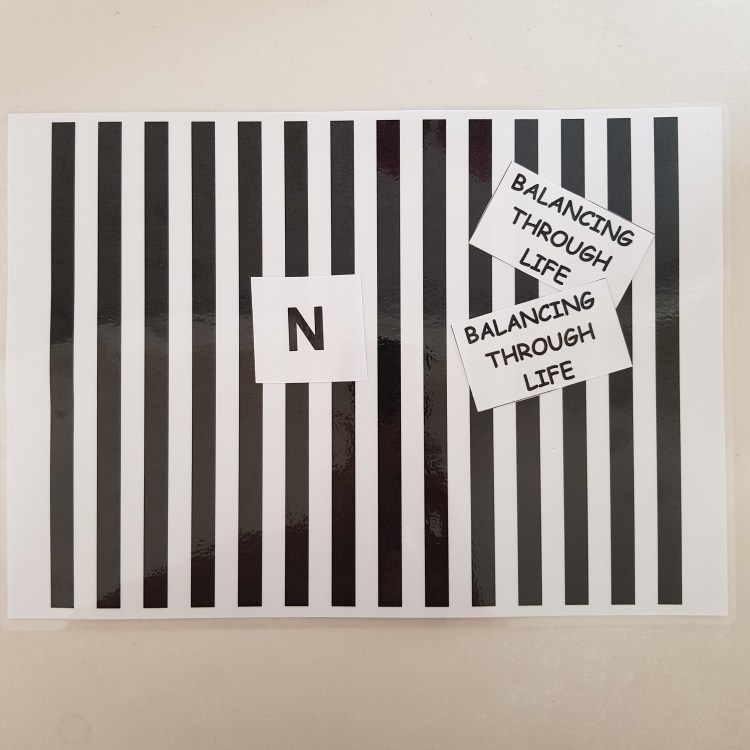
Then she asks me to look at the letter “N” on the wall, and moves my head left to right over and over and over, quickly, then asks me whether the letter moves. Yes. She repeats that test, but moves my head up and down over and over and over, quickly, asking whether the letter “N” moves. Yes.

Mandy sits close to me on my left. I have to sit at a 45-degree angle to her and focus on her nose. She then moves my head left to right over and over and over again, quickly. ‘That’s not too bad,’ she says.

She repeats the test, but this time she sits on my right side. I try to keep my focus on her nose as she moves my head left to right over and over and over again, quickly. I can not keep my focus on her nose at all. ‘Yes. That’s the gentamicin damage in your left ear,’ she says.

I sit on a massage table.

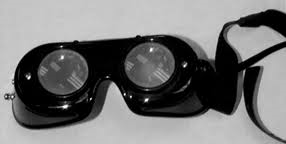
Mandy places some goggles over my eyes. She wants to see if I have Benign paroxysmal positional vertigo (BPPV). She does the Epley manoeuvre. No vertigo or eye movement evident.
Mandy stands and talks me through some vestibular exercises for neuro-plasticity – the brain relearning balance. I cannot express how happy I am to get these exercises. They will help me no end.

Except, each of the exercises make me feel insanely nauseous. I blow a controlled breath through my lips. I’m an expert at it.

‘Do you want to stop?’ she asks me during each exercise.

‘No,’ I say. ‘I can do this.’ And I get through to the end.

‘Can I take stemetil when I feel nauseous with the exercises?’ I ask.

‘No,’ she says. ‘It’s a vestibular suppressant, and your brain won’t learn the new balance pathways and desensitisation.’

‘What about Serc?’ I ask.
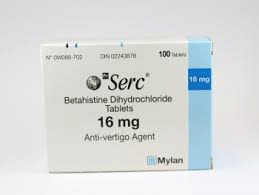
‘No. Don’t take Serc either,’ she says.

‘But it is only supposed to increase the blood floor in the inner ear,’ I say.

She shook her head. ‘No. That’s what they want you to believe. It a vestibular suppressant, like stemetil – it’s good for Meniere’s, but not other vestibular conditions.’

‘Some doctors say it does nothing for Meniere’s,’ I say, frowning, recalling how my own ENT and the Cochlear Implant ENT scoffed when I mentioned Serc. I wondered why the makers of Serc would say it increases blood flow, while the vestibular therapist, who specialises in vestibular retraining says it’s a suppressant. I know for a fact that many Meniere’s people say Serc keeps their vertigo at bay.

‘From the conferences I have attended, it does indeed work for many Meniere’s patients, not all though,’ she adds. Yeah, I was one who it didn’t work for, I think.

I leave her vestibular therapy room, which is in a really old house that is not level. I catch my balance as I walk through it. My shadow, Meniere’s, laughs at me. I am armed with vestibular exercises, and an appointment for next week.
I have now completed all of my necessary Cochlear Implant work-up appointments.

Next stop, the Cochlear Implant. December 19th.

It Will Change Your Life # 5

November 5th 2019 – the Surgeon.

Life with an invisible illness is an interesting voyage. People cannot see what you are going through, what you suffer- physically, emotionally, psychologically, socially –  your invisible scars – so it’s hard for others to empathize.

People would often say to me, ‘Your life has been so easy. Everything just falls into place. Good things always happen to you. You’re always smiling.’ It used to frustrate me. They had no idea what I was going through. They had no idea I worked hard to be where I was in my career, my family, my three children. Nothing ever “fell into place”. It was earned.

During the hardest time of my Meniere’s disease, I was in very deep and dark depression that I couldn’t climb out of. Yet, I kept smiling. It was easier that way. I would patch up the cracks in my mask before I put it on and met with others. If I could meet others … if my shadow, Meniere’s, hadn’t imprisoned me for five hours of violent, debilitating spinning that would land me in hospital at times.

In hindsight, I’m glad my illness is invisible. It makes it easier to pretend that I am okay. I don’t have people avoiding me like I have a contagious condition. I don’t have people looking at me with well-meaning concern, or that “pity” look. I hate the pity look. I don’t have people devaluing the severity of my symptoms, like:

‘It’s okay, dear, we all get dizzy sometimes.’

‘Oh, I have tinnitus too. It’s so common. When it’s really quiet, I can hear a little “sssssssssss”. You’ll be fine!’

My friend had Meniere’s disease – he got a bit faint sometimes. He went to the doctor and is cured.’

Meniere’s disease. No cause. No cure. Yet.

Good things are coming. I know it. I follow the research.

My Cochlear Surgeon is younger than me, as my ENT had said.

I follow the surgeon into his office, my shadow, Meniere’s, behind me, then my husband, and anxiety far behind. The more I know about the Cochlear Implant the less anxious I feel. And I am so thankful to hundreds of people with Cochlear Implants who have reached out to me. The world is a wonderful place.

The surgeon tells me that my ENT believes my Meniere’s disease has “burnt out”.

“Burnt out”. There’s those two words that float around in Meniere’s groups.

According to menieres-disease.co.uk, “the term ‘burn out’ is frequently used to describe Meniere’s as though it is the end of the line, that it has finished. However, it really means that the vertigo attacks have disappeared as the vestibular function has now been destroyed. The disease continues to progress as hearing is completely lost, tinnitus and fullness will continue even after burn out.”

‘Hmmm … I’m not so sure that it has burned out. I still get little mini spins at times,’ I say. And it’s definitely not BPPV.

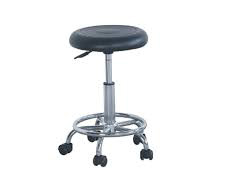
I am questioned about the history of my Meniere’s, then the surgeon asks me to sit on a stool so he can look inside my ears.     

‘Spin to your left,’ he says.

‘Spin?’ I say with a smirk, referring to the spinning of vertigo, then swivel the chair to the left, slowly.

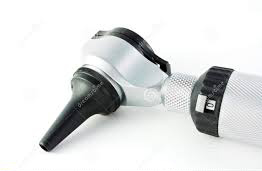
Turn to your left,’ he says, smiling. Ah – he has a sense of humour. Good. He uses the auriscope to look inside my ear canal.

Turn … to your right,’ he says with a smile in his voice. I swivel the chair to the right, slowly, and he checks inside my ear canal.

The remainder of the appointment flows with quick succession:

Surgery date: 19 December. Overnight stay. $25, 000 Cochlear Implant cost covered by the health fund. Any questions?

I take a deep breath. ‘Will my vertigo return?’

He considers my question, then says, ‘I don’t expect it to, but there are no guarantees. For Meniere’s patients who still have some balance cells left, I usually wash out the inner ear with gentamicin while I am in there as an insurance that they will not have vertigo anymore, but since you have been so good for quite a while without vertigo, I won’t do that, in case it upsets anything.’

I nod, feeling a little numb. There is still no certainty that my vertigo will not return. How can it be burnt out if the vertigo returns? My shadow, Meniere’s, crosses its arms and grins.

Before I leave, the surgeon gives me a form for an MRI and CT Scan, and tells me I need balance rehabilitation before I have surgery, and to continue afterward. I raise my eyebrows and nod. I have never had balance rehabilitation; I just relearned my balance to walk by myself after the gentamicin was injected into my middle ear in 2004.  

I leave the surgeon’s office. Anxiety is waiting.

Next – MRI and CT SCAN

About this blog …

My Shadow, Meniere’s, is not just about the physical aspect of a Cochlear Implant – you can research about them online. I am sharing the human side of the journey towards a Cochlear Implant – feelings, appointments, the process, apprehensions, successes, highs and lows as I step into the next chapter of my Meniere’s journey.

I am mindful of those who also have incurable diseases or are walking the path of a diagnosis that is life changing. My blog never aims to undermine the severity of anyone else’s illness, disability or journey. We all deal with life with different tolerances, attitudes and thresholds.  ‘My Shadow -Meniere’s’ is my journey. It is my hope that it can help others with Meniere’s disease, or hearing loss, or simply when life has a plot twist.

I also acknowledge those before me, who have already had a Cochlear Implant. Your experiences, advice and suggestions are welcome.

Meniere's and me

It Will Change Your Life #1

Monday, 21.10.19

The day is overcast, mirroring my mood. Today, I go for a Cochlear Implant “work-up” for my left ear. I’ve been considering a Cochlear Implant for a while, but have bathed in the delusion that somehow, my hearing will come back. But of course, it won’t – it’s just my eternal hope that floats around me as I journey through the incurable Meniere’s disease.

My symptoms started in 1995. Ear fullness, like I had been swimming and still had water stuck in my ear canal. Bouts of unpredictable, violent vertigo. Tinnitus. And then came the hearing loss. Gradually.

I was 28. ‘Meniere’s is more common in men over 50,’ my ENT told me. Online information at the time backed up the statement.

Today, I sit looking out the window at the dark, heavy clouds, painting the state of my heavy heart and dark emotion. I’m 24 years into my Meniere’s journey, yet I’m filled with tingles of anxiety travelling over my skin like waves, with one big question bouncing around in my mind.

If I have a Cochlear Implant, will the disabling vertigo of Meniere’s disease return?

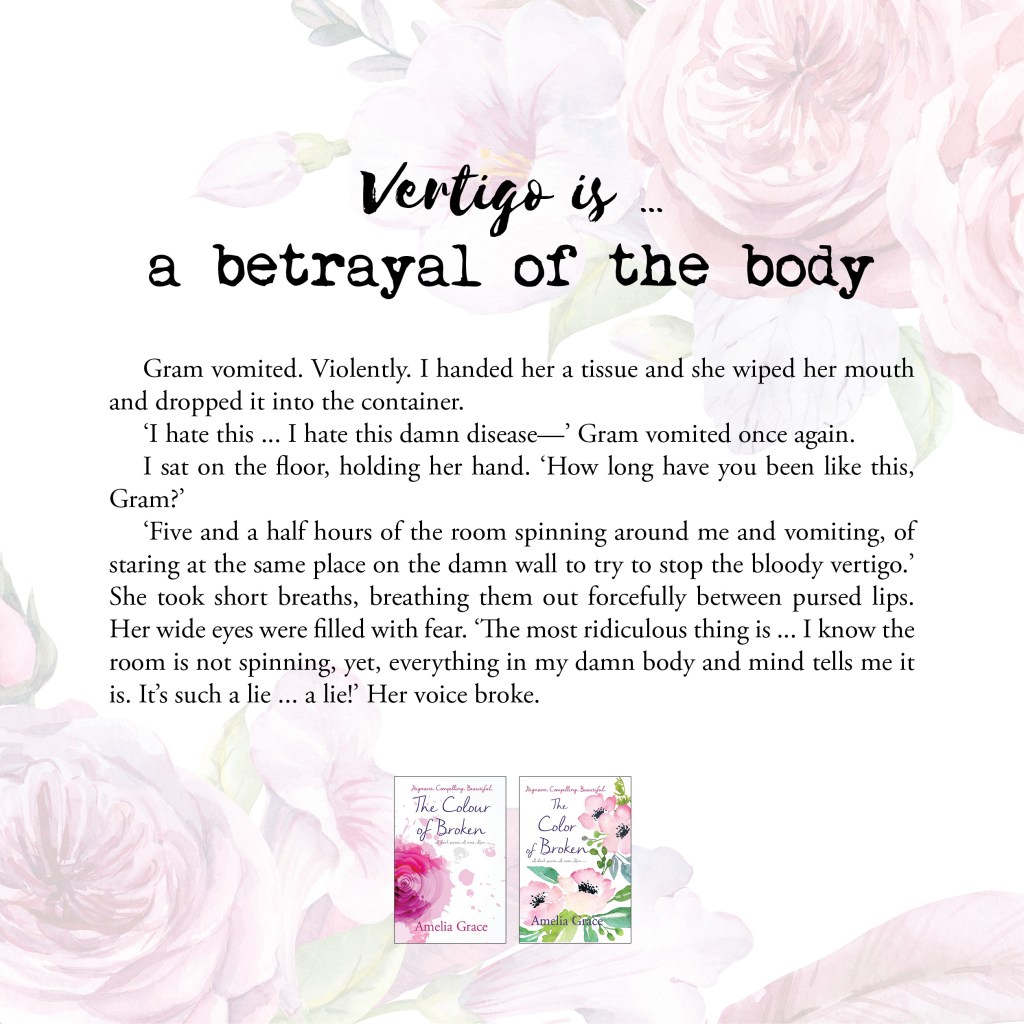
And I’m not just talking about being ‘dizzy’. The vertigo of Meniere’s disease for me was the most abhorrent, violent, room spinning. Totally debilitating. Hold on to the floor even though you are already on lying on the floor, stare at one spot on the wall for four or five hours until the spinning subsides. Beyond exhausting.   

And let’s not forget the relentless, vicious puking that feels like you’re about to turn inside-out, dehydrating the body so much you need to be transported to emergency at the hospital.

If you ever want to know how vertigo of Meniere’s feels, sit on an office swivel chair and get someone to spin you around as fast as they can, non-stop. Imagine not being able to stop it. For hours and hours and hours. Then imagine never being able to predict when vertigo will hit – because when it does, you are stuck wherever you are, and you absolutely can not move, as it will make the spinning impossibly worse. This is the vertigo of Meniere’s. Hell.

In 2004 I made the choice to destroy the balance cells in my left ear to stop the debilitating, violent vertigo. The bottle of gentamicin was now my hope. My ENT injected it into my middle ear.

Imagine for one moment, having to make the choice about destroying your balance cells. Balance. Yeah – that thing. Something you never even think about. Your body just does it for you.

I relearned my balance and retaught myself to walk with a new normal, using my eyesight as my guide for balance. But compared to the unpredictable vertigo, the destruction to my vestibular system was an answered prayer. It changed my life. It gave me my life back. With physical limitations. I was no longer spiralling down into the darkness of the Meniere’s prison where there is no escape.

But back to my question – if I have a Cochlear Implant, will the disabling vertigo return? And if it does, what does it mean for my life after living vertigo free for 15 years? 

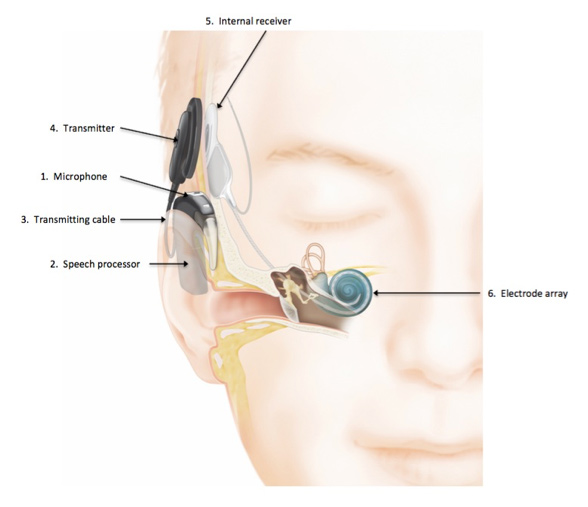
eyeandear.org.au Adapted from images courtesy of Cochlear Ltd

I’m taking a risk. I know that. The thought of having vertigo again terrifies me. My vertigo years were a very, very dark emotional place to be. Once upon a time I had a life and lived it fully – working full-time in a job I loved, physically able to do what I pleased, and engaged in a social life. I was happy. Then Meniere’s hit, and took it all away. Every waking moment was lived in fear of a vertigo attack. Sleep was not even a safe place. I would wake in the night, spinning violently, unable to close my eyes for four or five hours until it stopped.

I need answers from my ENT and my Otologist whom I am yet to see. Can my Meniere’s vertigo return due to the Cochlear Implant?

I walk out the front door and lock it behind me, anxiety joining me for the Cochlear Implant work-up appointment. Anxiety. We have been friends for a long time. Introduced to each other by my dark, dark shadow, Meniere’s disease.

Friends already fitted with Cochlear Implants tell me it will change my life … I sigh and wonder which way it will change my life.

Just breathe, I tell myself …

To be continued.

Julieann is a multi-published author and artist who is continually inspired by the gift of imagination and the power of words. When she is not disappearing into her imaginary worlds as Julieann Wallace – children’s author, or as Amelia Grace – fiction novelist, she is working as a secondary art teacher, editor, book designer, and book magician for other authors. Julieann’s 7th novel ‘The Colour of Broken’ with a main character with Meniere’s disease hit #1 on Amazon in its category twice – all profits are donated to Meniere’s research. Julieann is a self-confessed tea ninja and Cadbury chocoholic, has a passion for music and art, and tries not to scare her cat, Claude Monet, with her terrible cello playing.

The Color of Broken: Grace, Amelia: 9780648084662: Amazon.com: Books

The Colour of Broken: Grace, Amelia: 9780648084624: Amazon.com: Books

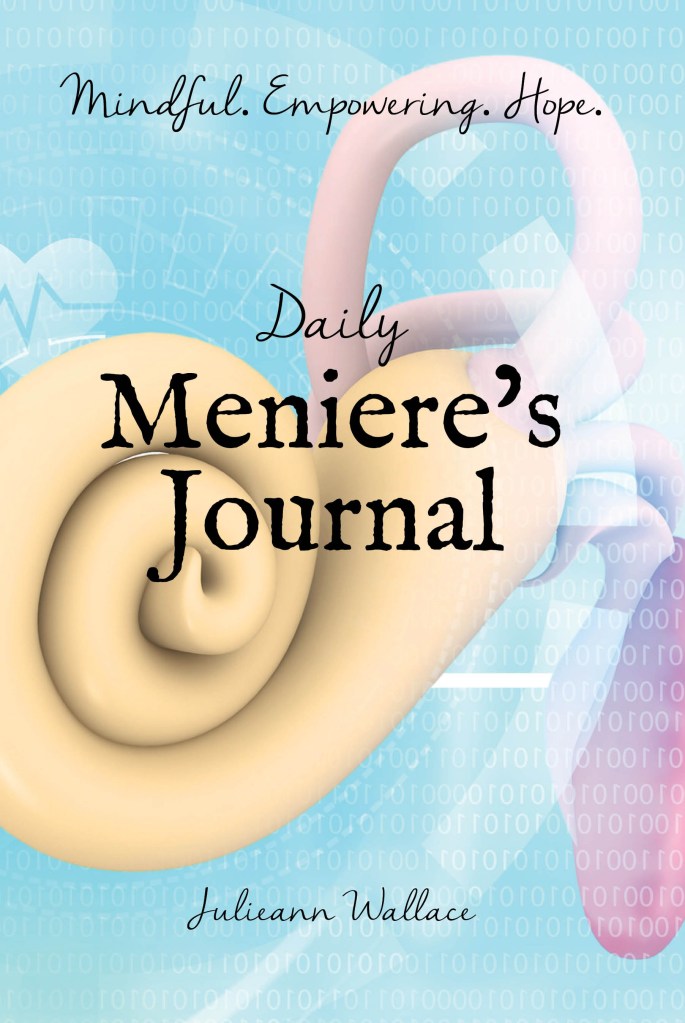
Amazon.com: Daily Meniere’s Journal (9780648424451): Wallace, Julieann: Books