Learning to Hear
Fatigue
/fəˈtiːɡ/
noun
noun: fatigue; plural noun: fatigues
1.
extreme tiredness resulting from mental or physical exertion or illness.

December 19, 2019, I had Cochlear Implant surgery. On the 9th of January, 2020, my Cochlear Implant was “activated”. My world of deafness, including the five roaring noises of tinnitus changed. I could hear again for the first time in 15 years!
My cochlear audiologist, Jane, warned me, ‘You will have mental fatigue from hearing again with your left cochlear.’
Yeah nah, I thought. I’ve had the repugnant, revolting, repulsive Meniere’s disease for 25 years now, three children and a teaching workload. I know exactly what mental and physical fatigue is like. The simple act of hearing again will leave me fatigued? I doubt it!
Yeah Nah. Australian slang for no.

I enter the outside world. Reality. I’m no longer safe and comfortable in the confines of the quiet audiologist’s office, where Jane’s reassuring smiles, encouragement and support, wrap me like a warm blanket on a freezing winter’s night.
My eyes widen. It’s so NOISY! I hear EVERYTHING! But not the sounds of normal hearing, but of cochlear implant hearing, newly activated: chipmunk voices, robotic representations of every sound my 22 electrodes can feed into my auditory nerve. I am told that what I hear now, is not what I will hear as I continue to attend “mapping” sessions. Sounds will become more “normal-ish”, like what I hear with my right ear.


After 10 hours of wearing my processor, I am fatigued. Like a flat battery.
Nah Yeah. Yes. Jane was right. Again.

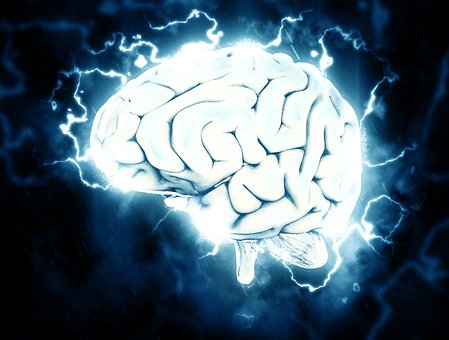
My cochlear audiologist, Jane, explained, ‘It’s like you’re a baby again. You hear absolutely everything. For your left hearing centre in your brain, every noise is new, and it’s working hard to work out whether to file the sound as an important sound, or background sound, that it doesn’t have to pay attention to. And the two hemispheres of your brain are not working together, yet. But they will.’

She continued. ‘When you lost your hearing 15 years ago, your brain re-used that area for something else, and now that it is stimulated again with hearing, your brain is madly reorganising what parts of your brain are used for what. It is also accessing your auditory memories to match up to what you are hearing now.’

WOW! Mind blown. Not only by the fact that I can hear again, but by the knowledge that the brain has a design and intelligence that is beyond human understanding.
My cochlear implant journey has been a road filled with new learnings, revelations and knowledge. My erudite self is soaking up anything and everything about hearing, the cochlear and the brain. The more I learn, the more I realise what an amazing piece of architecture our brain is, one that cannot be replicated. It’s complexity and control of our bodies are both extraordinary and intriguing.
When Jane was talking about my brain reorganising, she was talking about brain plasticity, or neuroplasticity, which I was already familiar with from having to relearn my balance after having my balance cells destroyed in my left ear to stop the horrendous, violent, vertigo of Meniere’s disease.
“Neuroplasticity or brain plasticity, is defined as the ability of the nervous system to change its activity in response to intrinsic or extrinsic stimuli by reorganizing its structure, functions, or connections. A fundamental property of neurons is their ability to modify the strength and efficacy of synaptic transmission through a diverse number of activity-dependent mechanisms, typically referred as synaptic plasticity”
Principles of neuroplasticity
The brain wastes nothing…
So, my left hearing centre is like a baby again. It’s got me thinking. If I was a baby again, would I choose the same path in life. For instance, if I didn’t excel in sport, and I didn’t receive a head trauma just in front of my left ear that I believe caused my Meniere’s, would I still have Meniere’s disease in my lifetime? Would I still be me?
Next blog – Learning to Hear is like Learning to Read

(Dip T., B Ed., Author, Artist, Teacher, Tea Ninja, Chocoholic, Papercut Survivor)
Julieann Wallace is a bestselling author, artist and teacher. She is continually inspired by the gift of imagination, the power of words and the creative arts. She is a self-confessed tea ninja, Cadbury chocoholic, and has a passion for music and art. She raises money to help find a cure for Meniere’s disease, and tries not to scare her cat, Claude Monet, with her terrible cello playing.


About this blog …
My Shadow, Meniere’s, is not just about the physical aspect of a Cochlear Implant – you can research about them online. I am sharing the human side of the journey towards a Cochlear Implant – feelings, appointments, the process, apprehensions, successes, highs and lows as I step into the next chapter of my Meniere’s journey.
I am mindful of those who also have incurable diseases or are walking the path of a diagnosis that is life changing. My blog never aims to undermine the severity of anyone else’s illness, disability or journey. We all deal with life with different tolerances, attitudes and thresholds. ‘My Shadow -Meniere’s’ is my journey. It is my hope that it can help others with Meniere’s disease, or hearing loss, or simply when life has a plot twist.
I also acknowledge those before me, who have already had a Cochlear Implant. Your experiences, advice and suggestions are welcome.
 My Shadow - Meniere's