
Balance Awareness Week, 2022
Balancing Awareness Week, 2022
balance
noun: balance; plural noun: balances
1. an even distribution of weight enabling someone or something to remain upright and steady.

‘I fell,’ I said. I wanted to sob. Loudly. Aftershock from my fall. I caught the sob in my throat. ‘I fell and I couldn’t stop it.’
My husband’s eyes filled with tears, but they didn’t leak down his cheek like mine. I always hate seeing his eyes that way. He was following me as we walked, to catch me if I fell. He always does that for me. My protector. And when it happened, there was no way he could stop it. I remember the panic in his voice as he leaned over me, asking if I was okay, looking over me, again and again. ‘Did you hurt yourself?’ he had asked.
All I could say was, ‘My phone is under the bush, over there.’ I had no idea how I saw it slide under the bush. When I fall (which is rare), I have no idea where to put my hands to stop me, or protect me – inside my head as I’m falling, I see myself as a body but no arms or legs. That’s what destroying my balance cells did to me. I just have to wait for impact and suffer the consequences.
‘I don’t care about your phone. Are you okay?’ he said.
‘Yes,’ I said. It was a lie. I was hurt. But I wanted to get up to save face. There were many people on the walking track at Dove Lake, Cradle Mountain, Tasmania. 5.7kn. 3 hours.
I HATE YOU MENIERE’S!
My husband pulled me up off the ground. My daughter picked up my phone. She was too quiet. How many times had she witnessed Meniere’s bring me to my knees with vertigo, deafness, depression? And now falling, this first time, only because I tripped over a step.
I blew out a long breath between my lips. Then set a rock in my sights to sit on for a moment to assess my injuries, then walked there, my husband holding onto my arm to support me. I wanted to yell at him, “LET GO OF ME. I’M NOT AN INVALID!” But I didn’t. He was trying to help.
I sat on the rock, looked over the lake and focussed on where I hurt – my wrist, my arm, my ankle and my back. Hold yourself together, I thought, people fall all the time. Put on your “I’m okay mask”.
‘Are you alright, Ma?’ my daughter asked.
Hold yourself together. The emotion of “I want to fall to pieces” rolled through me. Hold it together. Breathe.
‘It could be worse,’ I said, ‘I could have broken something.’ I was hoping that I didn’t break anything. My wrist, arm and ankle were throbbing. Not to mention my back spasms. ‘Thanks for picking up my phone,’ I added.
She nodded, looking at me with concern in my eyes.
‘I’m sorry for falling,’ I say to her. I don’t want her to be embarrassed by me.
I HATE YOU MENIERE’S!
And of course, she’s not. She never is. She’s always one of the first to help. It is my own self-judgement that betrays me.
I stand. In pain. But I can walk to finish the last hour of the 3 hour track.
My daughter is in front of me, glancing back at me every once and a while, and my husband behind me. I’m glad. He can’t see me wriggling my fingers to check my wrist, and feeling where my right arm hurts, nor the wince on my face when my ankle hurts more than I want it to, or my back spasms. All I can think of is when my son would roll his ankle at elite triathlon training, and his coach would tell him to walk normally on it. So that is what I do, despite the pain.

After the walk we entered a cafeteria for a drink.
Without warning, tears filled my eyes. In public. ‘I could have died if I fell in a different part of the walk,’ I say. It was true. Parts of the track were on a boardwalk above the ground that fell steeply, scattered with rocks and trees below. No rails to stop a tumble.
‘I know,’ my husband whispered. I watch his watery eyes and see him swallow harder than usual. ‘What do you want to drink? Do you want an ice-cream?’ He was using the distraction method. He knows me well.
Claire and I find a table away from most of the people. My wrist and arm throb. My back was spasming and my ankle twinging. Swelling was setting in. I ate my ice-cream, flicking tears from my eyes when they dropped. At least I don’t have vertigo, I thought. It was a good day, after all. Any day without vertigo is a good day. Suck it up, I tell myself, it could be worse.

In 2004, nine years after my Meniere’s started, I made a conscious decision to have my balance cells destroyed. I couldn’t do the horrendous, unpredictable, debilitating, violent, torturous, four-five hours of insane vertiginous spinning and nausea and vomiting and staring at one focus spot on the wall for the entire four-five hours anymore. I was more than done. I didn’t want to be here anymore. So when my ENT offered to inject gentamicin into my middle ear to kill off the balance cells, halting the vertigo, I didn’t think twice.
Imagine for one moment, having to make the choice about destroying your balance cells. Balance. Yeah – that thing. Something you never even think about. Your body just does it for you.
The vertigo of Meniere’s disease for me, was the most abhorrent, violent, room spinning.
Totally debilitating.
It was “hold on to the floor or the bed even though you are already on lying on the floor or bed”. I had to stare at one spot on the wall for four or five hours until the spinning subsided. And whatever you do, DON’T move your head. It will make the spinning one hundred times worse.
Beyond exhausting. Soul destroying.
And let’s not forget the relentless, vicious puking that feels like you’re about to turn inside-out, dehydrating the body so much you need to be transported to emergency at the hospital.
If you ever want to know how vertigo of Meniere’s feels, sit on an office swivel chair and get someone to spin you around and around and around as fast as they can.
Now, imagine not being able to stop it. Not being able to get off that office chair for hours and hours and hours.
Then imagine, never being able to predict when vertigo will hit – and when it does, you are stuck wherever you are, and you absolutely cannot move as it will make the spinning impossibly worse. This is the vertigo of Meniere’s. Hell.

Was the gentamicin my first port of call? Absolutely not. I had already had Meniere’s disease for nine years and tried:
* Low salt diet
* Diet elimination
* Stemetil
* Diuretic
* Serc
* Sound therapy
* Acupuncture
* Prednisone
* Grommet
Gentamicin was next. If that didn’t work, I was going to have a Vestibular Nerve Section where the balance nerve to your ear is severed.
The gentamicin worked – an answered prayer. One full strength shot injected in through my grommet with some bicarbonate of soda and sterile water mixed with it to make it penetrate better.

The procedure took place at my ENT’s procedure room in the city. I lied on my right side while he injected the concoction in through my grommet in my left ear.
‘Isn’t that hurting?’ he had asked me as he infused the mixture into my middle ear.
‘Yes,’ I had said, ‘but I am envisaging it destroying the Meniere’s in my middle ear. It’s a mind visualisation technique I taught myself when I was young, when I had growing pains in my knees.’
I remained on my right side, left ear facing the ceiling for 20 minutes after the procedure, then went home, where I went to bed and rolled onto my right side to keep my left ear up. I slept for two hours.
The next day I had bouncy vision when I walked. It has a term – oscillopsia. Oscillopsia is a vision problem in which objects seem to jump, jiggle, or vibrate when they’re actually still. It stems from a problem with the alignment of your eyes, or with the systems in your brain and inner ears that control your body alignment and balance. It was a side effect of having my balance cells destroyed. It was a good sign that the gentamicin was working, my ENT had said.
Three weeks later I was back teaching full-time, learning to trust that I wouldn’t have any more vertigo attacks. I relearned to walk using my eyesight. The neuroplasticity of the brain is beyond words. Since 2004, I have been vertigo free. So thankful for God’s mercy and grace.
15 year later, before I had my cochlear implant, I had balance rehabilitation. Finally. I wish I had discovered it earlier in my journey. My balance improved far beyond what I every thought it would. My life is pretty normal balance-wise now. I do have limitations, like climbing ladders and fences. I just make sure that I hold on for stability.

It’s Balance Awareness Week. Many people do not know that your inner ear plays a significant roll in your balance. The inner ear is home to the cochlea and the main parts of the vestibular system. The vestibular system is one of the sensory systems that provides your brain with information about balance, motion, and the location of your head and body in relation to your surroundings. There are three loops in your inner ear, called semicircular canals. The first canal senses up-and-down movement. The second canal senses side-to-side movement. The third canal senses tilting movement. Each canal has hair cells and fluid inside, which move when your head or body moves. The hair cells send messages to your brain through the acoustic nerve. These messages tell your brain about how you are moving. Are you moving straight, like in a car, or up and down, like in an elevator? Or maybe you are not moving at all. This information (along with what you see, hear, and sense with your body) helps you keep your balance. A problem in your inner ear is just one of many factors that can lead to balance difficulties, dizziness, and vertigo.
Signs and Symptoms
Balance disorders come with different symptoms. Symptoms may happen all the time or just occasionally. They may come about suddenly or may be triggered by something (e.g., position change, head movement, visual or sound stimulation). Symptoms of balance problems include:
- difficulty walking and moving around
- dizziness
- falling
- headaches
- light-headedness
- motion sickness
- nausea
- unsteadiness
- vertigo (e.g., a feeling that the room is spinning) and
- visual problems (e.g., blurry vision)
https://www.asha.org/public/hearing/dizziness-and-balance/https://www.asha.org/public/hearing/dizziness-and-balance/
A balance problem may cause you to feel nervous or afraid. You may change the way you walk and move around. For example, you may walk more slowly or move your head less.
Causes
It is important to find out the cause of your dizziness and balance problems. A variety of underlying conditions or issues may cause balance problems and dizziness, including:
- cardiovascular or circulation problems
- head injury (traumatic brain injury, or TBI)
- injury to the ear or vestibular system
- inner ear disorders
- medication side effects
- Meniere’s disease
- neurological diseases or disorders
- sudden hearing loss
- sudden vision changes
- surgeries, such as cochlear implant placement
- tumors on the acoustic nerve and
- viruses and other infections
https://www.asha.org/public/hearing/dizziness-and-balance/
Good News
The good news is the brain has an ability to change and adapt, also known as brain plasticity – neuroplasticity. https://www.verywellmind.com/what-is-brain-plasticity-2794886
I learned to use my vision to help with balance, and balance rehabilitation did wonders.
Life is good.
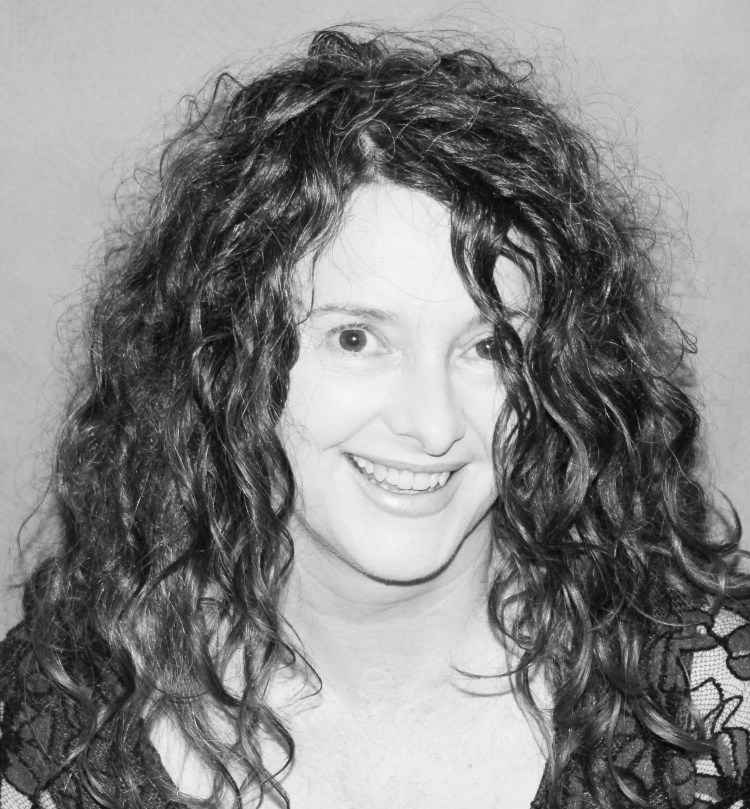
Julieann Wallace is a multi-published author and artist. When she is not disappearing into her imaginary worlds as Julieann Wallace – children’s author, or as Amelia Grace – fiction novelist, she is working as a secondary teacher. Julieann’s 7th novel with a main character with Meniere’s disease—‘The Colour of Broken’—written under her pen name of Amelia Grace, was #1 on Amazon in its category a number of times, and was longlisted to be made into a movie or TV series by Screen Queensland, Australia, twice. She donates profits from her books to Macquarie University, where they are researching Meniere’s disease to find a cure. Julieann is a self-confessed tea ninja and Cadbury chocoholic, has a passion for music and art, and tries not to scare her cat, Claude Monet, with her terrible cello playing.

julieannwallaceauthor | Instagram | Linktree
Home – Dizziness & Balance Disorders Centre (dizzinessbalancedisorders.com.au)
 My Shadow - Meniere's