Dear Mama, I see you wiping your wet eyes
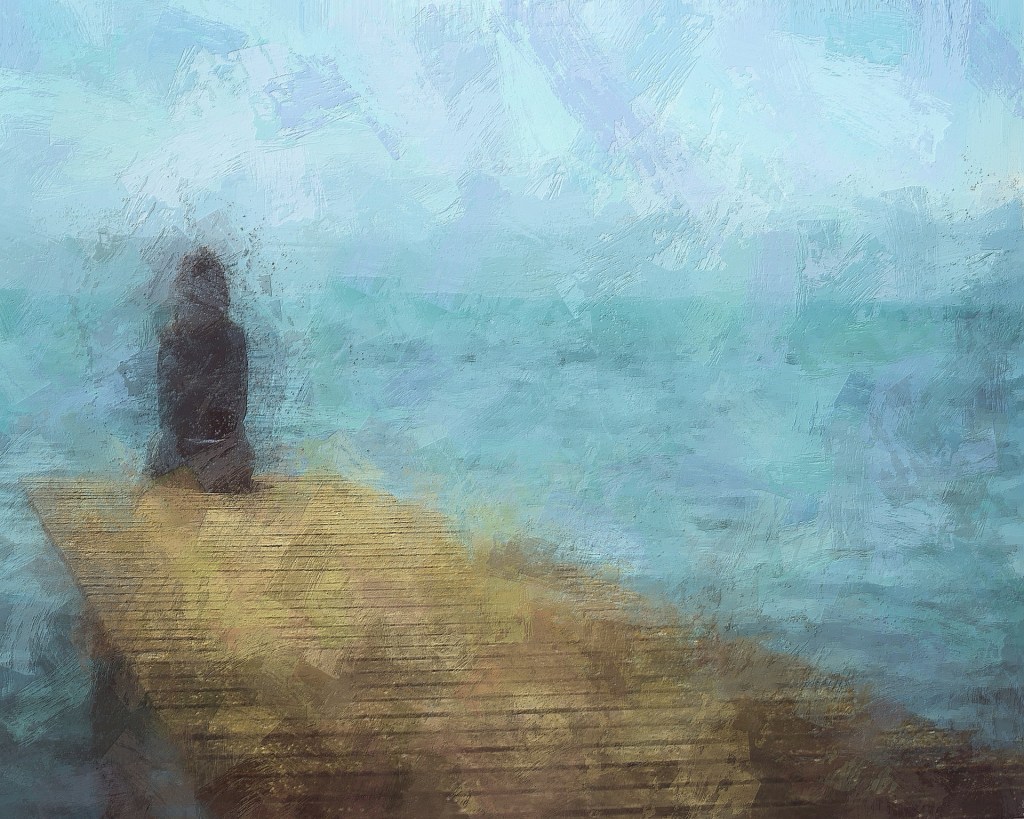
Dear Mama,

I see you.

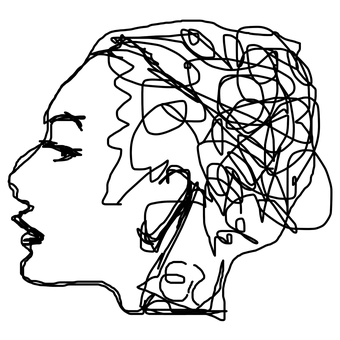
I see you wiping your wet eyes.

I see your tears dripping onto the pillow.

I see you wince at sounds that you say are too loud.

I see you, lying on your bed, staring at the wall, as still as a statue for a very long time. Why can’t you move?

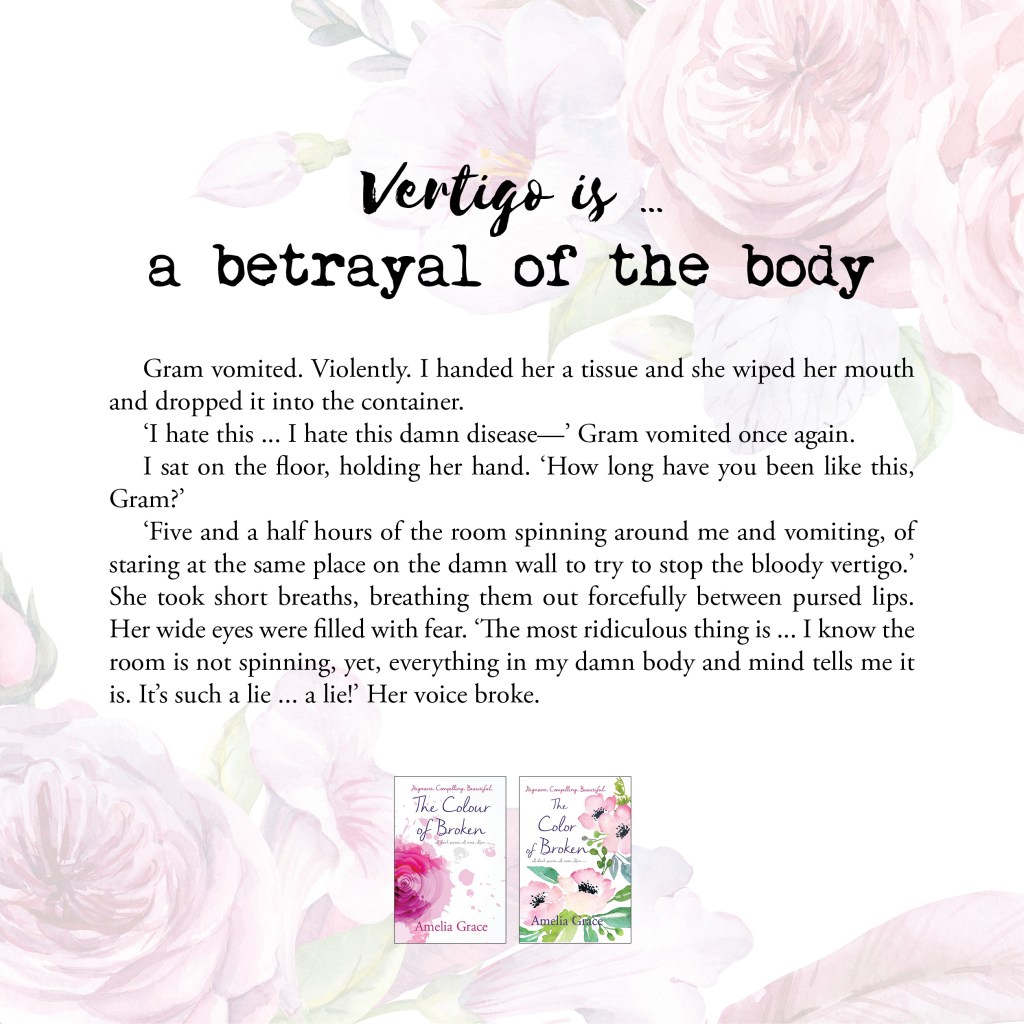
And when you are as still as a statue, I hear you vomiting loudly. It scares me. When will you get better?

I see you walking and nearly falling over.

I hear you crying in the shower.

I hear daddy crying, too.

It makes me sad.

I want to hold your hand.

Here, Mama. Have my magic wand. It will cure you. And then we can play together like we use to … before you got sick with many ears.

From your favouritest-est daughter,

Lucy-Lou

P.S. I love you Mama, to the furtherest-est sparkliest star and back. P.P.S. Please get better.

Do you ever try to hide your tears from your child?

Your crying?

Your sounds of frustration or anger?

Do you think you have hidden those emotions well enough from your children, because you don’t want them to know how you truly feel?

What if your child caught a glimpse of you at your time of vulnerability?

How would your child react? How would you react?

I have to admit. I cried in the shower. I cried in the middle of the night.

I wiped my tears the moment I heard the footfall of my children as they came near.

And when I was bed-bound due to violent vertigo from my Ménière’s disease, my husband or my parents would take care of my kids, keeping them busy to reduce the impact of my incurable disease upon them.

And sometimes, just sometimes, one of my three kids would quietly stand beside my bed and hold my hand for a moment in time. A moment in time that meant the world to me.

There’s a new book out. An important book. Not just for people who suffer from Ménière’s disease, but for anyone who has or has had vertigo, hearing loss or tinnitus.
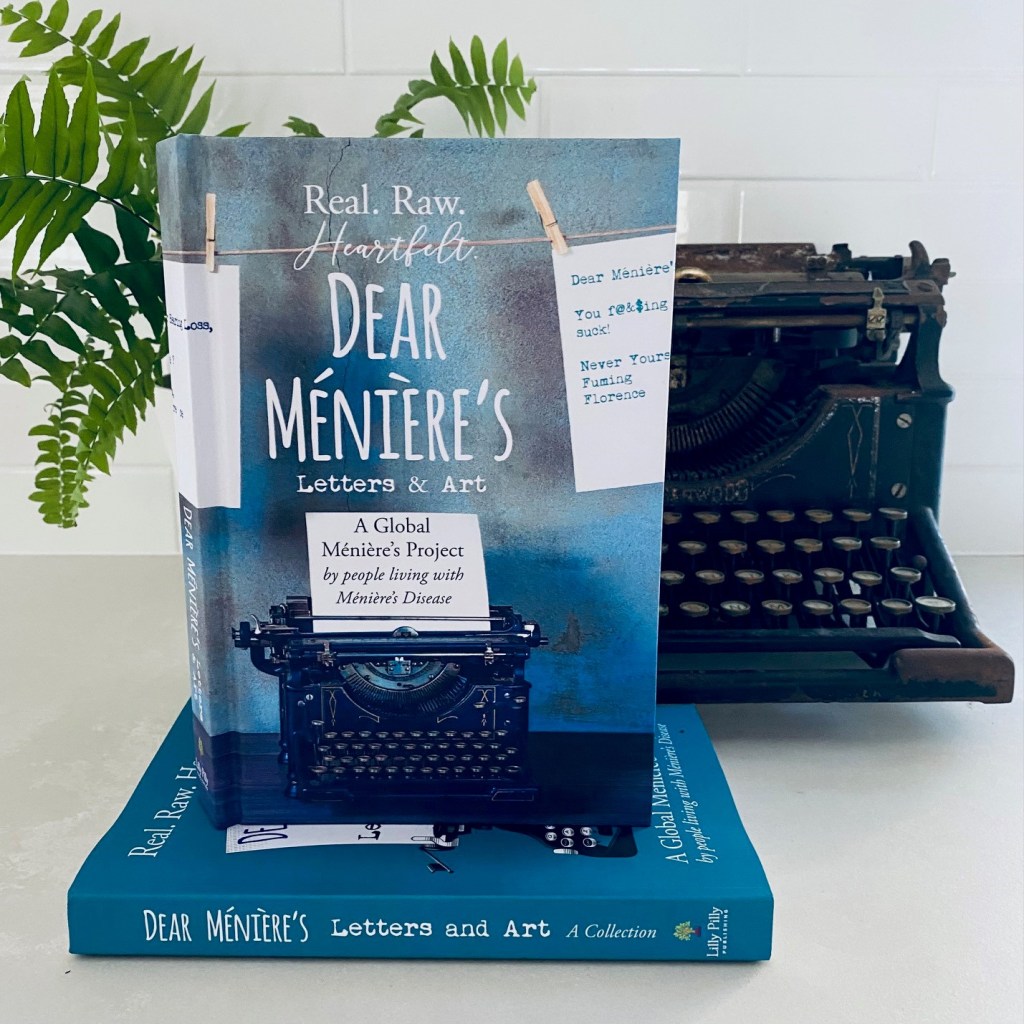
The global Meniere’s community has a goal – to stop that vertigo, that tinnitus, that hearing loss, not just for people with Meniere’s, but for all people from all walks of life.

Money raised from book sales will be donated to research.

Imagine not having vertigo anymore.

Imagine not having tinnitus anymore.

Image hearing loss being a thing of the past.

Can you dare to imagine being you again …

Dear Ménière’s has been labelled as extraordinary, a life changer and a much needed book by early readers. It’s available at online bookstores as a print book and eBook

Here’s some links to Amazon:

Hardcover www.amazon.com/Dear-Menieres-Letters-Global-Project/dp/064515816X/

Paperback www.amazon.com/Dear-Menieres-Letters-Art-Project/dp/0645158178/

eBook www.amazon.com/Dear-M%C3%A9ni%C3%A8res-Letters-Art-collection-ebook/dp/B0C4VG8HFY/    

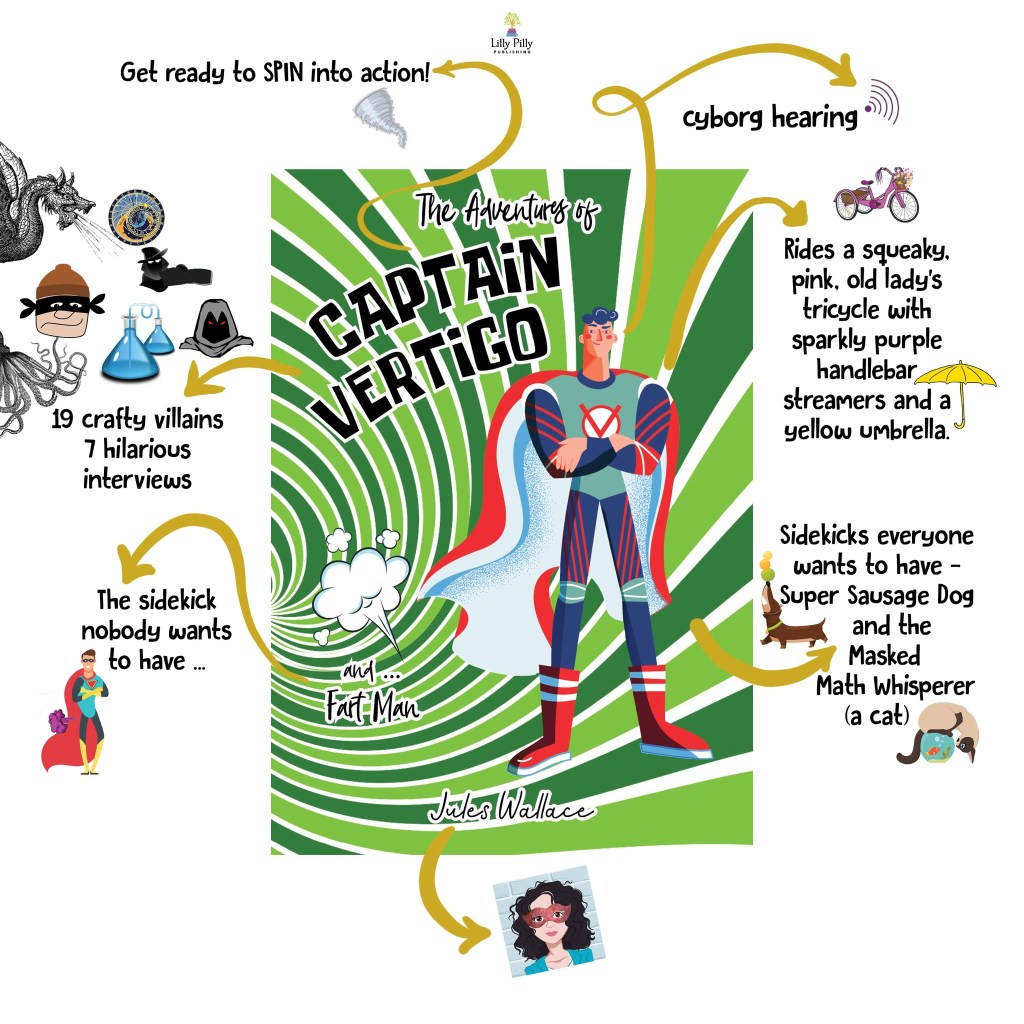
And now to inject some humour for our kids – Captain Vertigo.
Finally, enjoy some letters to Ménière’s …

Dear Ménière’s,

I wish I could stand at the ends of the earth, where the winds blow swiftest, and feel the gentle sway caused by the blowing, not by my lack of balance, and have the winds blow away the tinnitus and the brain fog.

To have, for just one moment again in time, the silence of sound.

The clarity of mind.

To feel energised by life and not drained by it.

I imagine standing on a windswept shore. The noise I hear is the rustle of seagrass, the blowing of the southerly wind, the heave and heft of the ocean. Sea salt and sand pepper my skin. The incessant ring in my ears is quiet, drowned out by the oceans song or swept away, I neither know nor care, I cannot hear it.

The salty air fills my lungs, its brusqueness blows away the ever present fog in my brain. Thoughts, swirling vaguely in my brain, come to the forefront. They take shape, as clear and sharp as the broken shells beneath my feet. I’m not moving through a miasma, I’m as clear as the sun shining through the water that rolls onto the sand and back out again.

Each deep breath clears more fog from my head and returns more of me to myself, as if the real me lives out there in the ocean, waiting to be breathed in on the winds.

I miss who I was.

Kelly

Ménière’s disease since 1998

Without Warning

Here it comes.

Deep breaths. Find your focus.

Radiating tremors. Vision blurred.

For a brief moment, numbness.

Knowing the dark wave is about to consume you.

Deep breaths. Screaming inside,

“NO! Please God, not again. Not here. Not now.”

White knuckles desperately trying to hold steady.

Sweat pours. Heart racing.

Every line bends. Every curve vibrates.

Close your eyes and it will find you.

Even in darkness you twist and turn.

Gut is writhing in distress.

So violent yet completely invisible for others to see.

Empathy is shared with whispers of doubt.

Solace too far to reach.

Independence lost.

Dignity robbed.

A bright future shadowed in fear.

In time, tremors dissipate and vision clears.

Th e agony is rewarded with short lived joy.

Without haste, the crippling fear of the next one looms.

Micaela Grady

Written 9/8/2021

Ménière’s disease since 2007, Vestibular Migraine: 2021

Dear monster,

You are …

AKIN TO SHIT on a shoe trodden through a carpeted home,

A 6 HOUR LONG podcast with a voice so monotone.

Like riding a bike with a constantly falling off chain,

A summer garden party that is RUINED BY THE RAIN.

The spilt glass of water that calculatedly covers one’s crotch,

Like paying for Netflix then discovering there’s barely anything good to watch.

The SOGGY WET SOCK and also the HOLE IN THE BOOT,

Like discovering HALF A WORM after biting into some fruit.

A SALT AND VINEGAR CHIP on a fresh paper cut thumb,

The APPROACHING BEAST IN THOSE NIGHTMARES where we are unable to run.

Truth is, you are SO MUCH WORSE than all these examples by a mile,

This is me keeping it light, and trying my damn hardest to CREATE A SMILE.

Colin (That Monster Ménière’s)

Diagnosed, 2019

Instagram: @that_monster_menieres

A massive thanks to Anne Elias (Sydney Meniere’s Support Group www.instagram.com/menieres_support_au/),

Heather Davies (Meniere’s Muse www.instagram.com/menieresmuse/)

Steven Schwier (On the Vertigo www.instagram.com/onthevertigo/)

for helping with the Dear Meniere’s book.
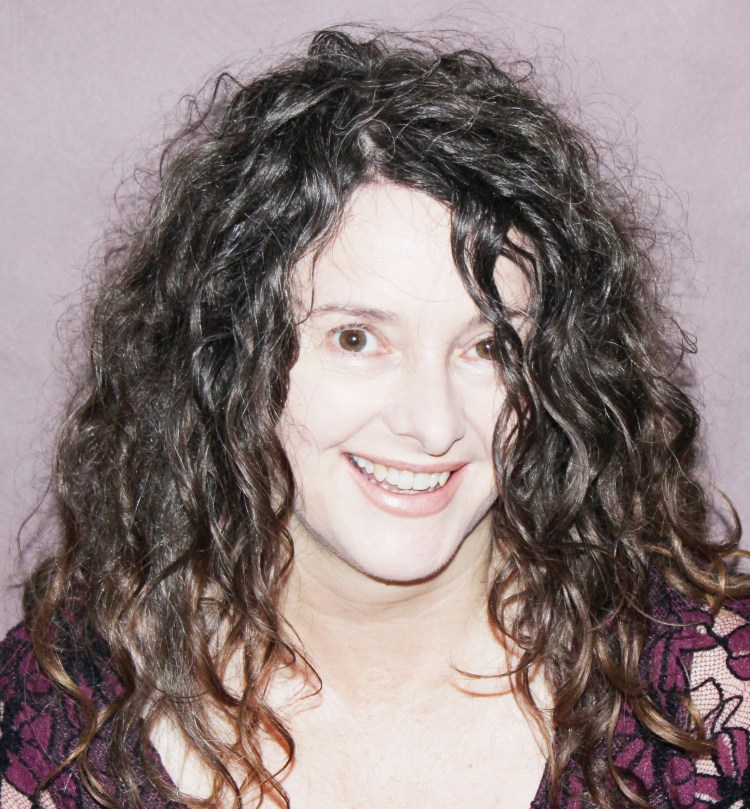
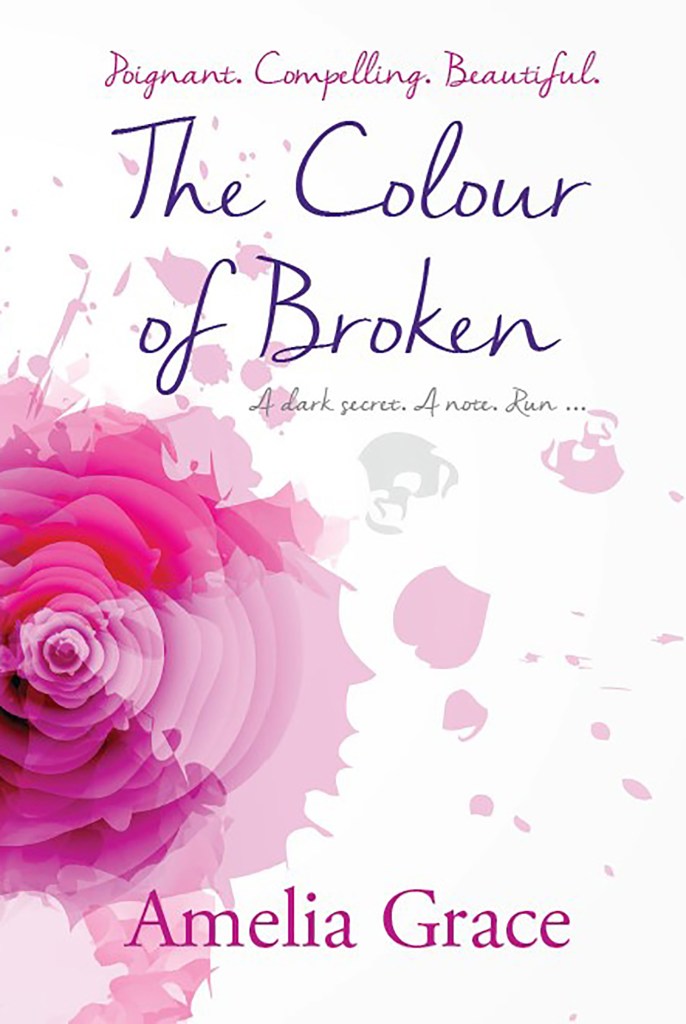
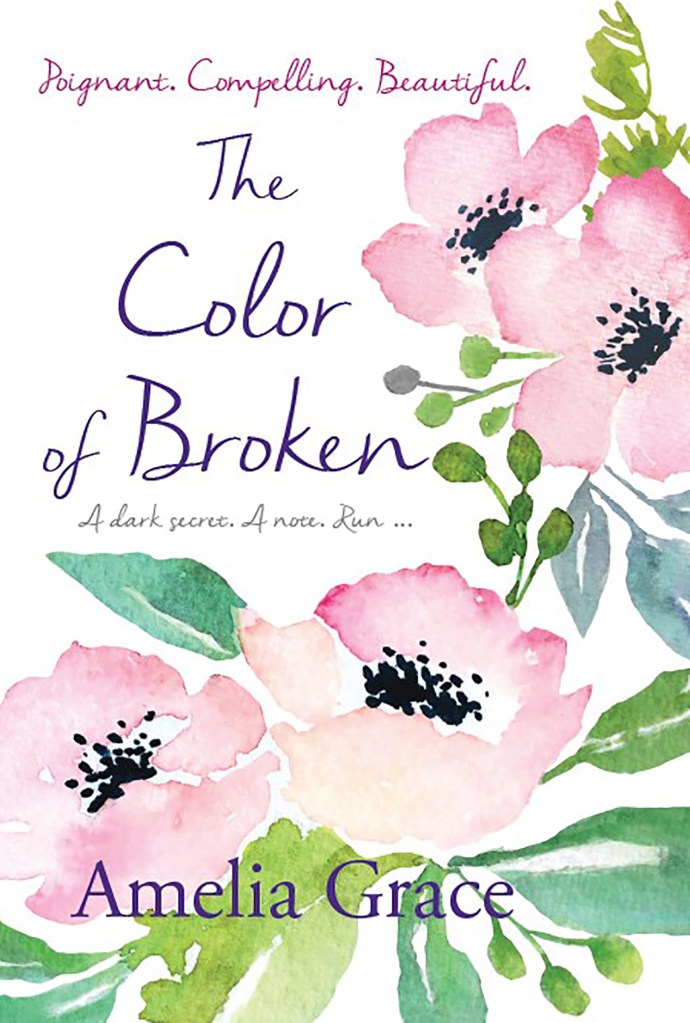
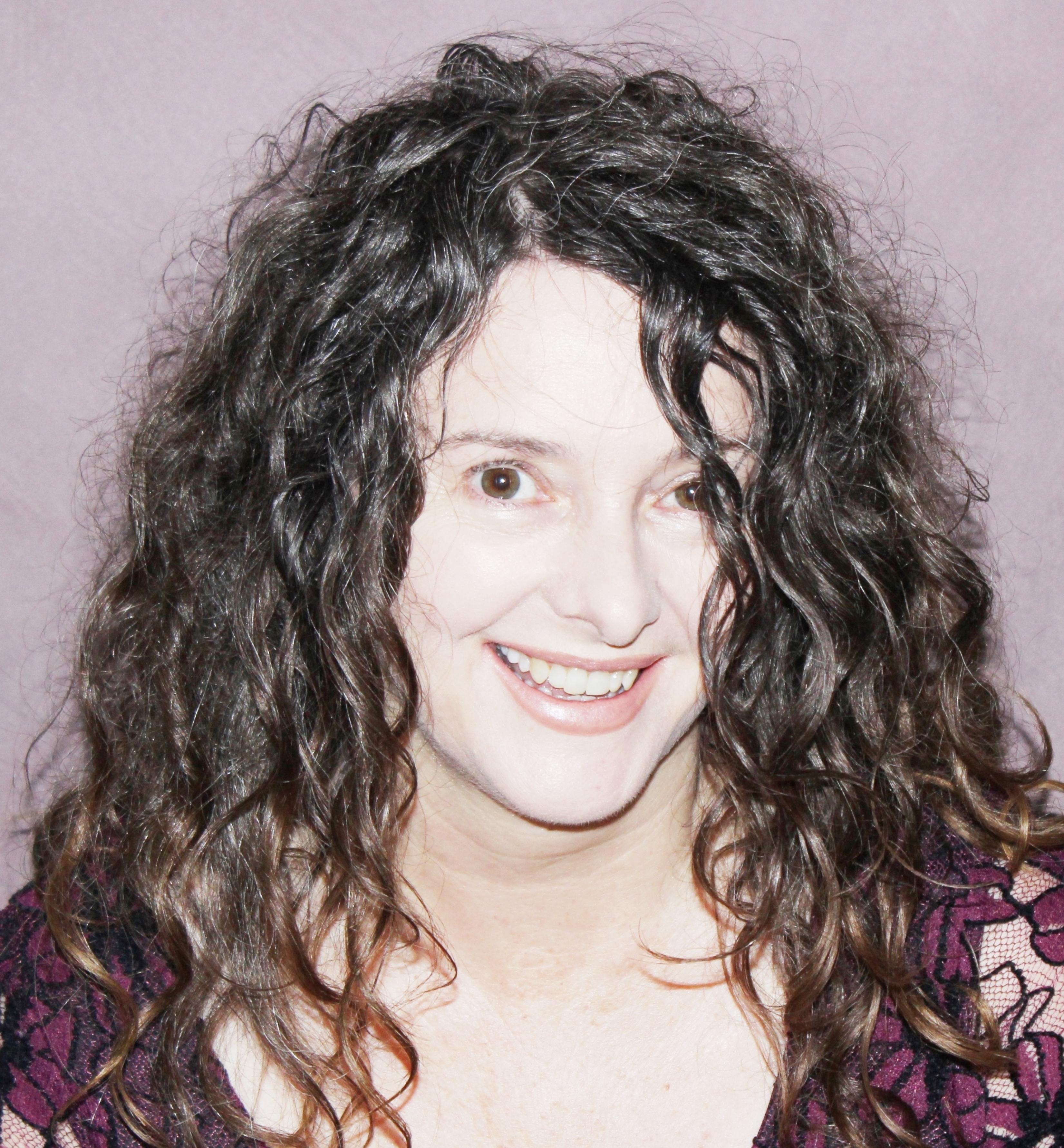
Julieann Wallace is a multi-published author and artist. When she is not disappearing into her imaginary worlds as Julieann Wallace – children’s author, or as Amelia Grace – fiction novelist, she is working as a secondary teacher. Julieann’s 7th novel with a main character with Meniere’s disease—‘The Colour of Broken’—written under her pen name of Amelia Grace, was #1 on Amazon in its category a number of times, and was longlisted in 2021 and 2022, to be made into a movie or TV series by Screen Queensland, Australia. She donates profits from her books to Meniere’s Research Australia, where they are researching Meniere’s disease to find a cure. Julieann is a self-confessed tea ninja and Cadbury chocoholic, has a passion for music and art, and tries not to scare her cat, Claude Monet, with her terrible cello playing.

Julieann Wallace ~ author (julieannwallaceauthor.com)       

www.instagram.com/myshadow_menieres/

www.instagram.com/julieann_wallace_

A Time of Gifting – from me to you

As Christmas draws closer, I am reminded of all those years where I would start to worry about whether I would be unwell, and have a four hour vertigo attack on Christmas day, ruining everyone’s plans, or whether something I ate would set off a cluster of vertigo attacks, debilitating me for nine days out of fourteen.

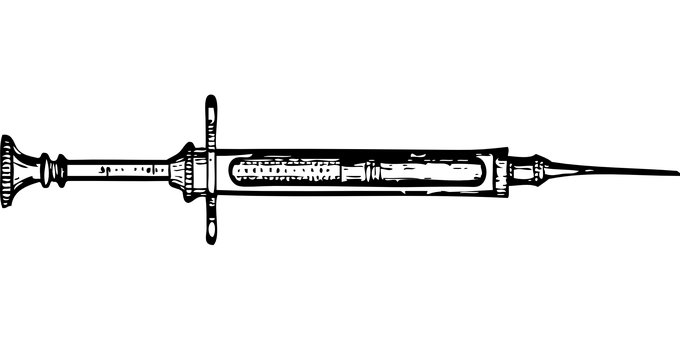
Thankfully, gentamicin injected into my middle ear in 2004, destroying my balance cells, stopped my Meniere’s vertigo attacks – an answered prayer. But sometimes, in the back of my mind is always the thought, “What if the vertigo returns?”

I have to consciously choose not to focus on that thought, instead, focussing on the positives. So here’s something I’d like to gift to you.  

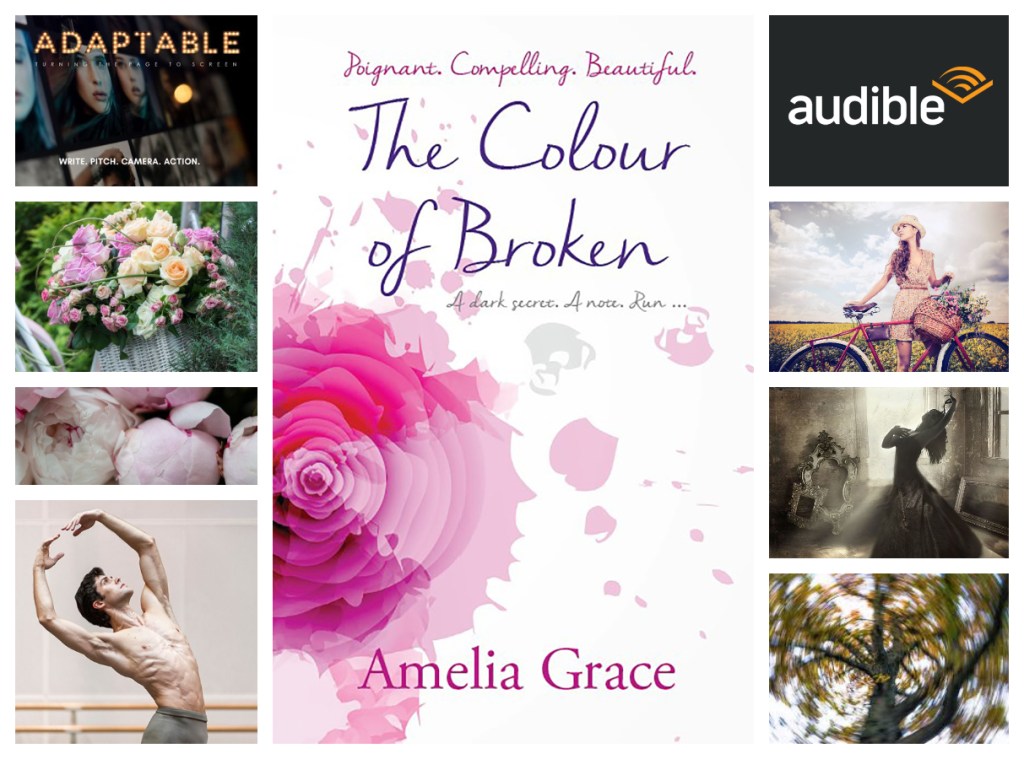
I’d like to gift you a FREE eBook copy of my bestselling novel that has been raising awareness about Meniere’s disease, which shares similar vestibular symptoms that COVID patients have experienced – vertigo, hearing loss, brain fog, tinnitus …

I pleased to say that ‘The Colour of Broken’ was longlisted earlier this year (2021) to be made into a movie or tv series.

And it has been an Amazon #1 in its category, three times.

Grab a copy and see what all the fuss is about. It’s FREE on the 23rd, 24th and 25th of December, 2021.

It’s downloadable on iPhone, iPad, android tablets, android phones, or on your computer. Here’s the App: https://www.amazon.com/b?ie=UTF8&node=16571048011

If you read the novel, I hope the story touches you where you need to be touched.

Wishing you a very merry Christmas filled with joy and thankfulness.

XX Julieann

Julieann Wallace is a multi-published author and artist. When she is not disappearing into her imaginary worlds as Julieann Wallace – children’s author, or as Amelia Grace – fiction novelist, she is working as a secondary teacher. Julieann’s 7th novel with a main character with Meniere’s disease—‘The Colour of Broken’—written under her pen name of Amelia Grace, was #1 on Amazon in its category a number of times, and was longlisted to be made into a movie or TV series by Screen Queensland, Australia. She donates profits from her books to Macquarie University, where they are researching Meniere’s disease to find a cure. Julieann is a self-confessed tea ninja and Cadbury chocoholic, has a passion for music and art, and tries not to scare her cat, Claude Monet, with her terrible cello playing.

A Gift for Christmas

Meniere’s disease – a manic, violent, debilitating, depressing, disgusting, deplorable, despicable, devastating, damaging, distressing, diabolical monster of a disease that makes you vulnerable and defenseless. It takes, and never gives back.

It’s now 26 years of living with my shadow, Meniere’s. But once, Meniere’s was not just a shadow, it was a monster, as it wreaked havoc in my life, sucking out every ounce of happiness I had, throwing me into the deepest, darkest pit, searching on my knees for the missing pieces of me.

In 2002, after a particularly violent and long vertigo attack, I cried under the running water of the shower. There, my gut wrenching sobs would be muffled, and my tears would become invisible as I tried to hide my deep sorrow, and absolute exhaustion of faking being well. I didn’t want my three children to hear me falling apart. I didn’t want my husband to know how broken I was. And it was then and there that I made a vow. I wanted to help find a cure for Meniere’s disease in whatever way I could.

In 2004, I had one shot of gentamicin (the full dosage, not the low dose given now to preserve hearing). It stopped my vertigo, and I was able to reclaim my life.

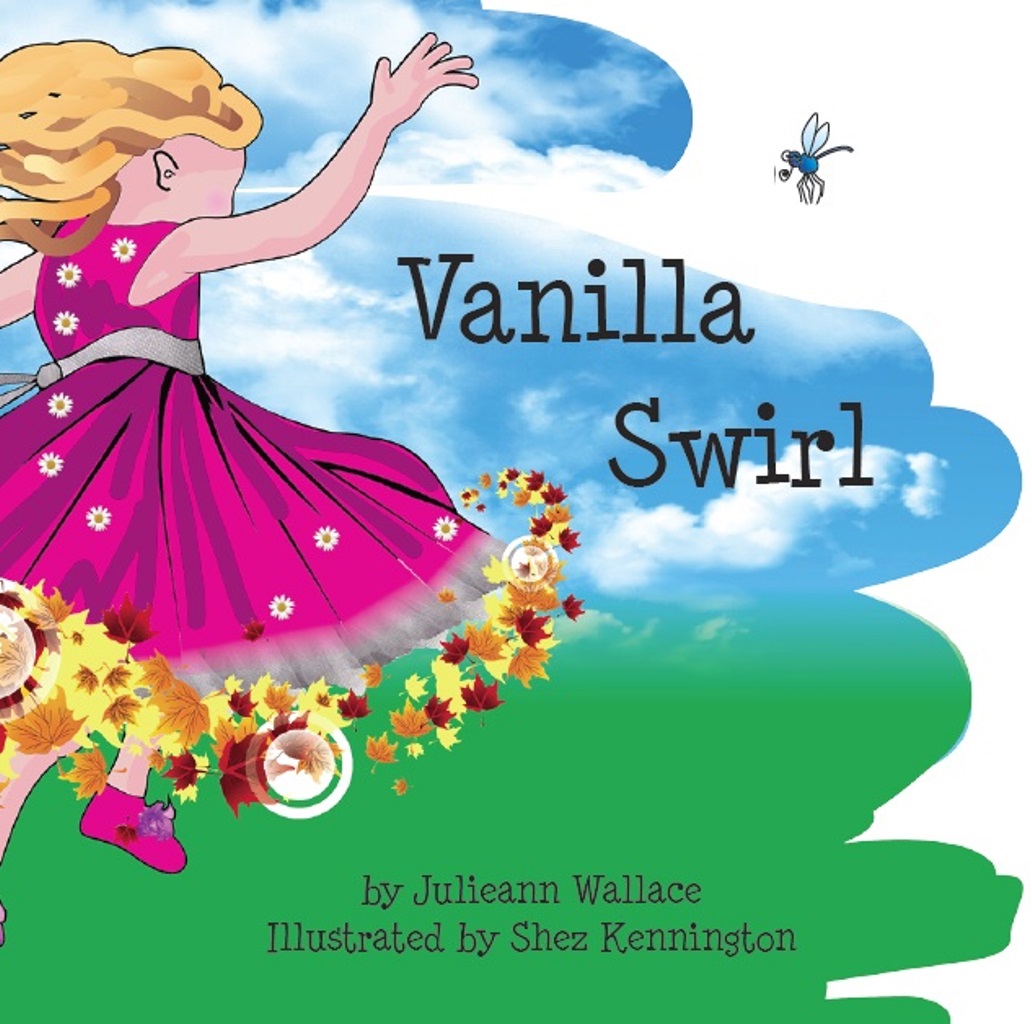
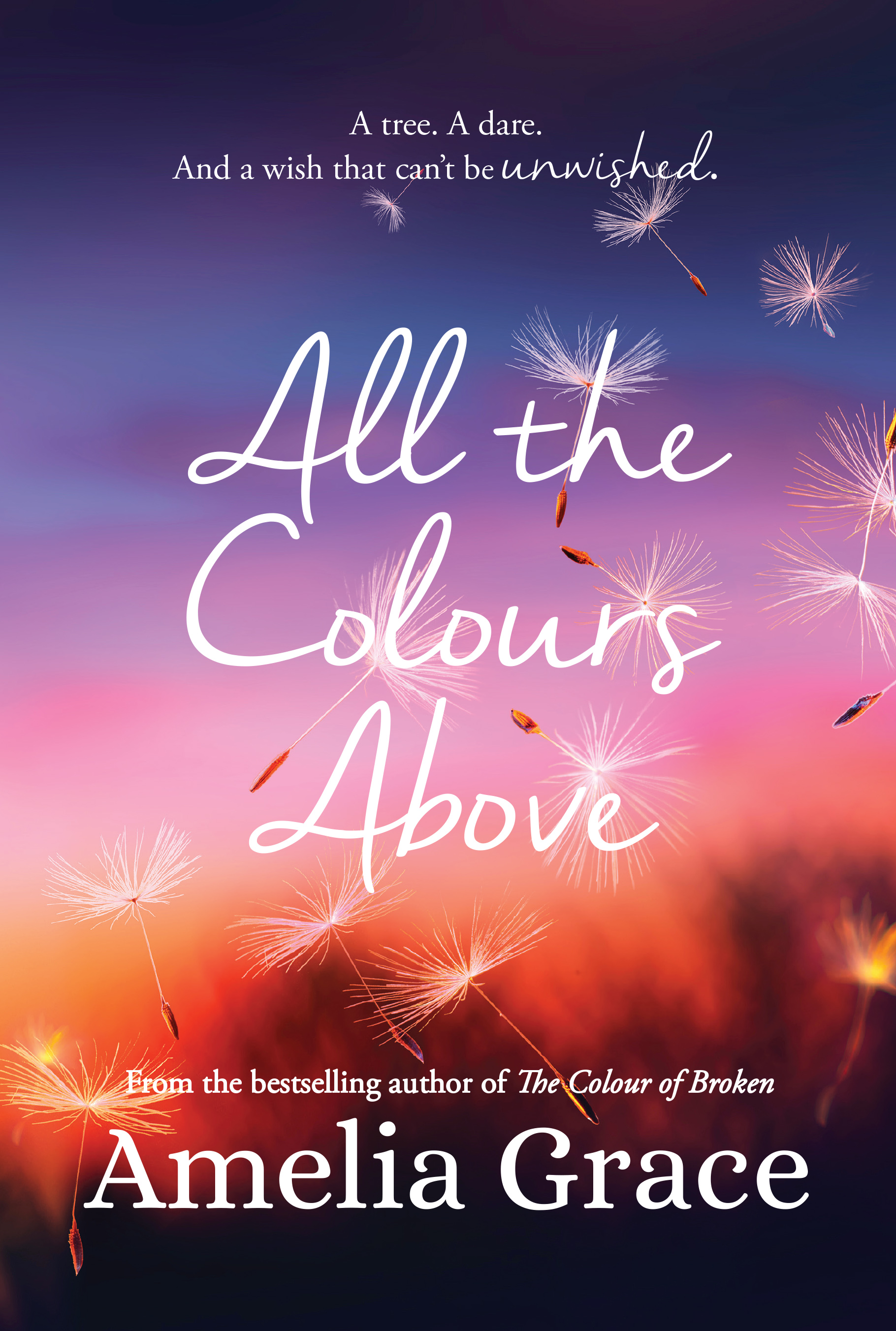
Since 2013, I have volunteered twice as a Meniere’s research subject at the University of Queensland (Australia) Brain and Mind Centre, released two Meniere’s picture books (Vanilla Swirl for mothers and Blueberry Swirl for Fathers, both gorgeously illustrated by the talented Shez Kennington), and 2 novels – The Colour of Broken with a main character with Meniere’s disease, and the sequel, All the Colours Above, with Meniere’s disease in it again, to raise awareness about Meniere’s disease. I donate 100% profits to research of the University of Sydney Brain and Mind Centre, where they have a dedicated Meniere’s disease research team.  

If you’d like to purchase any of these:

Vanilla Swirl

Blueberry Swirl

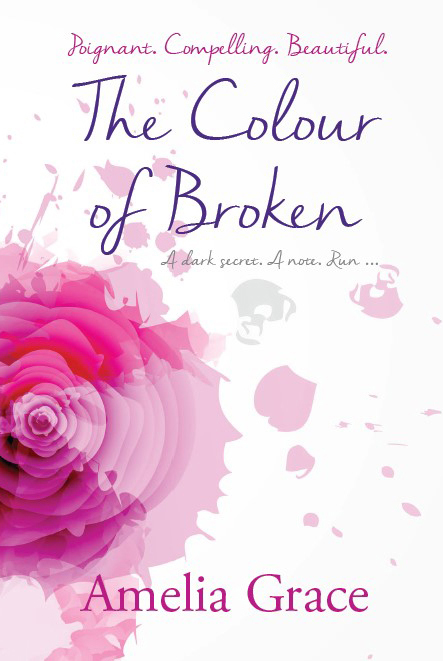
The Colour of Broken: print book & ebook audiobook (narrated by the incredible Heather Davies)

All the Colours Above: print book & ebook

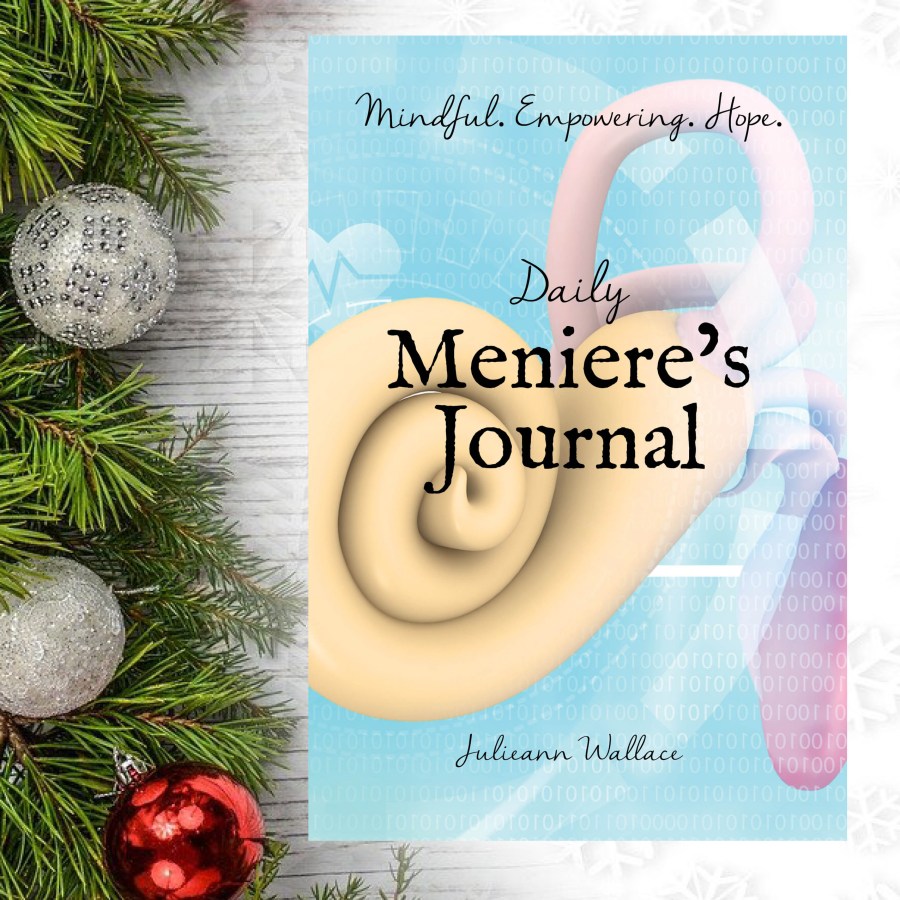
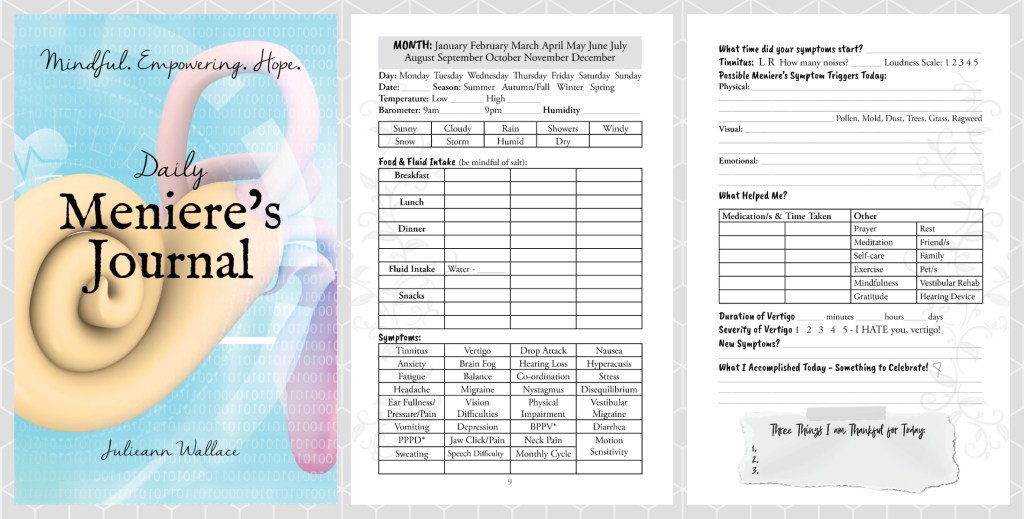
In January 2020, I released a Yearly Meniere’s Journal in response to the emotional pain I absorb, witnessing people struggle in the many Meniere’s support groups I am in. While I was reading comments, I thought back to before I had a gentamicin injection to stop the vertigo, and what I used to take with me to my ENT – it was a daily journal of my symptoms. And so I created one for Meniere’s Disease for people to use.

Roll-on to November 2021, and there seems to be more and more people being diagnosed with Meniere’s Disease, struggling to understand it and how they can take control of their lives. So I revisited my January 2020 Journal, added more details, and shortened the book to just 3 months so it would be more affordable. It’s a valuable tool, and perfect for looking for patterns and tracking triggers, and for taking to your doctor or ENT to show them exactly what you are suffering daily.

A gift for Christmas

The new journal is hot off the press, and I want to gift you the FREE PDF to download and print out.

It’s also available as a print book if you would prefer – 100% profits are donated to Meniere’s Research Fund Inc at the The University of Sydney and Macquarie University

Purchase the print book here for Australia Daily Meniere’s Journal – 3 Month : Wallace, Julieann: Amazon.com.au: Books For USA Amazon.com: Daily Meniere’s Journal – 3 Month: 9780645158106: Wallace, Julieann: Books For UK Daily Meniere’s Journal – 3 Month: Amazon.co.uk: Wallace, Julieann: 9780645158106: Books Also available at any online bookstore e.g. Booktopia Daily Meniere’s Journal – 3 Month by Julieann Wallace | 9780645158106 | Booktopia , Barnes and Noble Daily Meniere’s Journal – 3 Month by Julieann Wallace, Paperback | Barnes & Noble® (barnesandnoble.com) Powell’s Daily Meniere’s Journal – 3 Month: Julieann Wallace: Trade Paperback: 9780645158106: Powell’s Books (powells.com)

Wishing you a very happy Christmas, and looking forward to us finding a cure in the very near future, or even something that will successfully control all of our symptoms, one that works for everyone, not just for some.

The spark of hope can never be extinguished!

Julieann Wallace is a multi-published author and artist. When she is not disappearing into her imaginary worlds as Julieann Wallace – children’s author, or as Amelia Grace – fiction novelist, she is working as a secondary teacher. Julieann’s 7th novel with a main character with Meniere’s disease—‘The Colour of Broken’—written under her pen name of Amelia Grace, was #1 on Amazon in its category twice, and was longlisted to be made into a movie or TV series by Screen Queensland, Australia. Julieann is a self-confessed tea ninja and Cadbury chocoholic, has a passion for music and art, and tries not to scare her cat, Claude Monet, with her terrible cello playing.

Follow Julieann –

https://www.facebook.com/julieannwallace.author

https://www.instagram.com/julieann_wallace_/

https://www.instagram.com/myshadow_menieres/

It’s My Life, My Illness … Please Let Me Choose My Treatment

‘I’m sorry. There is no cure.’

I die a little inside each time I hear someone with Meniere’s disease pleading for help, saying they can’t do it anymore, and when I hear the callout for prayer for someone who is suicidal from the insidious incurable disease … I’ve been there. I know exactly how it feels. I wish I had a magic wand to heal every one of us. Right now.

I get angry when I read Meniere’s patients being told by their doctors, ‘I’m sorry. There is nothing more we can do.’

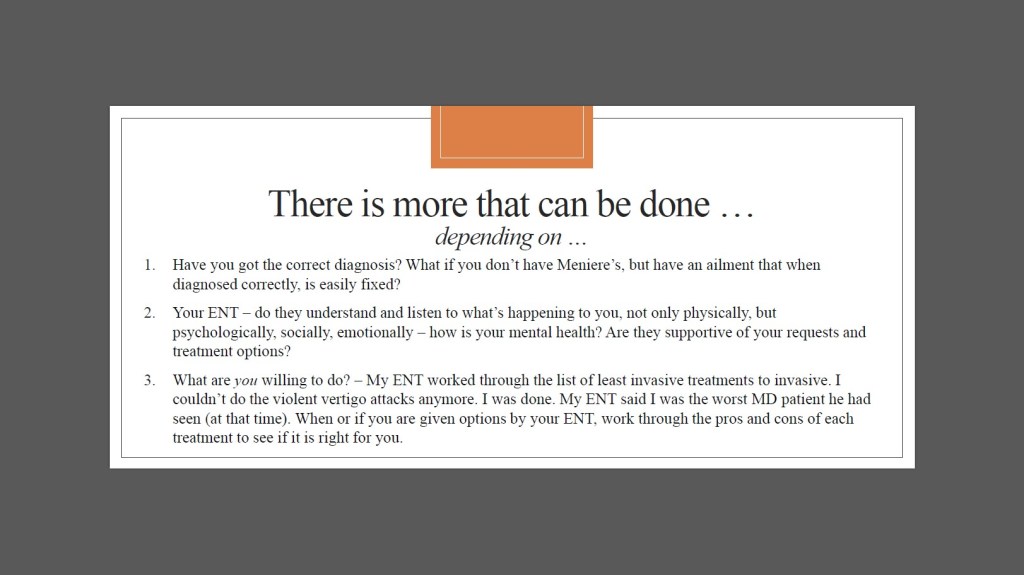
Don’t accept it. There is more that can be done.

But … it also depends on what you are willing to do.

Let me tell you the short story of my journey.

1995 …

‘I’m sorry. There is no cure.’

‘No cure?’

‘No … no cure; no cause. But you’re not going to die from it.’ My ear specialist eyed me with caution. The bitterness of my diagnosis after five hours of testing was painful to acknowledge.  

‘Let’s wait and see how your symptoms go,’ he said.

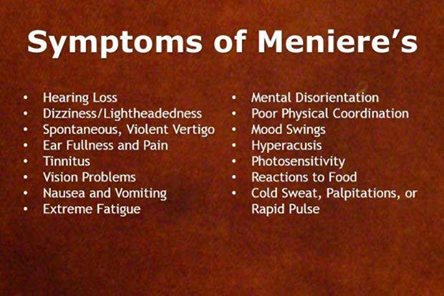
I stepped out of the ENT’s office, trailed by a very dark shadow: Meniere’s disease. It was so large it cast a darkness over me like a heavy, storm cloud, ready to erupt into the strong spiralling wind of a hurricane or cyclone at any moment. I knew the symptoms of my diagnosis well. I lived them with every breath that I took, mixed with fear and anxiety: aural fullness, hearing loss, tinnitus, and vertigo – the abhorrent violent vertigo – a life changer. 

I felt like I was given a prison sentence.

Where was the key to escape from Meniere’s disease? 

Wait and see how my symptoms go? Why? It could be a mild form that had little impact on my life, or it could go into remission.

But mine didn’t.

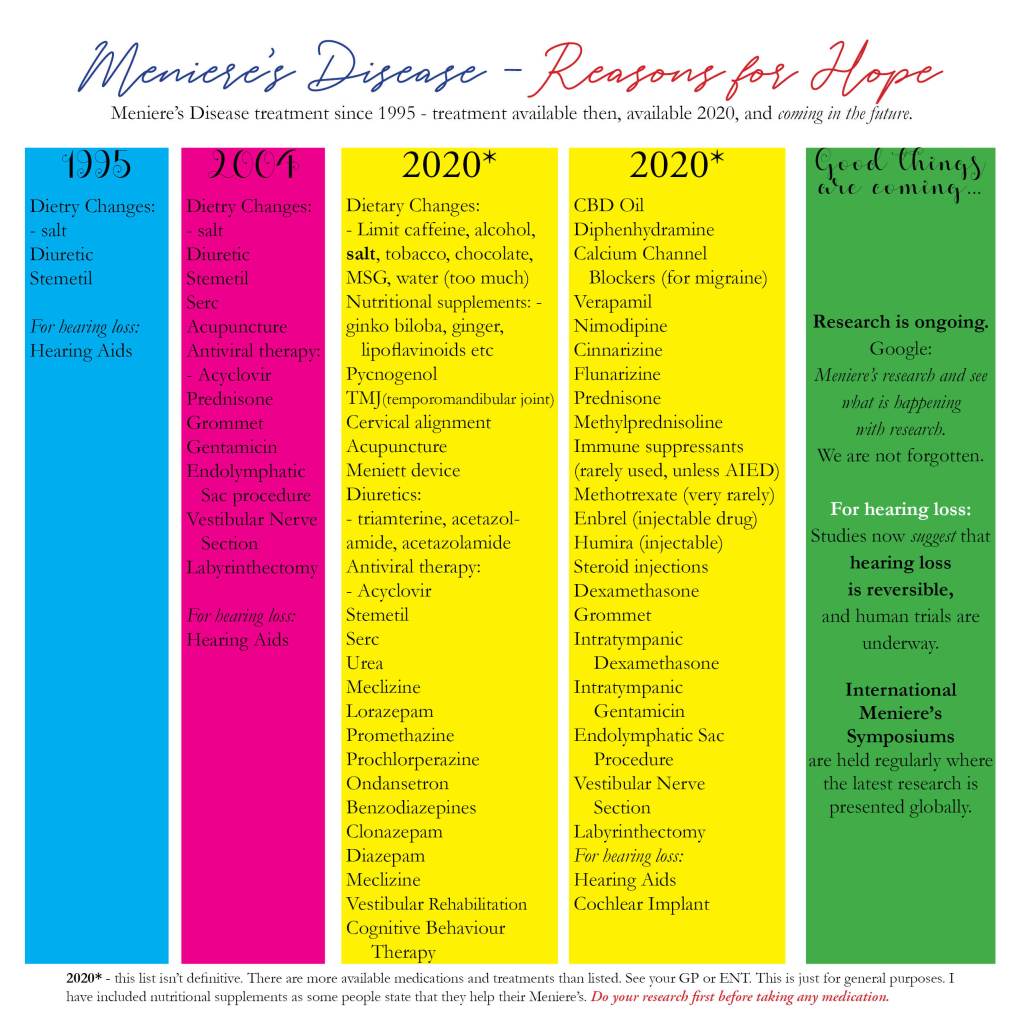
Thank you to the creator of this list.

After return visits to my ENT I was given a diuretic and Stemetil. That was it. And that was all they had in 1996. End of story.

But was it?

As my Meniere’s disease kicked into overdrive, destroying every bit of happiness I had in my life, the worst my ENT had seen, I got up to fight. Life was brutally unfair. Why was Meniere’s disease even a thing? It’s so cruel.

I was angry. I wasn’t going to accept “there’s no more we can do”. So I took control.

1. I started journaling my lifestyle vertigo attacks – what I did, ate, or drank beforehand an episode, trying to find a trigger or a pattern – and I discovered one – every two months I would have four hours of violent vertigo for nine days in a fortnight. Sometimes ending up in hospital.

2. I started my own research online when we finally had a home computer.

3. I researched and tried natural therapies.

4. I tried acupuncture.

5. I had my jaw alignment checked for TMJ (temporomandibular joint).

6. I listened to sound therapy for months on end – the Tomatis effect.

7. I took my research to my ENT, every visit. I’m sure he let out a sigh every time he saw my name on his patient list for the day. And when I found a Japanese doctor who claimed that the anti-viral Acyclovir cured people of their Meniere’s disease, my ENT was doubtful, but told me to give it a go. It cost me around $375 for each script from my GP – and that’s another story. It didn’t work.

8. I tried Serc.

But still, the debilitating vertigo rendered me defenceless. Incapacitated. And mentally, I found myself at the bottom of the darkest abyss with no hope, wearing a mask with a smile, covering up my very, very deep and dark depression.  

2004 …

9. I tried prednisone. For one day I felt like a normal person. And then my vertigo returned.

10. I had a grommet inserted into my eardrum. It did nothing.

The doctor’s words were full of apology. And frustration. ‘I’m sorry. There is nothing more we can do.’

‘Nothing more?’ My heart sunk. There was no horizon of hope, like the sun’s rays projecting onto the twilight canvas. It had disappeared into the darkness. Like me.

Just me and the beast: Meniere’s.

My ENT looked gutted. ‘Well … we could try gentamicin injected into your middle ear, and if that doesn’t work, I can do a vestibular nerve section.’

‘I’ll take the gentamicin.’

‘It will destroy your balance cells. You will also lose some hearing.’

‘Does it stop the vertigo?’

‘It can. Yes.’

‘Then I’ll take the gentamicin.’ I didn’t care about losing more hearing. I couldn’t live with the vertigo. I was done …

2020 …

I’ve been vertigo free since 2004. But the gentamicin injected into my middle ear was not the low dose gentamicin offered now, it was the full strength, and I remember my ENT saying that he added bi-carbonate of soda and sterile water to the mix to make the toxic antibiotic penetrate better. I now have my life back. And my shadow, Meniere’s, is a small thing that follows me around, a reminder that I am a survivor and a fighter.

I have to admit, I’m a little jealous of newly diagnosed Meniere’s people now. You have so much more HOPE than I did when I started my Meniere’s journey 25 years ago. There are far more medications and treatment options and success stories, and support groups and people who have started blogs and websites for MD people.

You have so much more.

And remember, you can choose. Like I did. Make sure you have a supportive ENT. I’m eternally thankful to my ENT and his care and compassion. And now my new ENT for his skill with my Cochlear Implant that has allowed me to hear again after 15 years.

Meniere’s Warriors:

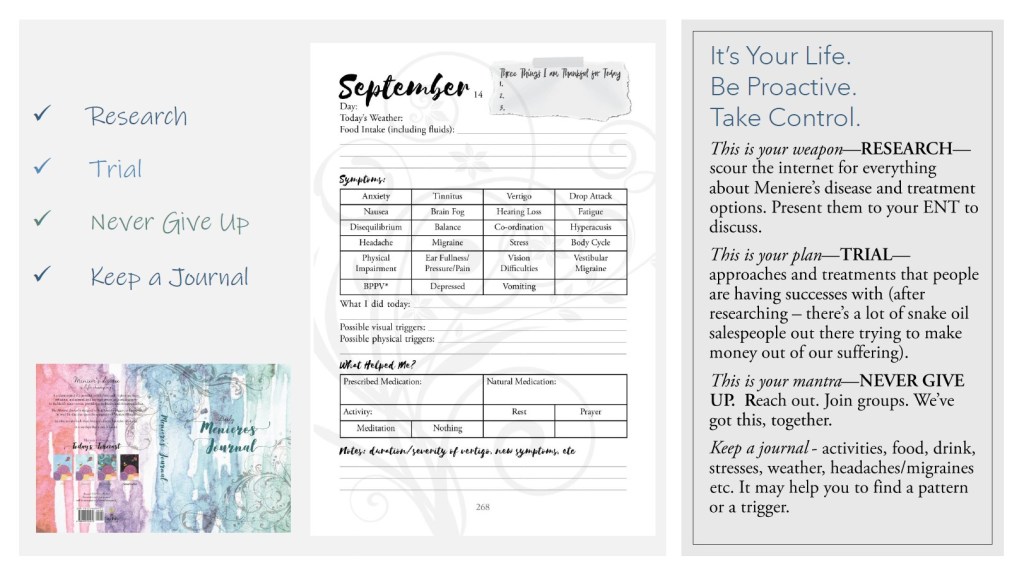
This is your weapon—Research—scour the internet for everything about Meniere’s disease and treatment options. Present them to your ENT. You are your best advocate. It’s your life. You take control.

This is your plan—Trial—approaches and treatments that people are having successes with (after researching – there’s a lot of scammers/snake oil salespeople/quacks out there trying to make money out of our suffering).   

This is your mantra—Never give up and reach out. We’ve got this, together.

Doctors, this is our plea: please let us choose our steps to wellness, to a better life where we can find joy again, where we can take back what Meniere’s disease has taken from us. Please don’t say “there is nothing more you can do”. We have suffered more than enough.

I’m looking forward to the day when I hear: ‘Here’s the bad news. You have Meniere’s disease. Here’s the good news—we can fix it!’’

To help you out in your MD journey, I have a two freebies you can download:

The spark of hope can never be extinguished. A cure for Meniere’s disease is coming …

I write this blog with the knowledge of the great diversity of experiences of people with Meniere’s disease in mind. Some suffer greatly. Some little. Some people respond to medications. Some don’t. Some can still function with little disruption to their daily lives. Some don’t.

I also write acknowledge that there are many debilitating incurable illnesses, and I am in not in any way discrediting or minimalizing another person’s illness.

Julieann Wallace is a best-selling author, artist and teacher. She is continually inspired by the gift of imagination, the power of words and the creative arts. She is a self-confessed tea ninja, Cadbury chocoholic, and has a passion for music and art. She raises money to help find a cure for Meniere’s disease, and tries not to scare her cat, Claude Monet, with her terrible cello playing. playing. 

https://www.julieannwallaceauthor.com/

The Colour of Broken is my best-selling novel (written under my pen name) that has a character with Meniere’s disease. It hit #1 on Amazon in it’s category a more than once. It can be bought at any online bookstore, including Amazon.

The Daily Meniere’s Journal is a 365 day print book to record your MD symptoms to find triggers and patterns. It can be bought on any online bookstore, including Amazon.

All profits from these books are donated to Meniere’s research to help find a cure.

I am mindful of those who also have incurable diseases or are walking the path of a diagnosis that is life changing. My blog never aims to undermine the severity of anyone else’s illness, disability or journey. We all deal with life with different tolerances, attitudes and thresholds. ‘My Shadow -Meniere’s’ is my journey. It is my hope that it can help others with Meniere’s disease, or hearing loss, or simply when life has a plot twist.

I also acknowledge those before me, who have Meniere’s Disease or a Cochlear Implant. Your experiences, advice and suggestions are welcome.

Learning to Hear

Fatigue
/fəˈtiːɡ/
noun
noun: fatigue; plural noun: fatigues
1.
extreme tiredness resulting from mental or physical exertion or illness.

bear-3663438__340

December 19, 2019, I had Cochlear Implant surgery. On the 9th of January, 2020, my Cochlear Implant was “activated”. My world of deafness, including the five roaring noises of tinnitus changed. I could hear again for the first time in 15 years!

My cochlear audiologist, Jane, warned me, ‘You will have mental fatigue from hearing again with your left cochlear.’

Yeah nah, I thought. I’ve had the repugnant, revolting, repulsive Meniere’s disease for 25 years now, three children and a teaching workload. I know exactly what mental and physical fatigue is like. The simple act of hearing again will leave me fatigued? I doubt it!

Yeah Nah. Australian slang for no.

Yeah nah

I enter the outside world. Reality. I’m no longer safe and comfortable in the confines of the quiet audiologist’s office, where Jane’s reassuring smiles, encouragement and support, wrap me like a warm blanket on a freezing winter’s night.

My eyes widen. It’s so NOISY! I hear EVERYTHING! But not the sounds of normal hearing, but of cochlear implant hearing, newly activated: chipmunk voices, robotic representations of every sound my 22 electrodes can feed into my auditory nerve. I am told that what I hear now, is not what I will hear as I continue to attend “mapping” sessions. Sounds will become more “normal-ish”, like what I hear with my right ear.

After 10 hours of wearing my processor, I am fatigued. Like a flat battery.
Nah Yeah. Yes. Jane was right. Again.

nah yeah
My cochlear audiologist, Jane, explained, ‘It’s like you’re a baby again. You hear absolutely everything. For your left hearing centre in your brain, every noise is new, and it’s working hard to work out whether to file the sound as an important sound, or background sound, that it doesn’t have to pay attention to. And the two hemispheres of your brain are not working together, yet. But they will.’

Creative background, the human brain on a blue background, the hemisphere is responsible for logic, and responsible for creativity. different hemispheres of the brain, 3D illustration, 3D render
source 123rf

She continued. ‘When you lost your hearing 15 years ago, your brain re-used that area for something else, and now that it is stimulated again with hearing, your brain is madly reorganising what parts of your brain are used for what. It is also accessing your auditory memories to match up to what you are hearing now.’

brain_senses-56ccf48f5f9b5879cc5ba0e6

WOW! Mind blown. Not only by the fact that I can hear again, but by the knowledge that the brain has a design and intelligence that is beyond human understanding.

My cochlear implant journey has been a road filled with new learnings, revelations and knowledge. My erudite self is soaking up anything and everything about hearing, the cochlear and the brain. The more I learn, the more I realise what an amazing piece of architecture our brain is, one that cannot be replicated. It’s complexity and control of our bodies are both extraordinary and intriguing.

When Jane was talking about my brain reorganising, she was talking about brain plasticity, or neuroplasticity, which I was already familiar with from having to relearn my balance after having my balance cells destroyed in my left ear to stop the horrendous, violent, vertigo of Meniere’s disease.

“Neuroplasticity or brain plasticity, is defined as the ability of the nervous system to change its activity in response to intrinsic or extrinsic stimuli by reorganizing its structure, functions, or connections. A fundamental property of neurons is their ability to modify the strength and efficacy of synaptic transmission through a diverse number of activity-dependent mechanisms, typically referred as synaptic plasticity”

https://www.physio-pedia.com/Neuroplasticity

Principles of neuroplasticity

The brain wastes nothing…

So, my left hearing centre is like a baby again. It’s got me thinking. If I was a baby again, would I choose the same path in life. For instance, if I didn’t excel in sport, and I didn’t receive a head trauma just in front of my left ear that I believe caused my Meniere’s,  would I still have Meniere’s disease in my lifetime? Would I still be me?

Next blog – Learning to Hear is like Learning to Read

Julieann Wallace 300 dpi

(Dip T., B Ed., Author, Artist, Teacher, Tea Ninja, Chocoholic, Papercut Survivor)

Julieann Wallace is a bestselling author, artist and teacher. She is continually inspired by the gift of imagination, the power of words and the creative arts. She is a self-confessed tea ninja, Cadbury chocoholic, and has a passion for music and art. She raises money to help find a cure for Meniere’s disease, and tries not to scare her cat, Claude Monet, with her terrible cello playing.

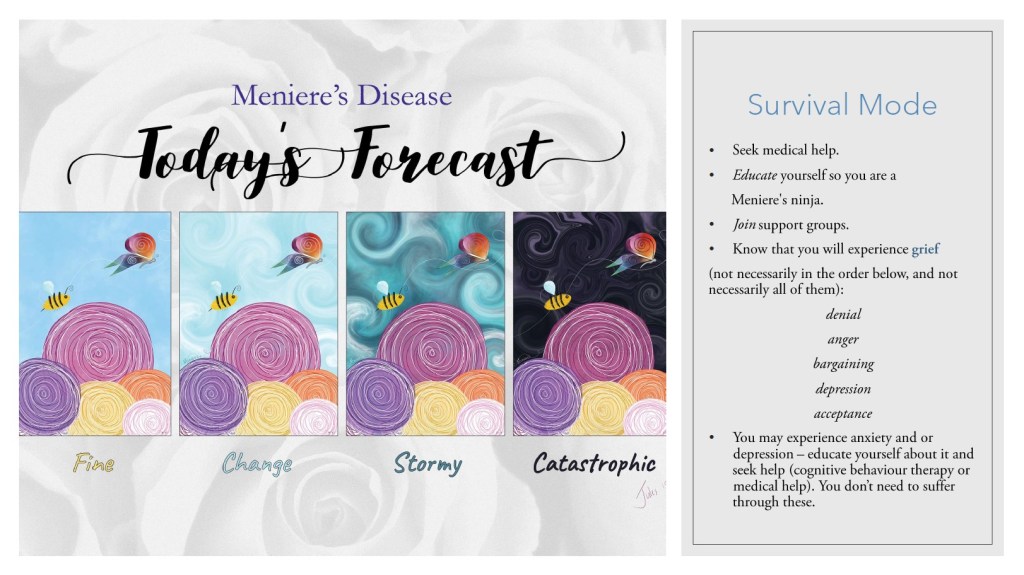
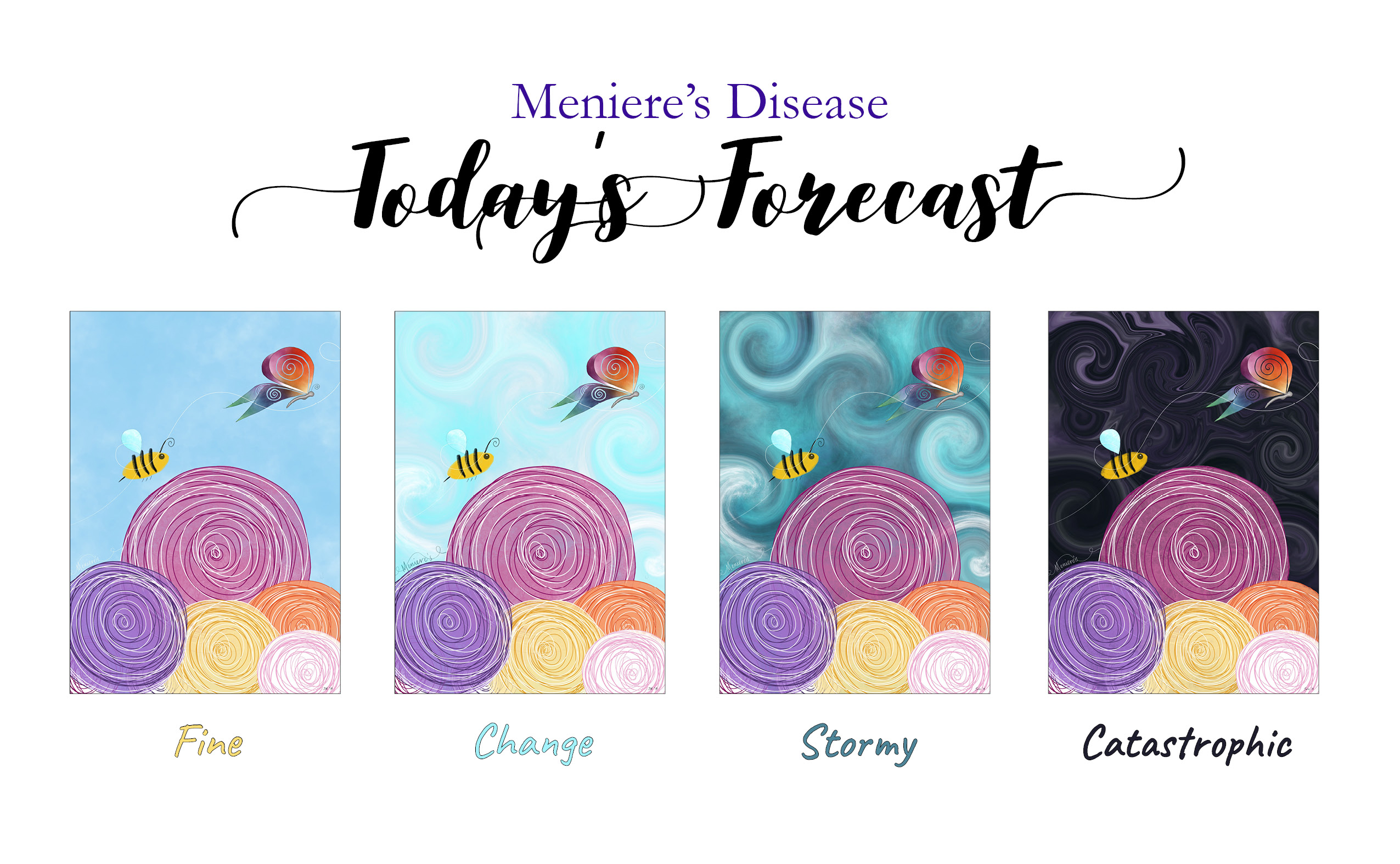
MD weather forecast

About this blog …

My Shadow, Meniere’s, is not just about the physical aspect of a Cochlear Implant – you can research about them online. I am sharing the human side of the journey towards a Cochlear Implant – feelings, appointments, the process, apprehensions, successes, highs and lows as I step into the next chapter of my Meniere’s journey.

I am mindful of those who also have incurable diseases or are walking the path of a diagnosis that is life changing. My blog never aims to undermine the severity of anyone else’s illness, disability or journey. We all deal with life with different tolerances, attitudes and thresholds. ‘My Shadow -Meniere’s’ is my journey. It is my hope that it can help others with Meniere’s disease, or hearing loss, or simply when life has a plot twist.

I also acknowledge those before me, who have already had a Cochlear Implant. Your experiences, advice and suggestions are welcome.


It Will Change Your Life #9

Wednesday, 27th November – balance therapy

Balance

/ˈbal(ə)ns/

noun: balance; plural noun: balances

1. an even distribution of weight enabling someone or something to remain upright and steady.

In 2004 I made a conscious decision to have my balance cells destroyed. I couldn’t do the horrendous, unpredictable, debilitating, violent, torturous, four-five hours of insane vertiginous spinning and nausea and vomiting and staring at one focus spot for the entire four-five hours anymore. I was more than done. So when my ENT offered to inject gentamicin into my middle ear to kill off the balance cells, halting the vertigo, I didn’t think twice.

Was the gentamicin my first port of call? Absolutely not. I had already had Meniere’s disease for 9 years and  tried:

* Low salt diet

* Diet elimination

* Stemetil

* Diuretic

* Serc

* Sound therapy

* Acupuncture

* Prednisone

* Grommet

* Gentamicin. The gentamicin worked. One shot injected in through my grommet with some bicarbonate of soda and sterile water mixed with it to make it penetrate better.

The procedure took place at my ENT’s procedure room in the city. I lied on my right side while he injected the concoction in through my grommet.

‘Isn’t that hurting?’ he had asked me as he infused the mixture into my middle ear.

‘Yes,’ I had said, ‘but I am envisaging it destroying the Meniere’s in my middle ear. It’s a mind visualisation technique I taught myself when I was young, when I had growing pains.’

I remained on my right side, left ear facing the ceiling for 20 minutes after the procedure, then went home, where I went to bed and rolled onto my right side to keep my left ear up. I slept for 2 hours.

The next day I had bouncy vision when I walked. It has a term – oscillopsia. And was a side effect of having my balance cells destroyed. It was a good sign that the gentamicin was working, my ENT had said.

https://www.healthline.com/health/oscillopsia

Three weeks later I was back teaching full-time, learning to trust that I wouldn’t have anymore vertigo attacks. Fifteen years later, I am still vertigo free.

Choosing to destroy my balance cells to stop the vertigo was not a hard decision. Meniere’s disease had total control on my life, and I wanted it back. There was a risk of losing all of my hearing, but that was a preferred choice to suffering through the torturous vertigo anymore. The gentamicin stopped the vertigo.

I gained quality of life again – socialising, working, independence, driving, and slowly became more confident in my life.

I lost a little of my hearing, but not a lot.

If my vertigo returned, would I do it again?

Yes.

When I joined global Meniere’s groups, I discovered that others who had had this procedure done, were having balance therapy. I was shocked that there was even a thing called balance therapy. When I had my procedure done in 2004, balance therapy didn’t exist where I lived. I had to learn to walk again, finding my new balance, learning my limitations as I went. No help.

Today, I sit in the reception of the Vestibular Therapist’s office, with a referral from my Cochlear Implant surgeon.

Mandy greets me with a smile. The universal language that puts you at ease. Curiosity, and my shadow, Meniere’s, follow her to her office. I sit on a chair and she questions me about my Meniere’s history, writing notes.

‘I’m an concerned about your imbalance after 15 years. You should not have that deficit anymore. It may point to another problem you have. Do you have Meniere’s in your right ear,’ she asks.

‘No,’ I say. Anxiety joins us in the room.

She frowns at me. ‘Let’s do some tests and see what is going on.’

She asks me to balance with my eyes closed for 30 seconds. I pass this test. 😊

She asks me to walk across the room, heel to toe, heel to toe, heel to toe. I fail miserably. Two steps and I fall over. ☹

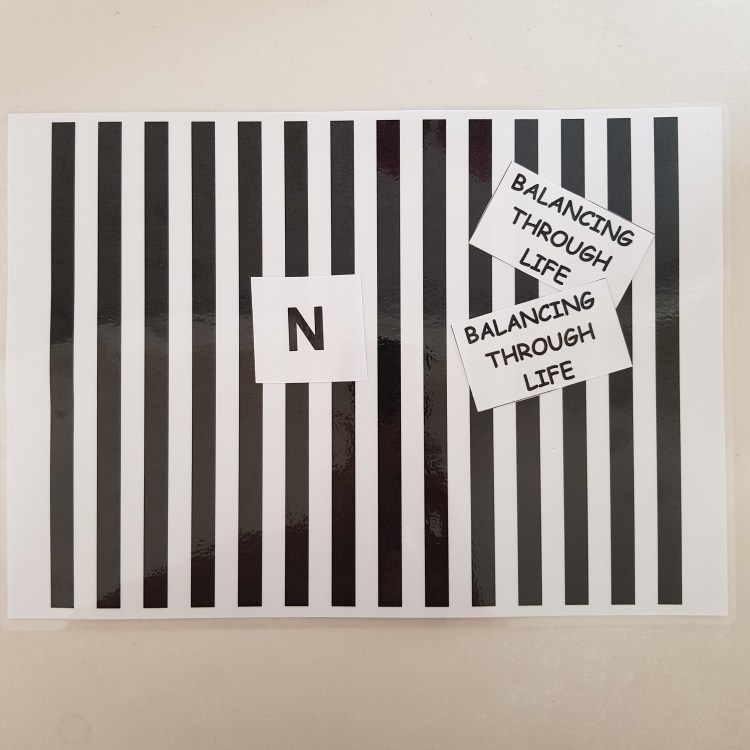
Then she asks me to look at the letter “N” on the wall, and moves my head left to right over and over and over, quickly, then asks me whether the letter moves. Yes. She repeats that test, but moves my head up and down over and over and over, quickly, asking whether the letter “N” moves. Yes.

Mandy sits close to me on my left. I have to sit at a 45-degree angle to her and focus on her nose. She then moves my head left to right over and over and over again, quickly. ‘That’s not too bad,’ she says.

She repeats the test, but this time she sits on my right side. I try to keep my focus on her nose as she moves my head left to right over and over and over again, quickly. I can not keep my focus on her nose at all. ‘Yes. That’s the gentamicin damage in your left ear,’ she says.

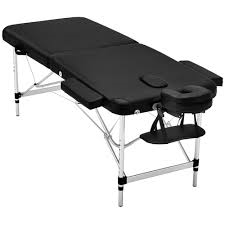
I sit on a massage table.

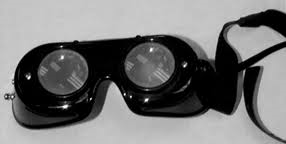
Mandy places some goggles over my eyes. She wants to see if I have Benign paroxysmal positional vertigo (BPPV). She does the Epley manoeuvre. No vertigo or eye movement evident.

Mandy stands and talks me through some vestibular exercises for neuro-plasticity – the brain relearning balance. I cannot express how happy I am to get these exercises. They will help me no end.

Except, each of the exercises make me feel insanely nauseous. I blow a controlled breath through my lips. I’m an expert at it.

‘Do you want to stop?’ she asks me during each exercise.

‘No,’ I say. ‘I can do this.’ And I get through to the end.

‘Can I take stemetil when I feel nauseous with the exercises?’ I ask.

‘No,’ she says. ‘It’s a vestibular suppressant, and your brain won’t learn the new balance pathways and desensitisation.’

‘What about Serc?’ I ask.

‘No. Don’t take Serc either,’ she says.

‘But it is only supposed to increase the blood floor in the inner ear,’ I say.

She shook her head. ‘No. That’s what they want you to believe. It a vestibular suppressant, like stemetil – it’s good for Meniere’s, but not other vestibular conditions.’

‘Some doctors say it does nothing for Meniere’s,’ I say, frowning, recalling how my own ENT and the Cochlear Implant ENT scoffed when I mentioned Serc. I wondered why the makers of Serc would say it increases blood flow, while the vestibular therapist, who specialises in vestibular retraining says it’s a suppressant. I know for a fact that many Meniere’s people say Serc keeps their vertigo at bay.

‘From the conferences I have attended, it does indeed work for many Meniere’s patients, not all though,’ she adds. Yeah, I was one who it didn’t work for, I think.

I leave her vestibular therapy room, which is in a really old house that is not level. I catch my balance as I walk through it. My shadow, Meniere’s, laughs at me. I am armed with vestibular exercises, and an appointment for next week.

I have now completed all of my necessary Cochlear Implant work-up appointments.

Next stop, the Cochlear Implant. December 19th.

It Will Change Your Life # 5

November 5th 2019 – the Surgeon.

Life with an invisible illness is an interesting voyage. People cannot see what you are going through, what you suffer- physically, emotionally, psychologically, socially –  your invisible scars – so it’s hard for others to empathize.

People would often say to me, ‘Your life has been so easy. Everything just falls into place. Good things always happen to you. You’re always smiling.’ It used to frustrate me. They had no idea what I was going through. They had no idea I worked hard to be where I was in my career, my family, my three children. Nothing ever “fell into place”. It was earned.

During the hardest time of my Meniere’s disease, I was in very deep and dark depression that I couldn’t climb out of. Yet, I kept smiling. It was easier that way. I would patch up the cracks in my mask before I put it on and met with others. If I could meet others … if my shadow, Meniere’s, hadn’t imprisoned me for five hours of violent, debilitating spinning that would land me in hospital at times.

In hindsight, I’m glad my illness is invisible. It makes it easier to pretend that I am okay. I don’t have people avoiding me like I have a contagious condition. I don’t have people looking at me with well-meaning concern, or that “pity” look. I hate the pity look. I don’t have people devaluing the severity of my symptoms, like:

‘It’s okay, dear, we all get dizzy sometimes.’

‘Oh, I have tinnitus too. It’s so common. When it’s really quiet, I can hear a little “sssssssssss”. You’ll be fine!’

My friend had Meniere’s disease – he got a bit faint sometimes. He went to the doctor and is cured.’

Meniere’s disease. No cause. No cure. Yet.

Good things are coming. I know it. I follow the research.

My Cochlear Surgeon is younger than me, as my ENT had said.

I follow the surgeon into his office, my shadow, Meniere’s, behind me, then my husband, and anxiety far behind. The more I know about the Cochlear Implant the less anxious I feel. And I am so thankful to hundreds of people with Cochlear Implants who have reached out to me. The world is a wonderful place.

The surgeon tells me that my ENT believes my Meniere’s disease has “burnt out”.

“Burnt out”. There’s those two words that float around in Meniere’s groups.

According to menieres-disease.co.uk, “the term ‘burn out’ is frequently used to describe Meniere’s as though it is the end of the line, that it has finished. However, it really means that the vertigo attacks have disappeared as the vestibular function has now been destroyed. The disease continues to progress as hearing is completely lost, tinnitus and fullness will continue even after burn out.”

‘Hmmm … I’m not so sure that it has burned out. I still get little mini spins at times,’ I say. And it’s definitely not BPPV.

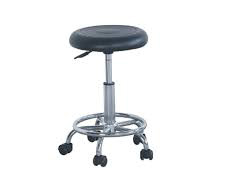
I am questioned about the history of my Meniere’s, then the surgeon asks me to sit on a stool so he can look inside my ears.     

‘Spin to your left,’ he says.

‘Spin?’ I say with a smirk, referring to the spinning of vertigo, then swivel the chair to the left, slowly.

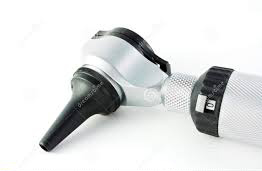
Turn to your left,’ he says, smiling. Ah – he has a sense of humour. Good. He uses the auriscope to look inside my ear canal.

Turn … to your right,’ he says with a smile in his voice. I swivel the chair to the right, slowly, and he checks inside my ear canal.

The remainder of the appointment flows with quick succession:

Surgery date: 19 December. Overnight stay. $25, 000 Cochlear Implant cost covered by the health fund. Any questions?

I take a deep breath. ‘Will my vertigo return?’

He considers my question, then says, ‘I don’t expect it to, but there are no guarantees. For Meniere’s patients who still have some balance cells left, I usually wash out the inner ear with gentamicin while I am in there as an insurance that they will not have vertigo anymore, but since you have been so good for quite a while without vertigo, I won’t do that, in case it upsets anything.’

I nod, feeling a little numb. There is still no certainty that my vertigo will not return. How can it be burnt out if the vertigo returns? My shadow, Meniere’s, crosses its arms and grins.

Before I leave, the surgeon gives me a form for an MRI and CT Scan, and tells me I need balance rehabilitation before I have surgery, and to continue afterward. I raise my eyebrows and nod. I have never had balance rehabilitation; I just relearned my balance to walk by myself after the gentamicin was injected into my middle ear in 2004.  

I leave the surgeon’s office. Anxiety is waiting.

Next – MRI and CT SCAN

About this blog …

My Shadow, Meniere’s, is not just about the physical aspect of a Cochlear Implant – you can research about them online. I am sharing the human side of the journey towards a Cochlear Implant – feelings, appointments, the process, apprehensions, successes, highs and lows as I step into the next chapter of my Meniere’s journey.

I am mindful of those who also have incurable diseases or are walking the path of a diagnosis that is life changing. My blog never aims to undermine the severity of anyone else’s illness, disability or journey. We all deal with life with different tolerances, attitudes and thresholds.  ‘My Shadow -Meniere’s’ is my journey. It is my hope that it can help others with Meniere’s disease, or hearing loss, or simply when life has a plot twist.

I also acknowledge those before me, who have already had a Cochlear Implant. Your experiences, advice and suggestions are welcome.

Meniere's and me

It Will Change Your Life #1

Monday, 21.10.19

The day is overcast, mirroring my mood. Today, I go for a Cochlear Implant “work-up” for my left ear. I’ve been considering a Cochlear Implant for a while, but have bathed in the delusion that somehow, my hearing will come back. But of course, it won’t – it’s just my eternal hope that floats around me as I journey through the incurable Meniere’s disease.

My symptoms started in 1995. Ear fullness, like I had been swimming and still had water stuck in my ear canal. Bouts of unpredictable, violent vertigo. Tinnitus. And then came the hearing loss. Gradually.

I was 28. ‘Meniere’s is more common in men over 50,’ my ENT told me. Online information at the time backed up the statement.

Today, I sit looking out the window at the dark, heavy clouds, painting the state of my heavy heart and dark emotion. I’m 24 years into my Meniere’s journey, yet I’m filled with tingles of anxiety travelling over my skin like waves, with one big question bouncing around in my mind.

If I have a Cochlear Implant, will the disabling vertigo of Meniere’s disease return?

And I’m not just talking about being ‘dizzy’. The vertigo of Meniere’s disease for me was the most abhorrent, violent, room spinning. Totally debilitating. Hold on to the floor even though you are already on lying on the floor, stare at one spot on the wall for four or five hours until the spinning subsides. Beyond exhausting.   

And let’s not forget the relentless, vicious puking that feels like you’re about to turn inside-out, dehydrating the body so much you need to be transported to emergency at the hospital.

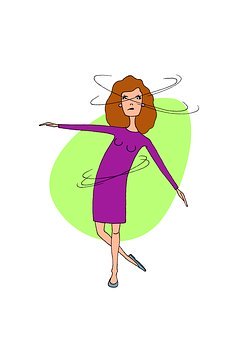
If you ever want to know how vertigo of Meniere’s feels, sit on an office swivel chair and get someone to spin you around as fast as they can, non-stop. Imagine not being able to stop it. For hours and hours and hours. Then imagine never being able to predict when vertigo will hit – because when it does, you are stuck wherever you are, and you absolutely can not move, as it will make the spinning impossibly worse. This is the vertigo of Meniere’s. Hell.

In 2004 I made the choice to destroy the balance cells in my left ear to stop the debilitating, violent vertigo. The bottle of gentamicin was now my hope. My ENT injected it into my middle ear.

Imagine for one moment, having to make the choice about destroying your balance cells. Balance. Yeah – that thing. Something you never even think about. Your body just does it for you.

I relearned my balance and retaught myself to walk with a new normal, using my eyesight as my guide for balance. But compared to the unpredictable vertigo, the destruction to my vestibular system was an answered prayer. It changed my life. It gave me my life back. With physical limitations. I was no longer spiralling down into the darkness of the Meniere’s prison where there is no escape.

But back to my question – if I have a Cochlear Implant, will the disabling vertigo return? And if it does, what does it mean for my life after living vertigo free for 15 years? 

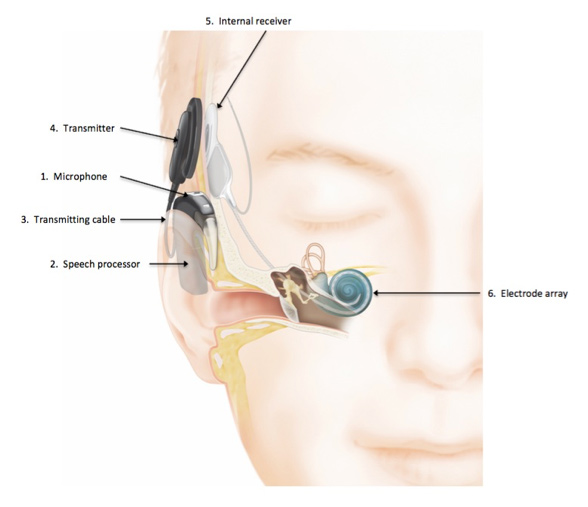
eyeandear.org.au Adapted from images courtesy of Cochlear Ltd

I’m taking a risk. I know that. The thought of having vertigo again terrifies me. My vertigo years were a very, very dark emotional place to be. Once upon a time I had a life and lived it fully – working full-time in a job I loved, physically able to do what I pleased, and engaged in a social life. I was happy. Then Meniere’s hit, and took it all away. Every waking moment was lived in fear of a vertigo attack. Sleep was not even a safe place. I would wake in the night, spinning violently, unable to close my eyes for four or five hours until it stopped.

I need answers from my ENT and my Otologist whom I am yet to see. Can my Meniere’s vertigo return due to the Cochlear Implant?

I walk out the front door and lock it behind me, anxiety joining me for the Cochlear Implant work-up appointment. Anxiety. We have been friends for a long time. Introduced to each other by my dark, dark shadow, Meniere’s disease.

Friends already fitted with Cochlear Implants tell me it will change my life … I sigh and wonder which way it will change my life.

Just breathe, I tell myself …

To be continued.

Julieann is a multi-published author and artist who is continually inspired by the gift of imagination and the power of words. When she is not disappearing into her imaginary worlds as Julieann Wallace – children’s author, or as Amelia Grace – fiction novelist, she is working as a secondary art teacher, editor, book designer, and book magician for other authors. Julieann’s 7th novel ‘The Colour of Broken’ with a main character with Meniere’s disease hit #1 on Amazon in its category twice – all profits are donated to Meniere’s research. Julieann is a self-confessed tea ninja and Cadbury chocoholic, has a passion for music and art, and tries not to scare her cat, Claude Monet, with her terrible cello playing.

The Color of Broken: Grace, Amelia: 9780648084662: Amazon.com: Books

The Colour of Broken: Grace, Amelia: 9780648084624: Amazon.com: Books

Amazon.com: Daily Meniere’s Journal (9780648424451): Wallace, Julieann: Books